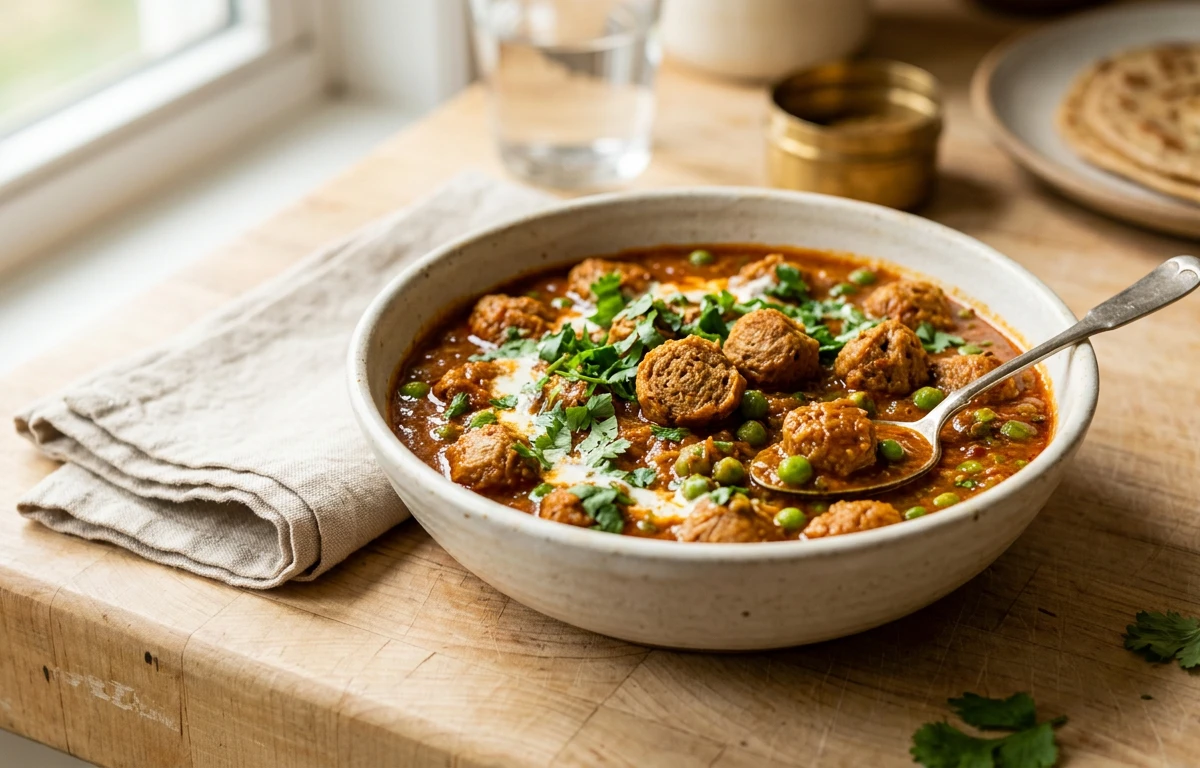
Aloo Rasedar Sabzi
This homestyle potato curry has a thin, lightly spiced gravy that feels especially comforting with puri, kachori, or paratha. Soft potatoes soak up the tangy tomato and ginger flavors beautifully.
For 4 servings
- prep · ~15 min
Boil and break the potatoes.
Boil the potatoes until just tender, then peel them and lightly break them by hand into uneven chunks. Keep a few small mashed bits ready to help thicken the gravy naturally.
TIPHand-broken potatoes give this sabzi its rustic texture and help the gravy cling better. - temper · ~2 min
Make the tempering.
1.Heat oil in a pan over medium heat.2.Add cumin seeds and let them crackle for 20 to 30 seconds.3.Add asafoetida and slit green chilies.4.Add grated ginger and cook for 30 seconds until fragrant. - saute · ~6 min
Cook the tomato masala.
1.Add chopped tomatoes and mix well.2.Add turmeric powder, red chili powder, coriander powder, and salt.3.Cook until the tomatoes turn soft and pulpy, about 5 to 6 minutes.4.Mash the tomatoes with the spoon as they cook to make a simple base.TIPCook the tomatoes until they lose their raw smell; this keeps the gravy bright but not sharp. - simmer · ~10 min
Add potatoes and make the ras.
1.Add the broken potatoes and mix so they are coated in the masala.2.Pour in hot water and stir well, lightly crushing a few pieces into the liquid.3.Bring the sabzi to a gentle simmer.4.Cook uncovered for 8 to 10 minutes until the gravy looks light, slightly thickened, and well blended. - garnish · ~1 min
Finish with lemon juice and coriander leaves.
Turn off the heat and stir in lemon juice. Sprinkle coriander leaves on top for a fresh finish.
- serve · ~1 min
Serve the sabzi hot.
Serve hot with puri, kachori, paratha, or plain roti while the gravy is still loose and spoonable.
What to keep in mind.
7 tips from the recipe — small details that make a real difference to the final dish.
- 1Break the boiled potatoes by hand instead of cutting them; the rough edges release starch and give the ras its classic texture.
- 2Use hot water when thinning the gravy so the simmer stays steady and the potatoes do not tighten up.
- 3Do not brown the ginger or tomatoes deeply; this sabzi tastes best with a bright, lightly cooked gravy.
- 4Keep the gravy slightly loose in the pan, because potatoes continue absorbing liquid as the sabzi rests.
- 5Add lemon juice only after switching off the heat to keep its tangy freshness from turning dull.
- 6If making ahead, store the sabzi a little thinner than desired and loosen with hot water when reheating.
- 7For puri or kachori, simmer an extra minute after lightly crushing a few potato pieces so the gravy clings better.
Adapt it for your goals.
No-onion-no-garlic
This recipe already fits that style, making it ideal for vrat-style meals or simple satvik home cooking with clean, direct flavors.
spicierSpicier
Increase green chilies and red chili powder slightly for a sharper, halwai-style kick that pairs especially well with puri.
jainJain
Replace potatoes with boiled raw banana or elephant foot yam, and skip asafoetida if needed, for a Jain-friendly gravy in a similar ras style.
thicker gravyThicker-gravy
Mash more of the boiled potatoes into the liquid and simmer a bit longer if you want a sabzi that sits better with paratha than puri.
Why this is on our healthy list.
Comforting Yet Light Gravy
The sabzi gets body from potatoes and tomato pulp rather than cream, butter, or a heavy nut-based paste.
Digestive Spice Support
Cumin, ginger, and asafoetida are classic Indian pantry spices often used to make simple potato dishes feel easier to digest.
Plant-Based Everyday Dish
Made from potatoes, tomatoes, spices, and herbs, this is a fully plant-based curry suitable for many everyday meals.
Herb and Tomato Freshness
Tomatoes, green chili, lemon juice, and coriander leaves bring brightness and fresh flavor without needing rich finishing ingredients.
Frequently asked questions
Hand-breaking creates rough edges and small mashed bits that dissolve slightly into the gravy, giving Aloo Rasedar Sabzi its rustic texture.



.webp)