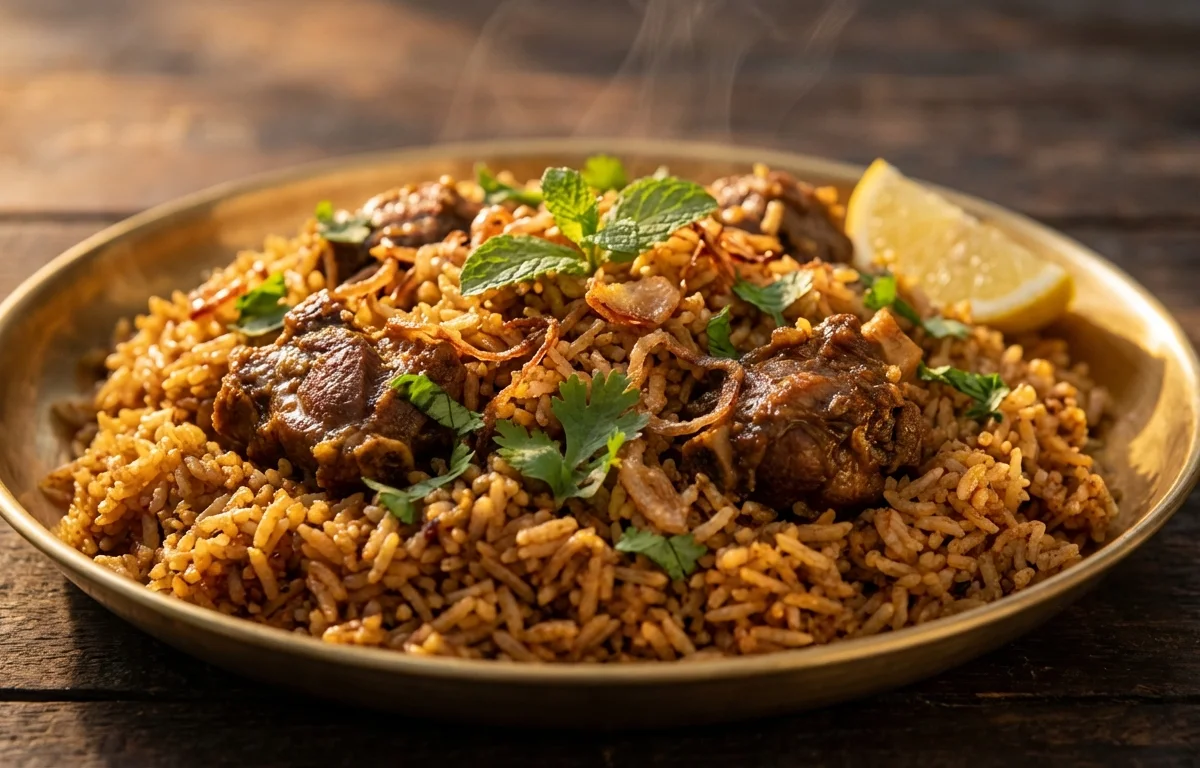
Ambur Mutton Biryani
A fragrant Tamil Nadu biryani with tender mutton, seeraga samba rice, browned onions, yogurt, mint, and a gentle chili warmth. It is cooked in one pot so the meat juices and spices soak beautifully into every grain.
For 4 servings
- prep · ~30 min
Soak the rice and prep the biryani ingredients.
1.Wash the seeraga samba rice gently until the water runs mostly clear.2.Soak the rice in fresh water for 30 minutes, then drain well.3.Slice the onion, chop the tomato, slit the green chili, and measure the yogurt, herbs, and spices.TIPDo not soak this small-grained rice too long or it can turn soft while cooking. - saute · ~11 min
Brown the onions and whole spices.
1.Heat oil and ghee in a heavy pot over medium heat.2.Add cinnamon, cloves, green cardamom, and bay leaf; cook until fragrant (30 seconds).3.Add sliced onion and cook until evenly golden and lightly browned (8-10 minutes).TIPA deep golden onion base gives Ambur biryani much of its color and flavor. - saute · ~7 min
Cook the masala base.
1.Add green chili and ginger-garlic paste; cook until the raw smell fades (1-2 minutes).2.Add chopped tomato and cook until soft and pulpy (4-5 minutes).3.Stir in red chili powder, turmeric powder, mint, and coriander leaves. - pressure cook · ~30 min
Cook the mutton until tender.
Add the mutton, yogurt, lemon juice, salt, and 1.5 cups water to the pot. Mix well, cover, and pressure cook until the meat is tender, about 20 minutes after the first whistle.
TIPThe mutton should be almost fully cooked before the rice goes in, so both finish at the same time. - boil · ~7 min
Bring the gravy to a steady boil.
Let the pressure drop naturally, then open the pot and check the liquid. Add the remaining 1.5 cups water and bring everything to a steady boil over medium heat.
- assemble · ~1 min
Add the rice to the mutton gravy.
Add the drained rice and mix gently once so the grains are evenly spread in the liquid without breaking.
- simmer · ~19 min
Cook on low until the rice is done.
1.Cook uncovered on medium heat until the liquid drops just below the rice level (4-5 minutes).2.Reduce the heat to very low and cover the pot tightly.3.Cook until the rice is tender and the moisture is absorbed (12-15 minutes).TIPKeep the heat low at this stage so the rice cooks through without catching at the bottom. - rest · ~10 min
Rest the biryani before fluffing.
Turn off the heat and let the biryani rest, covered, for 10 minutes. Fluff gently from the sides with a flat spoon.
- serve
Serve the Ambur mutton biryani hot.
What to keep in mind.
7 tips from the recipe — small details that make a real difference to the final dish.
- 1Use a heavy-bottomed pot after pressure cooking so the final low simmer does not scorch the masala-rich bottom.
- 2Brown the onions to a deep golden, not dark brown; overbrowned onions can make the biryani taste bitter.
- 3After pressure cooking, check that the mutton is nearly tender before adding rice; tough meat will not finish properly during the rice stage.
- 4Drain the soaked seeraga samba rice well so extra water does not throw off the one-pot liquid balance.
- 5Once the rice goes in, stir only once gently; repeated mixing can break seeraga samba grains and make the pot gummy.
- 6Resting the biryani for 10 minutes is essential because the trapped steam finishes the center grains and helps them firm up.
- 7If the gravy looks too reduced before adding rice, splash in a little hot water rather than cold so cooking stays even.
Adapt it for your goals.
Low-oil
Cut the oil slightly and rely more on the yogurt and mutton juices for moisture; useful if you want a lighter but still traditional pot.
spicierSpicier
Increase green chilies or red chili powder for a hotter Ambur-style finish while keeping the mint and yogurt to balance the heat.
chickenChicken
Swap mutton for bone-in chicken and reduce the pressure-cooking time significantly for a faster biryani with the same masala profile.
dum finishDum-finish
After the liquid drops below rice level, seal the lid and finish on very low heat for a more pronounced dum aroma and fluffier top grains.
Why this is on our healthy list.
Protein-Rich Main Dish
Mutton and yogurt make this biryani satisfying and protein-forward, helping turn it into a complete one-pot meal.
Herb-Loaded Flavor
Mint, coriander, ginger, garlic, and whole spices bring aroma and plant compounds without needing heavy cream-based richness.
Balanced With Fermented Dairy
Yogurt adds tang, tenderness, and a cultured dairy element that rounds out the richness of the meat and spices.
Frequently asked questions
You can, but the texture and authenticity will change. Basmati needs a different water ratio and gives a lighter, less compact South Indian biryani.