Arbi Gosht
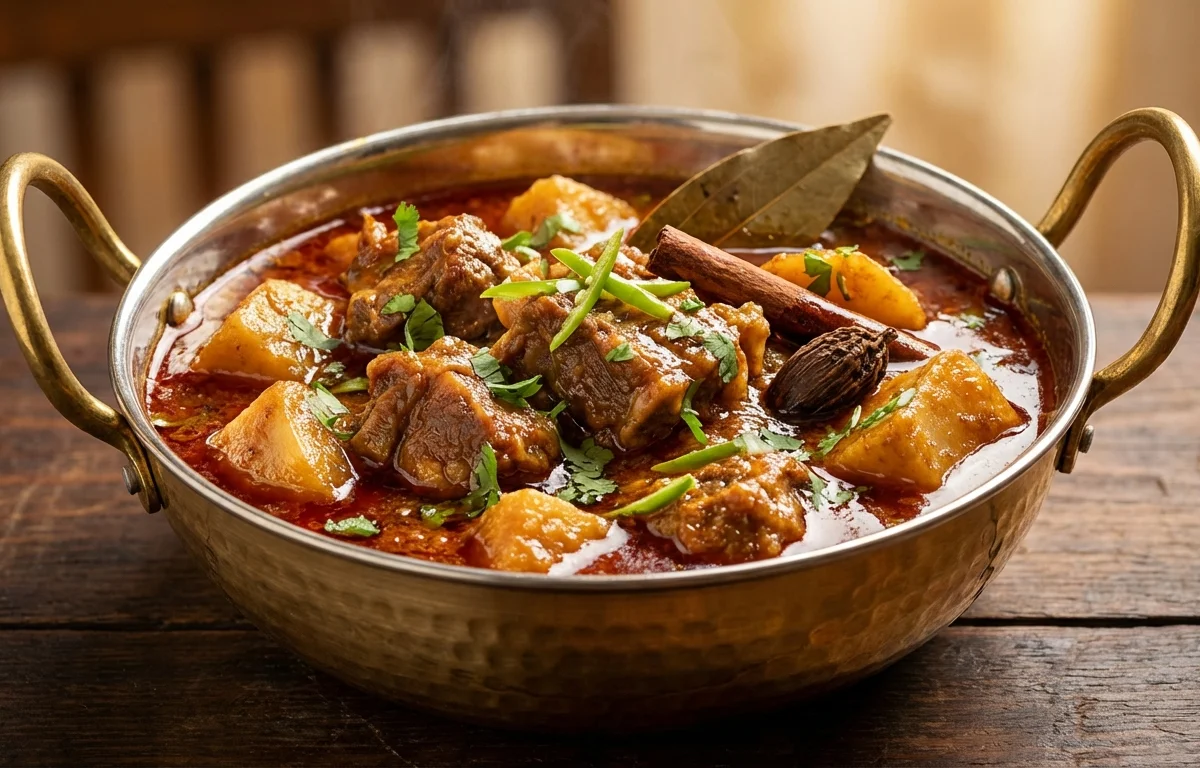
Tender chunks of mutton slow-cooked with colocasia (arbi) in a fragrant onion-tomato gravy. The arbi absorbs the rich meaty flavors while staying melt-in-the-mouth soft, creating a rustic, hearty curry that pairs beautifully with steamed rice or warm rotis.
For 4 servings
- prep · ~15 min
Clean and marinate the mutton.
Wash the mutton pieces well. Mix with ginger-garlic paste, yogurt, red chili powder, turmeric powder, and salt. Set aside for 15 minutes while you prepare the other ingredients.
- fry · ~7 min
Fry the arbi slices until golden.
1.Heat 2 tbsp oil in a frying pan over medium heat.2.Add the arbi slices and shallow fry until golden brown on both sides (5-7 minutes).3.Remove and set aside on a plate.TIPDo not overcrowd the pan — fry arbi in batches for even browning. - temper · ~1 min
Make the tempering with whole spices.
1.Heat the remaining 2 tbsp oil in a heavy-bottomed pot over medium heat.2.Add bay leaves, black cardamom, cinnamon stick, cloves, and cumin seeds.3.Let them sizzle and release their aroma (30-40 seconds).TIPDo not let the whole spices burn — they turn bitter quickly. - saute · ~20 min
Caramelize the onions and build the masala base.
1.Add sliced onions to the pot. Cook until deep golden brown, stirring frequently (8-10 minutes).2.Add the marinated mutton and cook on high for 3-4 minutes to sear the meat.3.Add coriander powder and cumin powder. Stir and cook for 2 minutes.4.Add chopped tomatoes and green chilies. Cook until tomatoes soften and oil separates (5-6 minutes). - pressure cook · ~25 min
Pressure cook the mutton until tender.
1.Pour 1 cup water into the pot and stir well.2.Close the pressure cooker lid and cook on medium heat for 4-5 whistles.3.Let the pressure release naturally before opening the lid.TIPNatural pressure release keeps the mutton tender and stops it from toughening. - simmer · ~10 min
Add fried arbi and finish the curry.
1.Gently add the fried arbi slices to the cooked mutton.2.Simmer on low heat for 8-10 minutes so the arbi absorbs the gravy.3.Check consistency — add a splash of water if the gravy is too thick.TIPStir gently after adding arbi. It is soft and can break apart if handled roughly. - garnish · ~1 min
Finish with garam masala and fresh coriander.
Sprinkle garam masala over the curry and gently mix. Turn off the heat and garnish with chopped coriander leaves. Let it rest for 5 minutes before serving.
What to keep in mind.
7 tips from the recipe — small details that make a real difference to the final dish.
- 1Fry the arbi until deep golden — this prevents it from turning mushy during simmering.
- 2Marinate the mutton for at least 15 minutes to tenderize and infuse flavor into the meat.
- 3Let the pressure release naturally after cooking — it keeps the mutton juicy and tender.
- 4Stir gently when adding arbi to the gravy to avoid breaking the soft slices.
- 5Adjust gravy consistency with water after adding arbi — it thickens as it rests.
- 6Caramelize the onions to a deep brown for a richer, sweeter masala base.
- 7Make this a day ahead — the flavors meld and deepen overnight.
Adapt it for your goals.
Chicken variation
Replace mutton with 500 g bone-in chicken (legs or thighs). Reduce pressure cooking to 2-3 whistles — chicken cooks faster. Great for a quicker, lighter weeknight version.
low oilLow-oil
Use only 1 tbsp oil for tempering and skip shallow-frying the arbi — instead, parboil the arbi slices for 5 minutes before adding to the gravy. Reduces oil while keeping the dish hearty.
veganVegan
Substitute mutton with 300 g paneer (cubed) or 400 g firm tofu, and replace yogurt with 3 tbsp cashew paste. Pressure cooking is not needed — simmer for 15 minutes after adding the base. A plant-based twist that keeps the creamy texture.
extra spicyExtra-spicy
Double the red chili powder and green chilies, and add 1 tsp chili flakes with the garam masala. Perfect for those who love intense heat alongside the rich gravy.
Why this is on our healthy list.
Rich in Iron and Zinc
Mutton provides easily absorbable heme iron and zinc, essential for oxygen transport and immune function.
Good Source of Dietary Fiber
Colocasia (arbi) supplies dietary fiber that aids digestion and supports gut health, especially when the skin is well scrubbed.
Anti-inflammatory Spices
Turmeric, ginger, and cumin in this curry contain bioactive compounds with anti-inflammatory and antioxidant properties.
Protein-Packed Meal
Each serving delivers around 25-30 g of high-quality animal protein from mutton, supporting muscle repair and satiety.
Frequently asked questions
Yes, but bone-in pieces add more flavor and natural gelatin to the gravy. If using boneless, reduce pressure cooking to 3-4 whistles and expect a slightly thinner gravy.