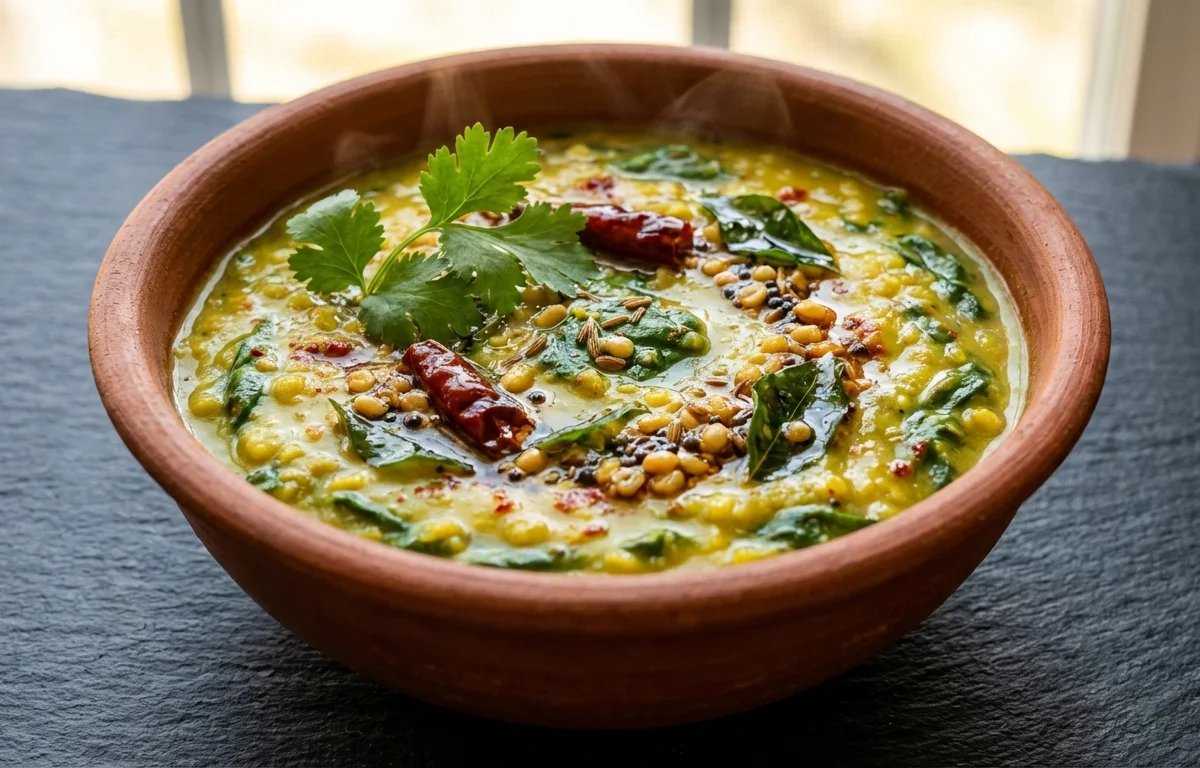
Bachali Kura Pappu
A homestyle Andhra dal where soft toor dal cooks with tender malabar spinach, green chili, and tomato. It turns creamy, earthy, and lightly tangy, with a simple garlic tempering that makes it especially good with hot rice.
For 4 servings
- prep · ~10 min
Prep the dal and greens.
1.Rinse the toor dal until the water runs mostly clear.2.Wash the bachali kura well and chop the leaves with the tender stems.3.Chop the tomato and slit the green chili. - pressure cook · ~20 min
Pressure cook the dal with the greens.
1.Add toor dal, bachali kura, tomato, green chili, turmeric powder, salt, and water to a pressure cooker.2.Mix once and close the lid.3.Pressure cook on medium heat for 4 whistles, then let the pressure drop naturally.TIPNatural pressure release helps the dal finish cooking gently and keeps the greens from tasting harsh. - mix · ~3 min
Mash the cooked dal.
Open the cooker and mash the dal and greens lightly with the back of a ladle until creamy but still a little textured. If it looks too thick, add a splash of water and mix well.
- temper · ~3 min
Make the tempering.
1.Heat oil in a small pan over medium heat.2.Add mustard seeds and let them splutter.3.Add cumin seeds, garlic, and dried red chili.4.Cook until the garlic turns light golden and smells fragrant.TIPDo not darken the garlic too much or the tempering will taste bitter. - assemble · ~2 min
Pour the tempering over the dal.
Pour the hot tempering over the mashed bachali kura pappu and mix it in. Simmer for 2 minutes if needed to bring everything together.
- serve
Serve hot with rice.
What to keep in mind.
6 tips from the recipe — small details that make a real difference to the final dish.
- 1Chop only the tender bachali stems; thicker stems can stay stringy even after pressure cooking.
- 2Let the pressure drop naturally so the toor dal finishes softening and the greens lose any raw edge.
- 3Mash lightly, not fully smooth; a bit of texture makes this pappu feel more homestyle and pairs better with rice.
- 4If the dal thickens after resting, loosen it with hot water and simmer briefly before serving.
- 5Fry the garlic just to light golden in the tempering; deeper browning can make the finish bitter.
- 6For make-ahead, cook the dal base first and add the fresh tempering just before serving for the best aroma.
Adapt it for your goals.
Spicier
Add 1-2 extra green chilies or an extra dried red chili in the tempering for a hotter Andhra-style finish.
no garlicNo-garlic
Skip the garlic in the tempering for a simpler flavor profile while keeping the mustard, cumin, and red chili aroma.
thicker rice mix styleThicker-rice-mix style
Use slightly less water and mash a bit more if you want a thicker pappu meant to be mixed with hot rice and ghee.
moong dalMoong-dal
Replace part or all of the toor dal with moong dal for a softer, lighter version that cooks even faster.
Why this is on our healthy list.
Dal and Greens Balance
Toor dal brings plant protein, while bachali kura adds leafy-green nourishment, making this a satisfying everyday meal.
Fiber-Rich Ingredients
The combination of lentils, malabar spinach, and tomato provides fiber that helps make the dish filling and hearty.
Moderate Oil Cooking
Most of the dish is pressure-cooked with water, and only a small tempering is used for flavor.
Frequently asked questions
Yes. Simmer the dal with the greens, tomato, chilies, turmeric, salt, and water in a pot until the toor dal turns very soft, then mash and temper as usual.



.webp)