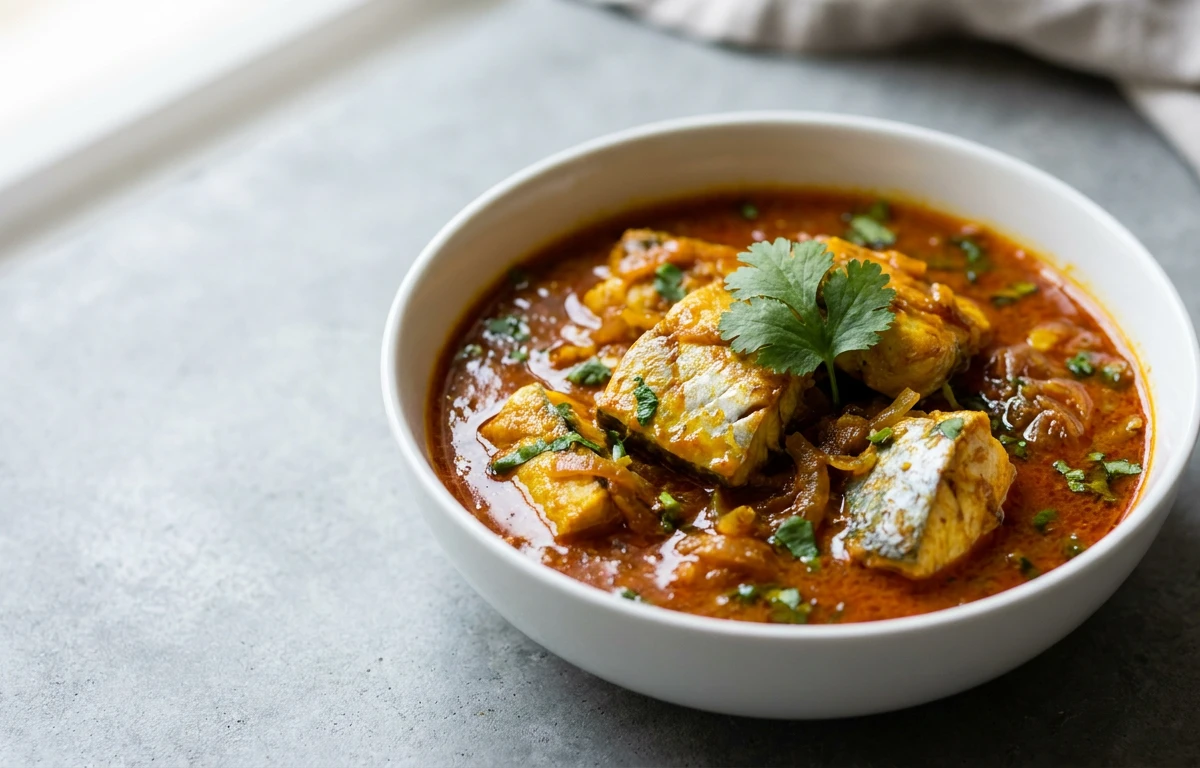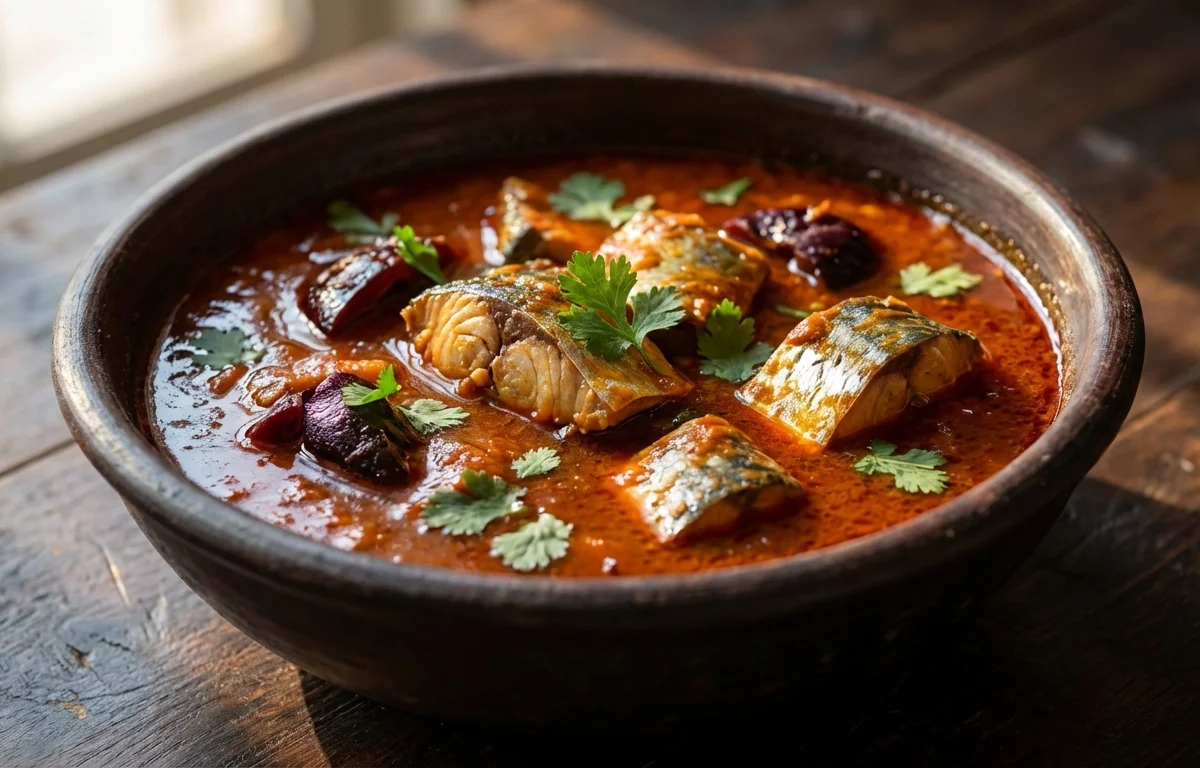
Bangda Ambat
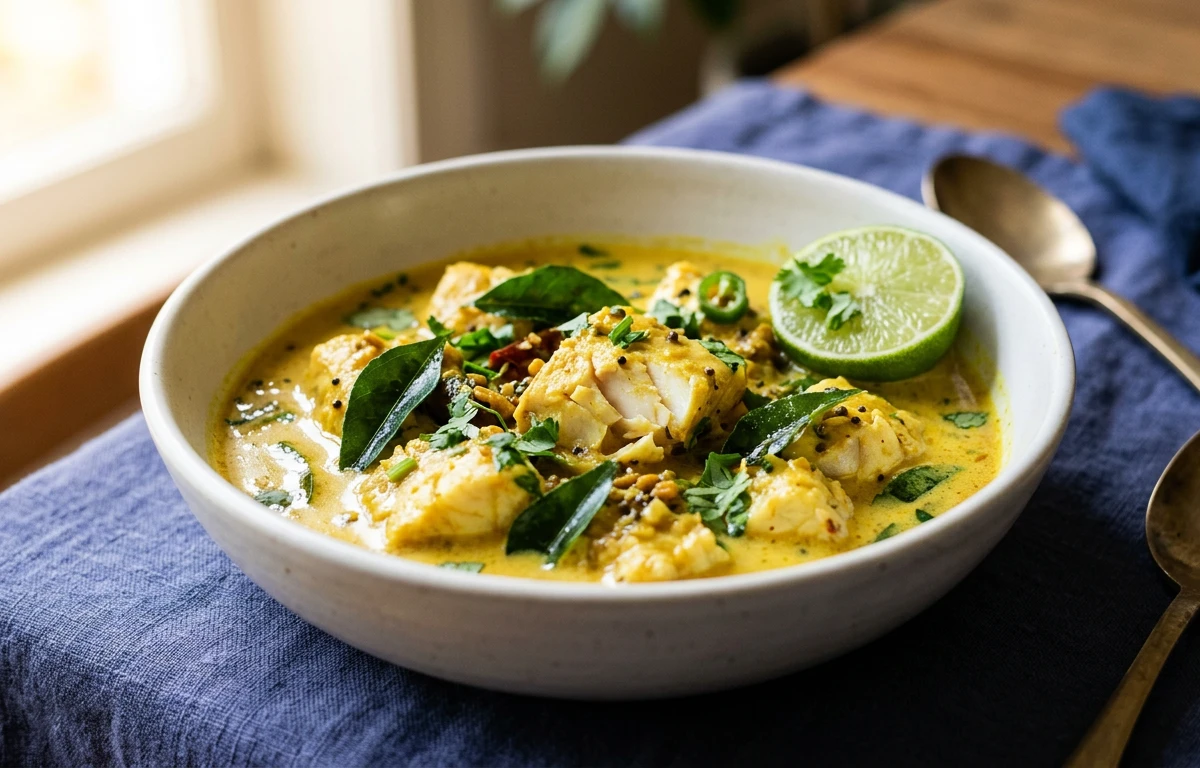
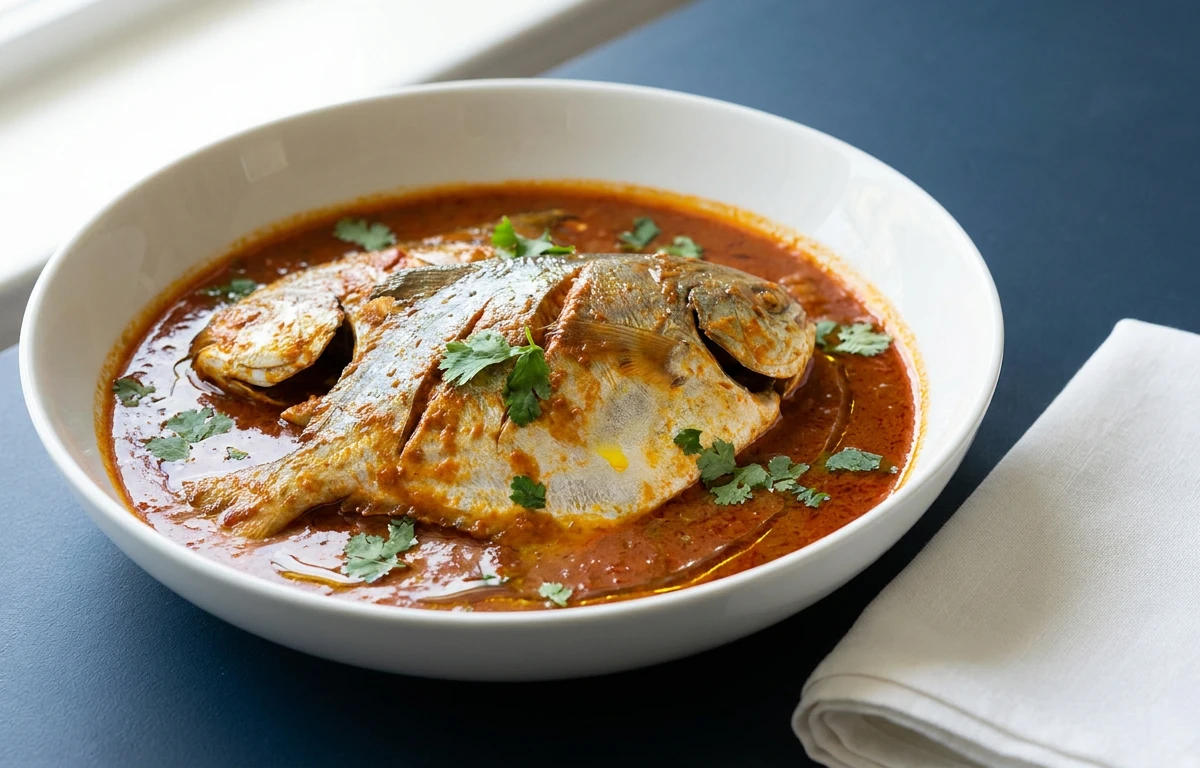
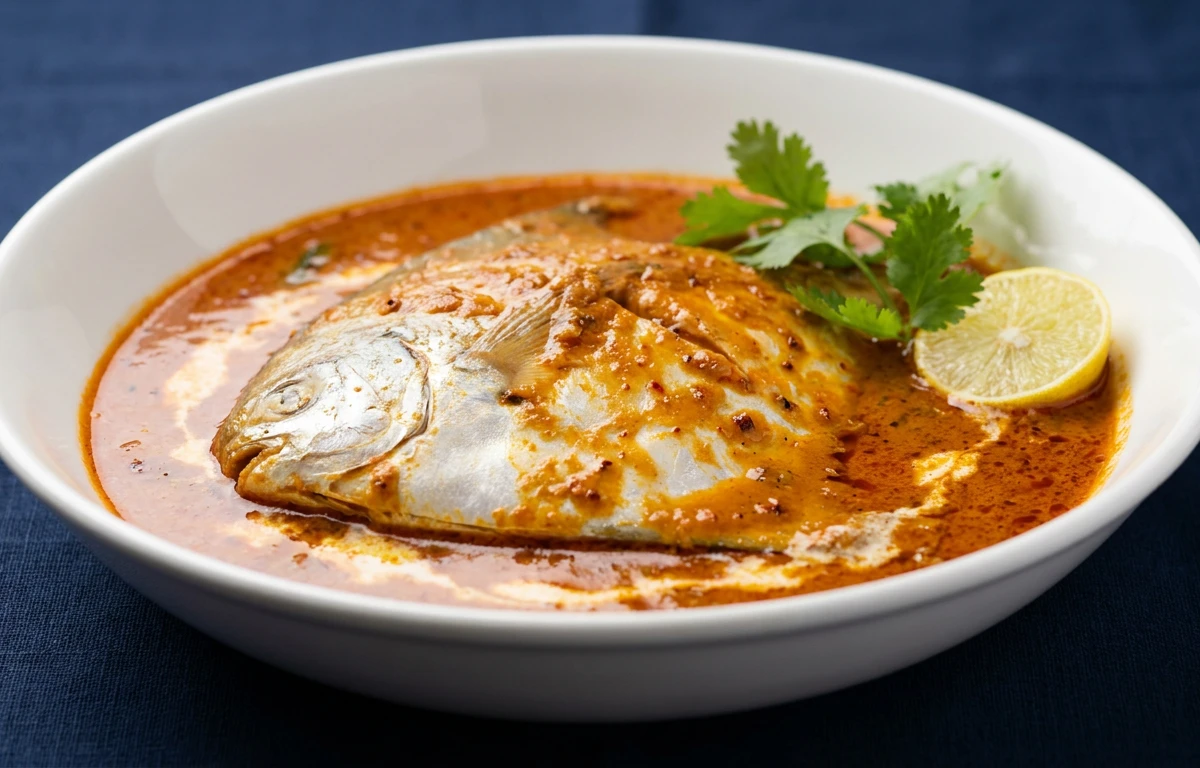
A tangy, coconut-rich Goan mackerel curry that balances the bold, oily flavor of fresh bangda with the subtle heat of Kashmiri chilies and the tartness of tamarind. This coastal staple comes together quickly in one pot, delivering a deeply comforting gravy that pairs beautifully with steamed rice.
For 4 servings
- prep · ~10 min
Soak tamarind and kokum.
1.Soak tamarind in 3 tbsp warm water for 10 minutes. Squeeze out the pulp and discard the fibres.2.Soak kokum in 2 tbsp warm water for 5 minutes. Keep aside. - prep · ~3 min
Grind the coconut masala paste.
1.In a mixer grinder, add grated coconut, Kashmiri red chilies, turmeric powder, and extracted tamarind pulp.2.Add 0.5 cup water and grind to a very smooth, fine paste. Set aside.TIPGrind until you see oil specks releasing from the coconut — that's when you know it's silky smooth. - temper · ~7 min
Start the curry base.
1.Heat coconut oil in a heavy-bottomed pot over medium heat.2.Add chopped onion and slit green chilies. Sauté until onions turn translucent (3-4 minutes).3.Pour in the ground coconut masala paste and sauté for 2 minutes until fragrant. - simmer · ~10 min
Simmer the gravy.
1.Add the remaining 1.5 cups of water to the pot and stir well.2.Add salt and the soaked kokum along with its water.3.Bring the gravy to a gentle boil, then reduce heat and simmer for 8-10 minutes until the raw smell of coconut disappears and the gravy slightly thickens.TIPDon't rush this simmer — it's crucial for mellowing the coconut and blending the flavors. - simmer · ~8 min
Cook the mackerel steaks.
Gently slide the mackerel steaks into the simmering gravy. Cook on low heat for 6-8 minutes without covering, until the fish is just cooked through and flakes easily.
TIPNever stir aggressively or the mackerel will break apart. Gently shake the pot instead. - rest · ~5 min
Rest the curry before serving.
Turn off the heat and let the curry rest for 5 minutes. This allows the fish to absorb the tangy, spicy flavors.
TIPBangda Ambat tastes even better after a few hours — the flavors deepen beautifully. - garnish
Garnish with fresh coriander and serve hot with steamed rice.
What to keep in mind.
6 tips from the recipe — small details that make a real difference to the final dish.
- 1Use fresh mackerel for the best flavor; frozen fish may turn mushy.
- 2Grind the coconut masala to a silky smooth paste until you see oil specks.
- 3Simmer the gravy until the raw coconut smell disappears for a well-rounded taste.
- 4Slide the mackerel steaks gently into the gravy and never stir aggressively.
- 5Let the curry rest for 5 minutes after cooking to help the fish absorb the flavors.
- 6For deeper taste, prepare the curry a few hours ahead and reheat gently before serving.
Adapt it for your goals.
Low-oil
Reduce coconut oil to 1 teaspoon and use a non-stick pan. The coconut in the masala still provides richness, making this a lighter version without sacrificing authentic flavor.
high proteinHigh-protein
Substitute half the mackerel with firm white fish like kingfish or pomfret for a different texture while keeping the protein content high.
jainJain
Omit the mackerel and kokum. Use raw mango pieces instead of kokum for sourness. The coconut-based gravy remains satisfying and tangy.
Why this is on our healthy list.
Rich in Omega-3 Fatty Acids
Mackerel is an excellent source of omega-3s which support heart and brain health.
Good Source of Antioxidants
Kashmiri red chilies and turmeric provide curcumin and capsaicin with anti-inflammatory properties.
Digestive Aid from Tamarind
Tamarind and kokum are natural digestives commonly used in coastal Indian cooking.
Frequently asked questions
Yes, but thaw it completely in the refrigerator and pat dry before cooking to prevent the curry from becoming watery.