Bhee Aloo Sabzi
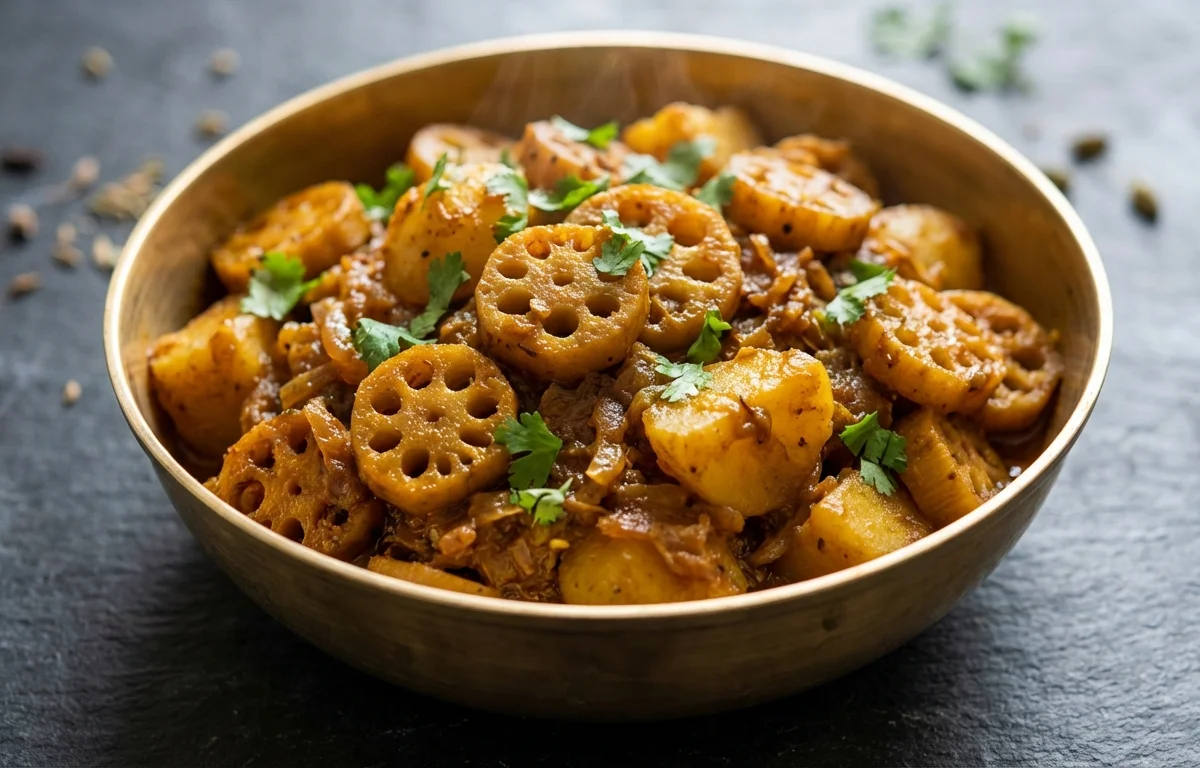
Tender lotus stem and potato cooked with everyday spices until lightly coated and flavorful. This homestyle North Indian sabzi is earthy, comforting, and pairs beautifully with roti or dal as part of a simple meal.
For 4 servings
- prep · ~20 min
Clean and cut the bhee and potatoes.
1.Peel the lotus stem and rinse it well, cleaning inside the holes.2.Slice the lotus stem into thin rounds.3.Peel the potato and cut it into small cubes.4.Chop the onion and tomatoes, slit the green chilies, and grate the ginger.TIPSlice the lotus stem evenly so it cooks at the same rate and stays tender. - boil · ~12 min
Boil the bhee and potatoes until just tender.
Add the lotus stem, potato, water, and half of the salt to a pan. Bring to a boil and cook until both are just tender but not mushy, about 10-12 minutes. Drain well.
TIPDo not overboil the bhee; it should hold its shape for the final sauté. - saute · ~11 min
Cook the masala base.
1.Heat oil in a pan over medium heat.2.Add cumin seeds and let them sizzle for 20-30 seconds.3.Add onion and cook until light golden, 4-5 minutes.4.Add ginger and green chili, then sauté for 30 seconds.5.Add tomato, turmeric powder, red chili powder, coriander powder, and the remaining salt.6.Cook until the tomatoes soften and the masala looks thick, 4-5 minutes. - saute · ~8 min
Add the bhee and potatoes.
Add the drained lotus stem and potatoes to the pan. Mix well so the masala coats everything evenly, then cook on medium-low heat for 6-8 minutes, stirring gently now and then.
TIPStir gently so the potato pieces do not break and turn pasty. - garnish · ~1 min
Finish with garam masala, amchur, and cilantro.
Sprinkle in the garam masala and dry mango powder, then toss well for 1 minute. Turn off the heat and garnish with cilantro.
- serve
Serve the Bhee Aloo Sabzi hot.
What to keep in mind.
7 tips from the recipe — small details that make a real difference to the final dish.
- 1Clean the lotus stem holes thoroughly under running water so no grit remains in the slices.
- 2Boil the bhee and potatoes only until just tender; they will cook further in the masala.
- 3Drain the boiled vegetables very well to prevent the sabzi from turning watery in the pan.
- 4Cook the onion until light golden, not deeply brown, so the dish stays homestyle and balanced.
- 5Let the tomato masala turn thick before adding the bhee, or the coating will taste raw.
- 6Stir gently after adding the potatoes so the cubes stay intact and don't mash into the masala.
- 7Add amchur and garam masala right at the end to keep their aroma bright and fresh.
Adapt it for your goals.
No-onion-no-garlic
Skip the onion and build the masala with extra tomato, ginger, cumin, and coriander for a simple fasting-style or satvik-friendly version.
dry sabziDry-sabzi
Cook a few minutes longer on low heat after adding the vegetables for a drier roast-style sabzi that pairs especially well with paratha.
spicierSpicier
Increase green chili and red chili powder slightly for a sharper heat that suits the earthy bhee and mild potato.
peas addedPeas-added
Add a handful of green peas with the boiled vegetables for extra sweetness, color, and texture.
Why this is on our healthy list.
Fiber-Rich Vegetables
Lotus stem, potato, onion, and tomato together make this sabzi satisfying and naturally rich in plant fiber.
Plant-Based Meal Option
Made entirely from vegetables, spices, and oil, this sabzi fits easily into a vegetarian everyday meal.
Digestive Spice Support
Ginger, cumin, and coriander are traditional spices that add flavor while making the dish feel lighter and more balanced.
Frequently asked questions
It should be just tender when pierced but still hold its round shape. If it feels mushy after boiling, it has gone too far.



.webp)