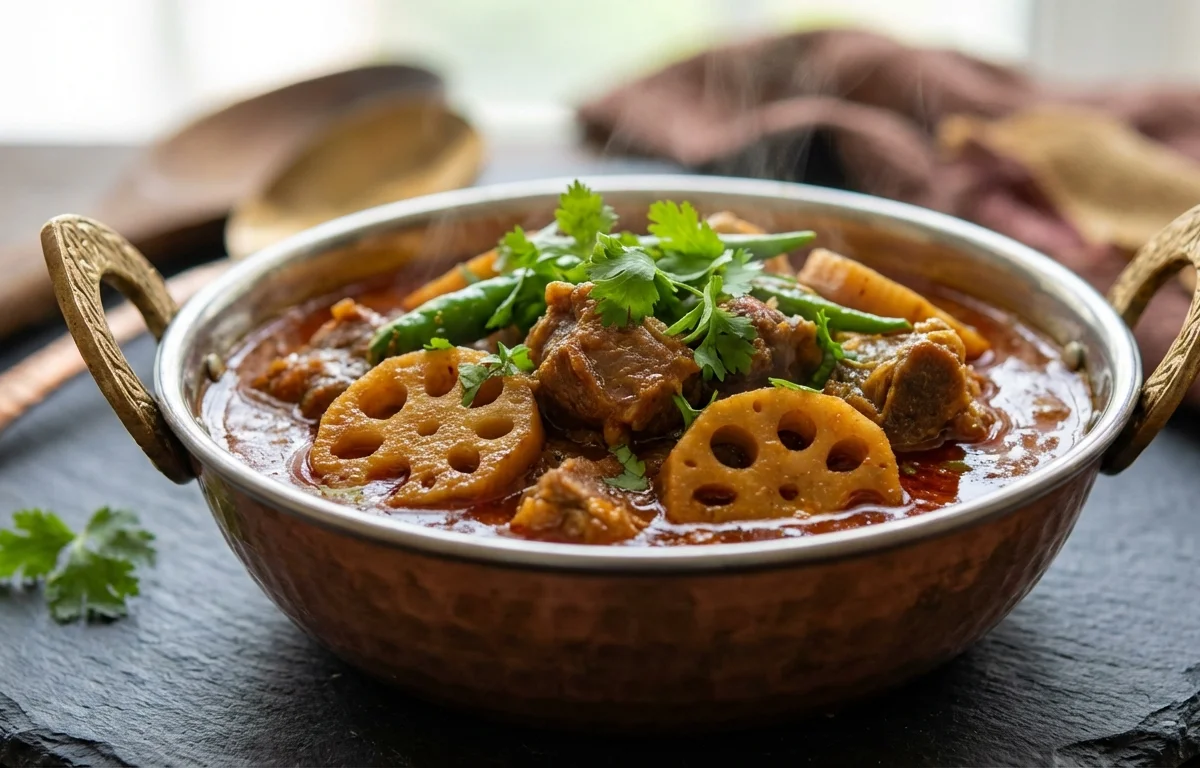
Bhee Gosht
Tender mutton slow-cooked with crisp lotus stem in a fragrant yogurt-based gravy. A beloved Kashmiri Pandit delicacy where the earthy sweetness of lotus stem balances the rich, spiced meat curry. Perfect with steamed rice on a cold winter afternoon.
For 4 servings
- prep
Prepare the lotus stem.
Peel the lotus stem and slice into thin even rounds about ½ cm thick. Soak the slices in a bowl of cold water to prevent discoloration.
TIPChoose fresh lotus stems that are firm and heavy for their size. Avoid any with dark spots or soft texture. - fry · ~10 min
Fry the lotus stem rounds.
Drain the lotus stem slices and pat dry with a clean kitchen towel. Heat 1 tablespoon of mustard oil in a heavy-bottomed pan until it reaches smoking point. Reduce heat to medium and shallow fry the lotus stem rounds in batches until golden and crisp on both sides. Remove with a slotted spoon and drain on paper towels.
TIPEnsure the oil is hot enough before frying to prevent the lotus stem from absorbing too much oil and becoming soggy. - pressure cook · ~20 min
Pressure cook the mutton.
1.Heat 1 tablespoon of mustard oil in a pressure cooker over high heat until smoking.2.Add the mutton pieces and sear in batches until browned on all sides (about 4-5 minutes).3.Return all mutton to the cooker. Add 2 cups of water and 0.25 teaspoon of salt.4.Close the lid and pressure cook for 15-20 minutes or approximately 4-5 whistles on medium heat until the mutton is tender.5.Let the pressure release naturally. - temper · ~2 min
Begin the tempering in a separate pan.
1.Heat the remaining 1 tablespoon of mustard oil in a heavy-bottomed pan until it reaches smoking point.2.Reduce heat to low. Add cumin seeds and asafoetida. Let them sizzle for 10 seconds.3.Add bay leaves, cinnamon stick, green cardamoms, black cardamom, and cloves. Sauté for 30 seconds until fragrant.TIPHeating mustard oil to smoking point removes its raw pungency and makes it sweet and mellow. - saute · ~10 min
Sauté the onions until golden.
Add the sliced onions to the pan. Cook over medium heat, stirring frequently, until they turn a deep golden brown. This should take about 8-10 minutes. Add a splash of water if they start to stick.
- saute · ~2 min
Cook the spice powders.
1.Add turmeric powder, red chili powder, fennel powder, and ginger powder to the onions.2.Sauté on low heat for 1 minute until the raw aroma disappears and you see the oil separating from the masala.3.Ensure the heat is low to prevent the powdered spices from burning.TIPIf the masala starts to burn, add a tablespoon of water to deglaze the pan and cool it down instantly. - simmer · ~5 min
Incorporate yogurt into the masala.
Take the pan off the heat. Let it cool for 30 seconds. Add the whisked yogurt in a steady stream, stirring continuously and vigorously to prevent the yogurt from curdling. Once fully incorporated, return the pan to low heat and cook for 2-3 minutes, stirring until the gravy releases a glossy sheen of oil.
TIPAlways whisk the yogurt until completely smooth and remove the pan from heat before adding it. This prevents the yogurt from curdling. - simmer · ~15 min
Simmer mutton in the yogurt gravy.
Add the pressure-cooked mutton along with its cooking liquid to the yogurt masala. Stir in the remaining 0.25 teaspoon of salt. Bring to a gentle boil, then reduce the heat to low. Cover and simmer for 15 minutes, allowing the mutton to soak up all the flavors of the gravy.
- simmer · ~7 min
Add fried lotus stem and finish.
Gently fold the fried lotus stem rounds into the simmering curry. Continue to simmer for another 5-7 minutes. The lotus stem should soften slightly but still retain a gentle bite. Taste and adjust salt if needed.
TIPDo not over-simmer after adding the lotus stem or it will turn mushy and lose its delightful texture. - garnish
Garnish and serve hot.
Remove the pan from heat. Discard the bay leaves if desired. Garnish generously with freshly chopped coriander leaves and serve the Bhee Gosht hot in a serving bowl.
TIPBhee Gosht tastes even better the next day as the flavors deepen. Reheat gently on the stovetop with a splash of water.
What to keep in mind.
7 tips from the recipe — small details that make a real difference to the final dish.
- 1Soak sliced lotus stem in cold water immediately after cutting to prevent discoloration and maintain crispness.
- 2Heat mustard oil to smoking point before frying or tempering to mellow its sharp, raw flavor.
- 3Pat lotus stem slices completely dry before frying to ensure they turn golden and crisp, not soggy.
- 4Remove the pan from heat before adding yogurt to the masala to prevent curdling; stir continuously.
- 5Add the fried lotus stem only at the end and simmer briefly to keep its tender-crunchy texture.
- 6Pressure-cook mutton until fork-tender but not falling apart so it holds its shape in the gravy.
- 7Let the pressure release naturally from the cooker for juicier, more tender mutton.
Adapt it for your goals.
Low-oil
Reduce mustard oil to 2 tablespoons total: use 1 for frying the lotus stem (shallow-fry in less oil or air-fry at 180°C for 8 minutes) and 1 for the tempering. Ideal for those watching calorie intake while keeping the authentic flavor.
high proteinHigh-protein
Swap mutton with equal weight of boneless chicken thighs or lean goat meat to bump protein content and reduce cooking time. Chicken will cook in the pressure cooker in just 10 minutes, making this a quicker weekday meal.
jainJain
Omit the mutton, garlic, and onion. Use lotus stem as the hero, increase the quantity to 400 g, and add a pinch of hing (asafoetida) along with the cumin in the tempering. Replace yogurt with plant-based yogurt to keep it Jain-compliant.
veganVegan
Replace mutton with 300 g of firm tofu (cubed and pan-seared until golden) and use full-fat coconut yogurt instead of dairy yogurt. The tofu will absorb the spiced gravy beautifully, and coconut yogurt adds a subtle sweetness that complements fennel and cardamom.
quick weeknightQuick-weeknight
Use boneless lamb or beef stew meat and skip pressure-cooking by simmering the mutton in the yogurt gravy on the stovetop for 45 minutes after browning. The lotus stem can be fried while the meat simmers, saving 15 minutes of active time.
Why this is on our healthy list.
Rich in Dietary Fiber
Lotus stem provides a good amount of dietary fiber, which aids digestion and promotes gut health, especially when combined with the natural probiotics in yogurt.
High-Quality Animal Protein
Mutton is an excellent source of complete protein and essential amino acids, supporting muscle repair and satiety. The dish also provides iron and zinc from the meat.
Antioxidant Spices
Turmeric, fennel, cumin, and cardamom are all rich in antioxidants and anti-inflammatory compounds that help reduce oxidative stress and support immunity.
Probiotic Benefits from Yogurt
The yogurt in the gravy adds live cultures that contribute to a healthy gut microbiome, helping with digestion and nutrient absorption.
Low in Refined Carbohydrates
This dish contains no added sugar or refined grains, making it suitable for low-carb and diabetic-friendly diets when paired with cauliflower rice or a small portion of basmati rice.
Frequently asked questions
Yes, frozen lotus stem works well. Thaw it completely, pat dry with paper towels, and fry as directed. Note that frozen lotus stem may release more water during frying, so cook a little longer until crisp.