Cabbage Sabzi
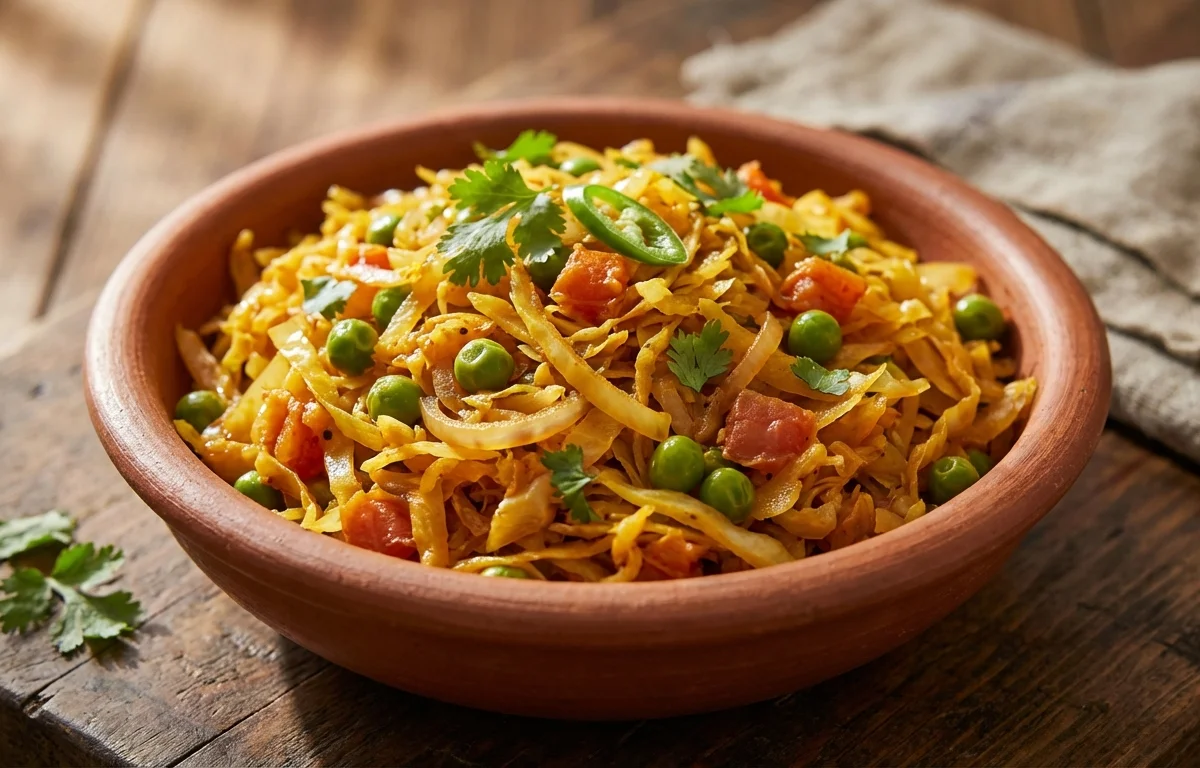
A simple everyday cabbage sabzi made with shredded cabbage, onions, and gentle spices. It cooks quickly, stays light, and pairs well with roti or dal-rice as part of a comforting Indian meal.
For 4 servings
- prep · ~10 min
Prepare the vegetables.
1.Shred the cabbage finely.2.Slice the onion thinly.3.Slit the green chilies and chop the ginger.4.Chop the coriander leaves and keep the lemon juice ready. - temper · ~1 min
Heat the oil and crackle the cumin.
Heat oil in a wide pan over medium heat. Add cumin seeds and let them sizzle for a few seconds until fragrant.
- saute · ~4 min
Cook the onion, chili, and ginger.
Add onion, green chili, and ginger. Sauté for 3 to 4 minutes until the onion turns soft and lightly golden.
- saute · ~1 min
Add the spices.
Add turmeric powder, red chili powder, coriander powder, and salt. Mix well for 20 to 30 seconds so the spices coat the onion without burning.
TIPKeep the heat medium-low once the powdered spices go in so they stay fragrant and do not turn bitter. - saute · ~8 min
Cook the cabbage.
1.Add the shredded cabbage and toss well with the masala.2.Pour in the water and mix once.3.Cover the pan and cook on low heat until the cabbage softens, stirring once or twice.TIPDo not add too much water. Cabbage releases its own moisture and too much liquid will make the sabzi soggy. - saute · ~3 min
Cook until the sabzi turns semi-dry.
Remove the lid and cook for 2 to 3 minutes, stirring gently, until any extra moisture evaporates and the cabbage is tender but not mushy.
- garnish
Finish with coriander leaves and lemon juice.
Turn off the heat. Add coriander leaves and lemon juice, then toss lightly.
- serve
Serve the cabbage sabzi hot.
What to keep in mind.
7 tips from the recipe — small details that make a real difference to the final dish.
- 1Use a wide pan so the cabbage cooks off its moisture instead of steaming and turning soggy.
- 2Shred the cabbage finely and evenly for quick cooking and a soft but not mushy texture.
- 3After adding the powdered spices, keep the heat medium-low so the masala stays fragrant, not bitter.
- 4Add only the listed splash of water; cabbage releases plenty on its own as it cooks.
- 5Cook uncovered at the end until the sabzi looks semi-dry, which helps it pair better with roti.
- 6Stir gently once or twice while covered so the cabbage softens evenly without breaking down too much.
- 7Add lemon juice only after switching off the heat to keep its fresh brightness noticeable.
Adapt it for your goals.
Low-oil
Use 1 tablespoon oil and a good nonstick pan; this keeps the sabzi lighter while still letting the cumin and onions cook properly.
no onionNo-onion
Skip the onion for a simpler, lighter version; increase ginger slightly so the sabzi still has enough aroma.
peasPeas
Add a handful of green peas with the cabbage for a sweeter bite and more color in an everyday meal.
potatoPotato
Add thinly sliced or small diced potato before the cabbage for a heartier sabzi that pairs especially well with roti.
Why this is on our healthy list.
Vegetable-Forward Dish
This sabzi is built mainly from cabbage and onion, making it a simple way to include more vegetables in a regular meal.
Light Everyday Preparation
The recipe uses modest oil, very little water, and no heavy gravies, so the finished dish stays light and easy to pair with dal or roti.
Herbs and Aromatics
Ginger, green chili, cumin, coriander leaves, and lemon juice add flavor without needing rich ingredients.
Frequently asked questions
Use a wide pan, add only a little water, and cook uncovered at the end until the extra moisture evaporates and the sabzi turns semi-dry.