
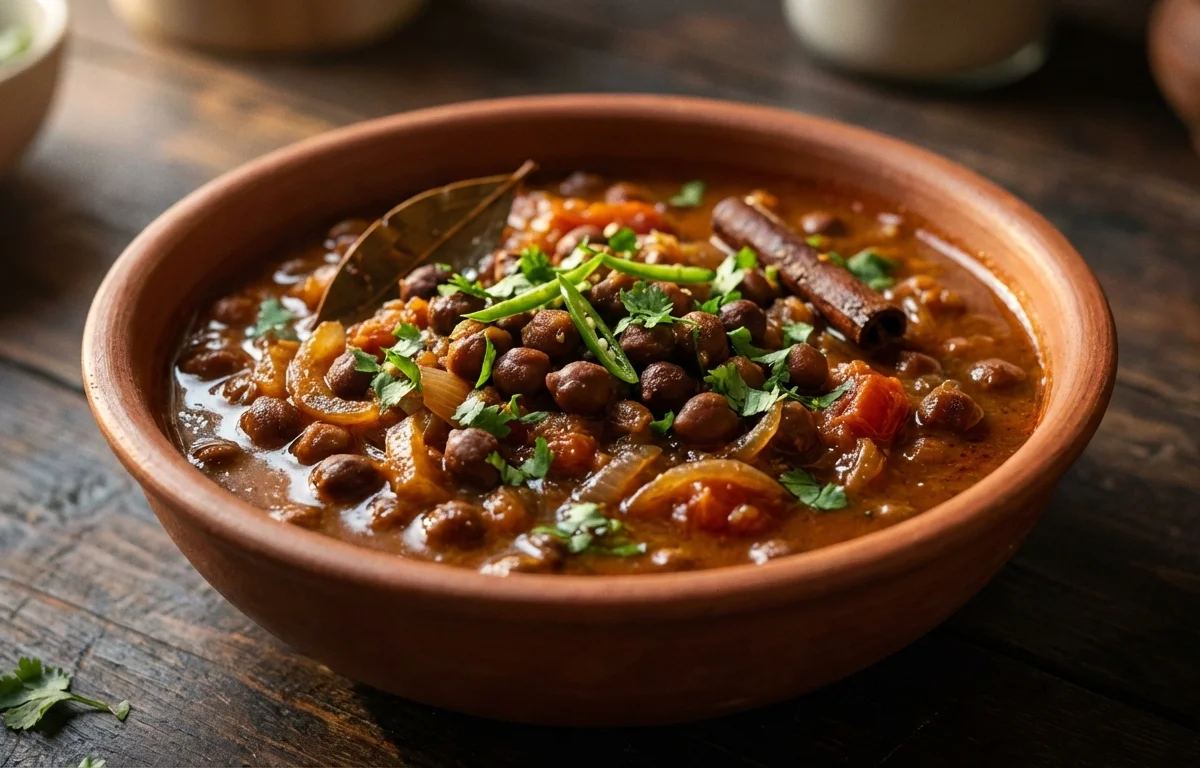
Chana Tarkari
A rustic, home-style chickpea curry from the eastern kitchens of Odisha and Bengal. Tender white chickpeas simmered with potatoes, a handful of tomatoes, and a simple tempering of cumin, green chilies, and bay leaf. It’s light, mildly spiced, and deeply comforting — best enjoyed with steamed rice or a soft bhaat.
For 4 servings
- prep · ~20 min
Soak and cook the chickpeas.
Wash the soaked chana and drain. Place in a pressure cooker with 2 cups of water and pressure cook on medium heat for 15-20 minutes until soft but holding shape. Let the pressure release naturally.
TIPThe chickpeas should mash easily when pressed between fingers — but don't overcook them to a paste. - temper · ~2 min
Make the tempering.
1.Heat mustard oil in a heavy-bottomed pot over medium heat until it reaches smoking point. Reduce heat to low.2.Add cumin seeds, bay leaves, and dried red chilies. Let them splutter and turn fragrant (30 seconds).3.Add slitted green chilies and ginger. Sauté for 1 minute until aromatic.TIPMustard oil must smoke to lose its raw pungency — don't skip this step or the curry will taste sharp. - saute · ~7 min
Cook the tomatoes and spices.
1.Add chopped tomato and stir well.2.Add turmeric powder, red chili powder, and cumin powder. Mix thoroughly.3.Cook until the tomatoes soften and the oil starts to separate from the masala (5-7 minutes). Stir occasionally.TIPPatience here pays off — properly sautéed tomatoes give the gravy its body and natural sweetness. - simmer · ~15 min
Combine and simmer the curry.
1.Add the boiled chickpeas along with their cooking liquid and the cubed potatoes to the pot.2.Add 0.5 cup water, salt, and sugar. Stir to combine everything.3.Bring to a gentle simmer, cover, and cook for 12-15 minutes until potatoes are fork-tender and the flavors meld.TIPThe curry thickens as it sits — if it becomes too thick while simmering, add a splash of hot water. - mix · ~1 min
Finish with garam masala.
Uncover, sprinkle garam masala on top, and give a gentle stir. Simmer for 1 more minute, then switch off the heat.
- garnish
Garnish with fresh coriander leaves and serve hot.
Transfer to a serving bowl, scatter chopped coriander leaves on top. Serve with steamed rice or soft roti.
What to keep in mind.
5 tips from the recipe — small details that make a real difference to the final dish.
- 1Soak the chickpeas overnight for at least 8 hours to ensure even cooking and a creamy texture.
- 2Mustard oil must be heated until it just begins to smoke to mellow its pungent flavor — do not skip this.
- 3Cook the tomato masala until oil visibly separates from the mixture; this builds the gravy's body.
- 4Add the potatoes after the chickpeas so they cook evenly and don't turn mushy.
- 5Let the curry rest for 10 minutes after cooking — the flavors deepen and the gravy thickens naturally.
Adapt it for your goals.
Vegan
This recipe is already vegan as written — simply ensure your garam masala is made without any non-vegan additives (most are).
no potatoNo-potato
Omit the potato for a lighter, starch-free curry that lets the chickpeas shine — ideal for low-carb diets.
extra vegetableExtra-vegetable
Add a handful of chopped spinach or green peas in the last 5 minutes of simmering for added color, nutrients, and a subtle sweetness.
quick chana tarkariQuick chana tarkari
Replace dried chickpeas with 2 cans of drained and rinsed canned chickpeas. Reduce water to 1 cup and simmer for only 10 minutes.
Why this is on our healthy list.
High in Plant Protein
Chickpeas are a rich source of plant-based protein, making this curry a filling and muscle-friendly meal for vegetarians.
Good Source of Dietary Fiber
Both chickpeas and potatoes provide soluble and insoluble fiber, supporting healthy digestion and stable blood sugar levels.
Low in Saturated Fat
The recipe uses mustard oil in modest quantity and no cream or butter, keeping the fat profile heart-friendly.
Rich in Antioxidants
Turmeric, cumin, and fresh ginger supply anti-inflammatory compounds and antioxidants that support overall wellness.
Frequently asked questions
Yes — use 2 cans (15 oz each), drained and rinsed. Reduce cooking water to 1 cup and simmer for only 10–12 minutes, as canned chickpeas are already cooked.



-curry.webp)
.webp)