Chepala Pulusu
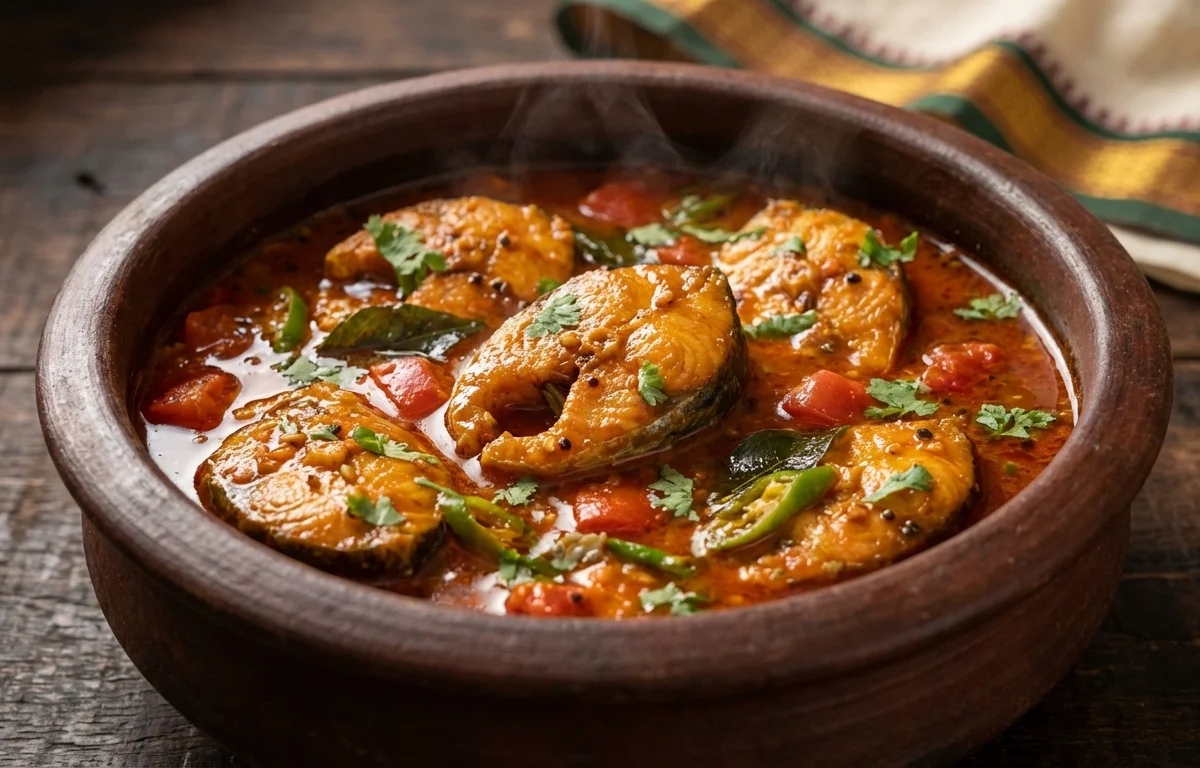
A tangy Andhra-style fish curry simmered with tamarind, onions, tomatoes, and everyday spices. The gravy turns rich and deeply savory as the fish cooks gently, making it perfect with a small bowl of hot rice.
For 4 servings
- prep · ~15 min
Soak the tamarind and prepare the fish.
1.Soak the tamarind in warm water for 15 minutes.2.Clean the fish pieces well and set them aside.3.Squeeze the tamarind and strain out a smooth pulp.4.Slice the onion, chop the tomato, crush the garlic, and slit the green chilies.TIPUse firm fish pieces so they hold their shape while simmering in the sour gravy. - temper · ~7 min
Make the base for the pulusu.
1.Heat the oil in a wide pan over medium heat.2.Add mustard seeds, cumin seeds, and fenugreek seeds.3.When the mustard seeds splutter, add curry leaves.4.Add the onion, garlic, and ginger and cook until the onion softens and turns light golden.TIPKeep the fenugreek seeds brief in the oil so they flavor the curry without turning bitter. - saute · ~6 min
Cook the tomatoes and spices.
1.Add the chopped tomato and green chilies.2.Cook until the tomatoes turn soft and pulpy.3.Add red chili powder, turmeric powder, coriander powder, and salt.4.Mix well and cook for 1 minute so the spices lose their raw smell. - simmer · ~10 min
Add tamarind and make the gravy.
Pour in the tamarind pulp and water, then bring the curry to a gentle simmer. Cook uncovered for 8 to 10 minutes so the raw tamarind taste mellows and the gravy slightly reduces.
TIPA wide pan helps the gravy reduce evenly and lets the fish cook in a single layer. - simmer · ~10 min
Cook the fish gently in the gravy.
Slide the fish pieces into the simmering gravy in a single layer. Cover partially and cook on low heat for 8 to 10 minutes, gently shaking the pan once or twice, until the fish is cooked through and flakes easily.
TIPDo not stir with a spoon after adding the fish or the pieces may break. - rest · ~10 min
Let the curry rest before serving.
Turn off the heat and rest the curry for 10 minutes so the fish absorbs the tamarind and spice flavors.
- garnish
Garnish with cilantro.
- serve
Serve hot with rice.
What to keep in mind.
6 tips from the recipe — small details that make a real difference to the final dish.
- 1Use a wide, shallow pan so the fish can sit in a single layer and cook without breaking.
- 2Do not let the fenugreek seeds darken in the oil; even a small pinch turns the pulusu bitter if overfried.
- 3Simmer the tamarind gravy for a few minutes before adding fish so the raw sourness mellows properly.
- 4Once the fish goes in, shake the pan gently instead of stirring with a spoon to keep the pieces intact.
- 5The curry tastes even better after a 10 to 20 minute rest, when the fish absorbs the tamarind-spice gravy.
- 6If making ahead, reheat on very low heat just until warm; boiling again can toughen the fish and split the pieces.
Adapt it for your goals.
Spicier-andhra
Increase red chili powder slightly or add extra slit green chilies for a hotter, more assertive pulusu that pairs especially well with plain rice.
low oilLow-oil
Reduce the oil a little and cook the onion-tomato base more slowly; useful if you want a lighter everyday fish curry.
rustic clay potRustic-clay-pot
Cook it in a clay pot for a more traditional finish and slower reduction, which gives the gravy a fuller, earthier taste.
boneless fishBoneless-fish
Use firm boneless fish chunks if you want easier serving for children or quick weeknight eating, though steaks give richer flavor.
Why this is on our healthy list.
Good Source of Protein
The fish provides satisfying protein that makes this curry filling while still feeling lighter than many meat-based gravies.
Rich in Aromatic Spices
Garlic, ginger, cumin, mustard, fenugreek, and curry leaves add flavor complexity without needing heavy cream or rich sauces.
Tomato and Tamarind Base
Tomatoes and tamarind create a bright, tangy gravy that adds depth and acidity rather than relying on excess fat.
Frequently asked questions
Use firm fish steaks or sturdy pieces that can handle simmering in sour gravy without falling apart, such as seer fish or other firm white fish.



.webp)