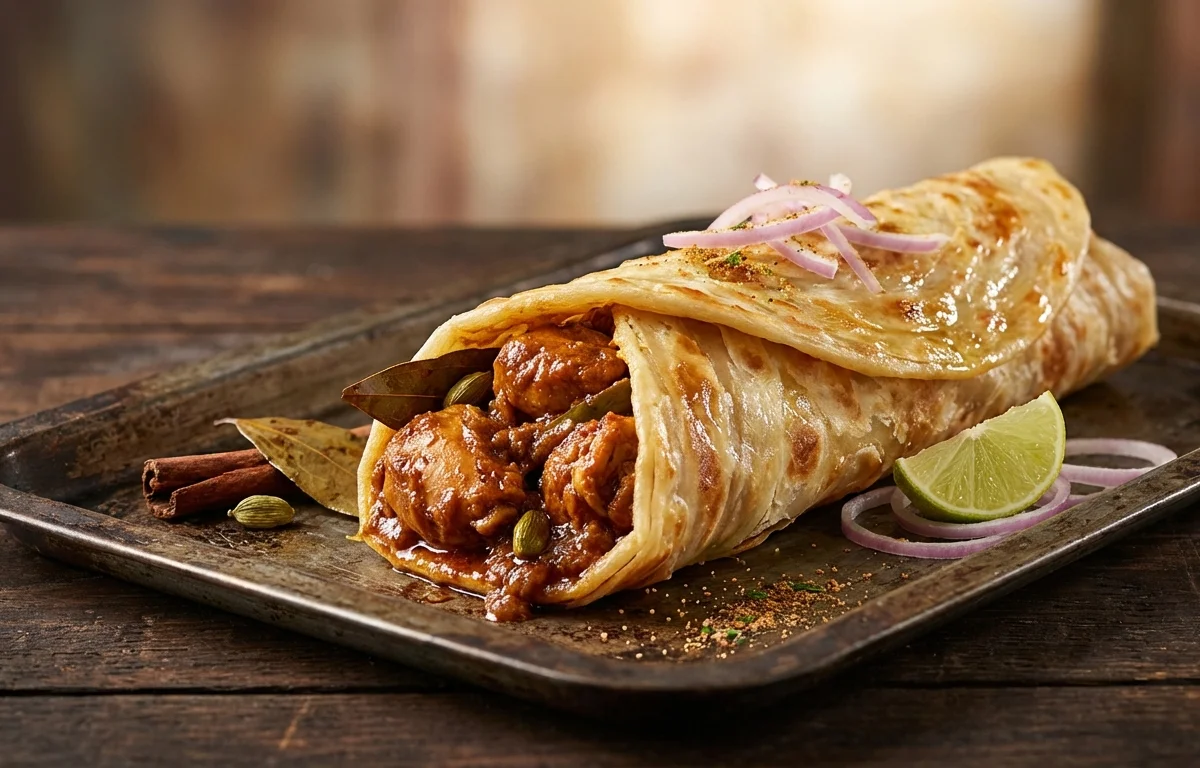
Chicken Kassa Roll
A Kolkata street-food legend wrapped in a flaky paratha. Tender, slow-cooked chicken in a rich, dark, caramelized gravy with bold Bengali spices, rolled up with crunchy onions, green chilies, and a squeeze of lime. It's messy, spicy, and deeply satisfying — the kind of roll you crave at midnight.
For 4 servings
- prep · ~15 min
Marinate the chicken.
In a bowl, combine chicken pieces with whisked yogurt, a pinch of turmeric powder, half the red chili powder, and half the ginger-garlic paste. Mix well, cover, and let it rest for at least 15 minutes.
- knead · ~20 min
Knead the paratha dough.
Mix all-purpose flour, whole wheat flour, a pinch of salt, and 1 tablespoon oil. Gradually add warm water and knead for 5 minutes into a soft, smooth dough. Cover with a damp cloth and rest for 20 minutes.
TIPResting relaxes the gluten, making the parathas easier to roll and flakier when cooked. - temper · ~15 min
Make the kassa tempering.
1.Heat mustard oil in a heavy-bottomed kadai until it reaches smoking point, then cool slightly to remove rawness.2.Add bay leaves, dried red chilies, cardamom, cinnamon, and cloves. Sauté until aromatic (30 seconds).3.Add all the sliced onions and sugar. Cook on medium heat, stirring frequently, until deep golden brown (10-12 minutes).4.Add the remaining ginger-garlic paste and cook until the raw smell disappears (1 minute).TIPCaramelizing the onions until deep brown is the secret to the rich, dark kassa gravy. Don't rush this step. - saute · ~10 min
Cook the masala base.
1.Add chopped tomatoes, remaining red chili powder, cumin powder, and turmeric powder.2.Sauté vigorously, mashing the tomatoes, until the mixture is dry and oil separates from the sides (8-10 minutes).3.Add the marinated chicken pieces. Sear on high heat for 3-4 minutes, turning frequently, until the chicken is no longer pink on the outside. - simmer · ~25 min
Slow-cook the chicken kassa.
1.Add 0.5 cup water and salt. Stir well and bring to a gentle simmer.2.Cover the pan and cook on low heat for 20-25 minutes, stirring occasionally, until the chicken is tender and the gravy clings thickly to the pieces.3.Uncover, increase heat, and dry up any remaining liquid. The final consistency should be a thick, dark, dry-ish coating on the chicken. Sprinkle garam masala, mix, and turn off heat.TIPThe end goal is dry, not runny, so the filling doesn't make the rolled paratha soggy. - fry · ~10 min
Cook the parathas.
1.Divide the rested dough into 4 equal balls.2.Roll each ball out on a lightly floured surface into a thin, roughly 8-inch round.3.Cook on a hot tawa, drizzling 0.5 teaspoon of oil on each side, until golden spots appear and the paratha is flaky and cooked through.TIPFor an authentic street-style roll, make the paratha a bit larger than usual, so it wraps around the filling easily. - assemble · ~2 min
Assemble the chicken kassa roll.
1.Place one hot paratha on a clean surface.2.Spoon a generous portion of the chicken kassa filling in the center.3.Top with a handful of raw sliced onions, a few green chili slices, a sprinkle of chaat masala, and a squeeze of lime juice.4.Fold one end of the paratha over the filling, roll tightly into a wrap, and secure the bottom with parchment paper or foil for clean serving. - serve
Serve immediately while the paratha is warm and crisp.
What to keep in mind.
7 tips from the recipe — small details that make a real difference to the final dish.
- 1For the deepest color, caramelize the onions until they are a rich mahogany brown — this builds the signature dark kassa gravy.
- 2Mustard oil must be heated to smoking point first, then cooled slightly, to mellow its pungent intensity without losing its distinct flavor.
- 3Dry the final chicken kassa well so the gravy clings to the meat; excess moisture will make the rolled paratha soggy.
- 4Rest the paratha dough for at least 20 minutes — this relaxes the gluten and yields a soft, flaky texture.
- 5Roll the paratha slightly larger than usual (about 8-9 inches) to give you enough surface area to encase the filling securely.
- 6Assemble each roll just before serving so the paratha stays crisp and doesn't steam from the hot filling.
- 7Use boneless chicken thighs for tenderness; they stay juicier than breast meat during the long slow-cook.
Adapt it for your goals.
Low-oil
Reduce mustard oil to 1 tablespoon in the tempering and skip the oil drizzle on the parathas; cook on a non-stick pan. You'll lose some richness, but the kassa flavor still shines.
mutton kassa rollMutton kassa roll
Substitute chicken with 500g boneless mutton (goat or lamb). Increase water to 1 cup and simmer for 40-50 minutes until the meat is fork-tender. Great for a heartier version.
egg kathi versionEgg kathi version
Add a beaten egg to the tawa while cooking each paratha, spreading it thin, then fold. This gives you a classic Kolkata-style egg roll with the kassa filling inside.
jain friendlyJain-friendly
Replace onions and garlic with asafoetida (hing) and generous use of ginger, and swap yogurt for a plant-based alternative. The flavor will differ but still be aromatic.
high protein twistHigh-protein twist
Mix in 1/4 cup of paneer cubes or cooked chickpeas along with the chicken. Adds texture and a protein boost without overpowering the original masala.
Why this is on our healthy list.
High in Lean Protein
Boneless chicken thighs provide a excellent source of protein for muscle repair and satiety.
Rich in Antioxidant Spices
Turmeric, cumin, cardamom, and cloves offer anti-inflammatory compounds and help digestion.
Contains Probiotic Yogurt
The yogurt marinade aids in tenderizing the chicken and introduces beneficial gut bacteria.
Good Source of Iron
Chicken thigh meat and the iron-rich spices like cumin and turmeric contribute to a moderate iron content.
Low in Added Sugar
Only a small teaspoon of sugar is used to aid caramelization, keeping the dish relatively low in added sugars.
Frequently asked questions
Yes, but breast meat can dry out during the 25-minute simmer. Reduce cooking time by 5 minutes and check for doneness early.