Dahi Macha
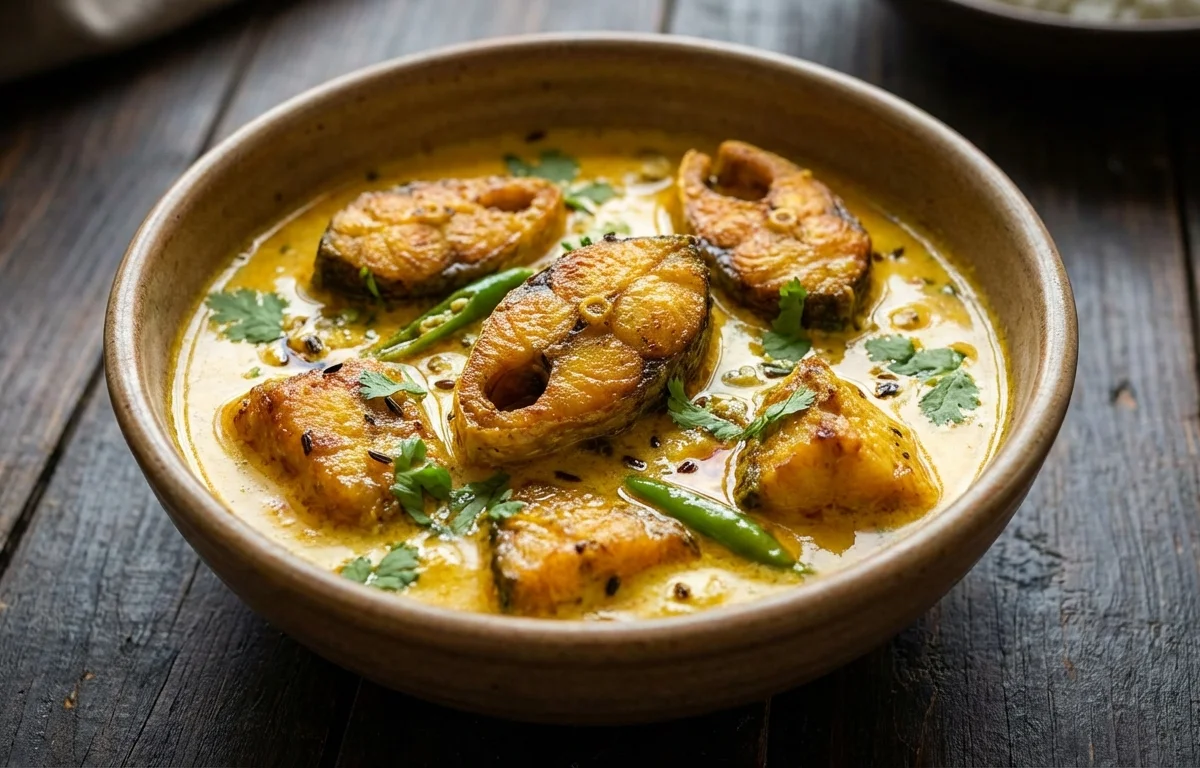
Tender fish simmered in a creamy, spiced yogurt gravy with mustard, cumin, and green chilies. This classic Odia delicacy strikes the perfect balance between tangy and savory, best enjoyed with steamed rice for a comforting homestyle meal.
For 4 servings
- prep · ~10 min
Marinate the fish pieces.
Rub the cleaned fish pieces with a pinch of turmeric powder and a pinch of salt. Set aside for 10 minutes.
- mix · ~2 min
Prepare the yogurt mixture.
In a bowl, whisk the yogurt with the remaining turmeric, red chili powder, and cumin powder until smooth. Keep aside.
- fry · ~5 min
Shallow fry the fish.
1.Heat 2 tbsp mustard oil in a pan until it reaches smoking point, then cool slightly.2.Slide in the fish pieces and shallow fry on medium heat for 2 minutes per side until lightly golden.3.Remove the fish and drain on paper towels.TIPDon't overcrowd the pan — fry the fish in batches if needed to keep them from breaking. - temper · ~1 min
Make the tempering.
1.In the same pan, add the remaining 1 tbsp mustard oil and heat it.2.Add mustard seeds and let them splutter.3.Toss in cumin seeds and let them sizzle for a few seconds. - saute · ~7 min
Sauté the aromatics.
1.Add chopped onions and sauté on medium heat until translucent (4-5 minutes).2.Add minced garlic, grated ginger, and slit green chilies. Sauté for 2 minutes until fragrant.3.Stir in the remaining salt. - simmer · ~7 min
Cook the gravy with yogurt.
1.Reduce the heat to low. Gently pour in the spiced yogurt mixture while stirring continuously.2.Add ½ cup water and bring to a gentle simmer. Cook for 5-7 minutes, stirring occasionally, until the gravy thickens slightly.TIPKeep the heat low after adding yogurt to prevent it from curdling. Constant stirring helps. - simmer · ~7 min
Add the fish back to the gravy.
Gently slide the fried fish pieces into the simmering gravy. Spoon some gravy over them, cover the pan, and cook on low heat for another 5-7 minutes so the fish absorbs the flavors.
TIPDon't stir aggressively once the fish is added — use a spatula gently or simply swirl the pan to avoid breaking the fish. - garnish
Garnish with fresh coriander leaves.
Turn off the heat. Sprinkle chopped coriander leaves on top and let the dish rest for 5 minutes before serving.
What to keep in mind.
7 tips from the recipe — small details that make a real difference to the final dish.
- 1Always use thick, hung yogurt and whisk it until completely smooth to prevent curdling in the gravy.
- 2Let mustard oil reach its smoking point, then cool slightly before frying — this tames its pungency and deepens flavor.
- 3Pat the marinated fish pieces dry with a paper towel before frying to ensure a golden, crisp exterior.
- 4Fry the fish in a single layer without crowding the pan; do it in batches if needed for even browning.
- 5After adding the yogurt mixture, keep the heat on low and stir continuously to maintain a silky, lump-free gravy.
- 6Once the fish goes back into the pan, avoid stirring with a spoon — gently swirl the pan to coat the pieces without breaking them.
- 7Let the finished dish rest for 5 minutes after garnishing so the fish fully absorbs the spices and yogurt sauce.
Adapt it for your goals.
Low-Oil
Reduce the mustard oil to 1 tbsp total — skip shallow frying the fish and instead poach it directly in the yogurt gravy. This cuts calories while keeping the dish tender and tangy.
High ProteinHigh-Protein
Replace half the yogurt with Greek yogurt or hung curd to boost protein content, and add a handful of boiled chana dal for extra texture and nutrition.
Non Fish ProteinNon-Fish Protein
Substitute the rohu fish with firm tofu or paneer cubes (pan-fried until golden) for a vegetarian version that still soaks up the spiced yogurt gravy beautifully.
Coconut TwistCoconut Twist
Add 2 tablespoons of fresh or dried grated coconut along with the yogurt for a subtle sweetness that balances the tanginess — a coastal Odia variation.
Spicier VersionSpicier Version
Increase the green chilies to 5-6 and add ½ teaspoon of crushed black pepper with the cumin powder for an extra layer of heat that pairs well with the creamy yogurt.
Why this is on our healthy list.
Rich in Lean Protein
Rohu fish provides high-quality, easily digestible protein that supports muscle repair and overall body function without excess saturated fat.
Probiotic Support from Yogurt
The yogurt in this dish contains live cultures that aid digestion and promote a healthy gut microbiome when consumed regularly.
Anti-Inflammatory Spices
Turmeric, ginger, and cumin are known for their natural anti-inflammatory and antioxidant properties, contributing to overall wellness.
Heart-Friendly Mustard Oil
Mustard oil is low in saturated fat and high in monounsaturated fats and omega-3s, which can support cardiovascular health when used in moderation.
Low in Added Sugars
This savory dish relies on natural tanginess from yogurt and spices rather than added sugars, making it suitable for balanced eating.
Gluten-Free and Grain-Free
Dahi Macha is naturally free from gluten and grains, making it safe for those with celiac disease or gluten sensitivity.
Frequently asked questions
Curdling usually happens when the heat is too high or the yogurt isn't whisked smooth. Always keep the flame low after adding yogurt and stir continuously to maintain a stable emulsion.