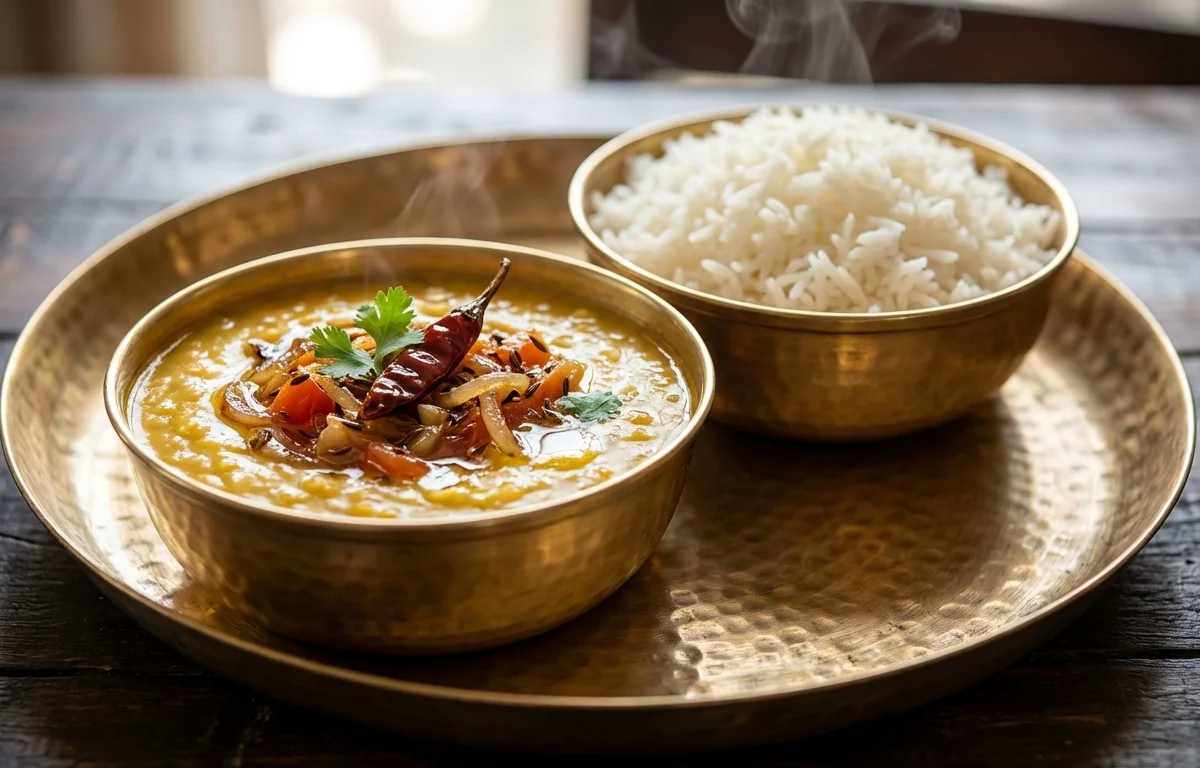
Dal Chawal
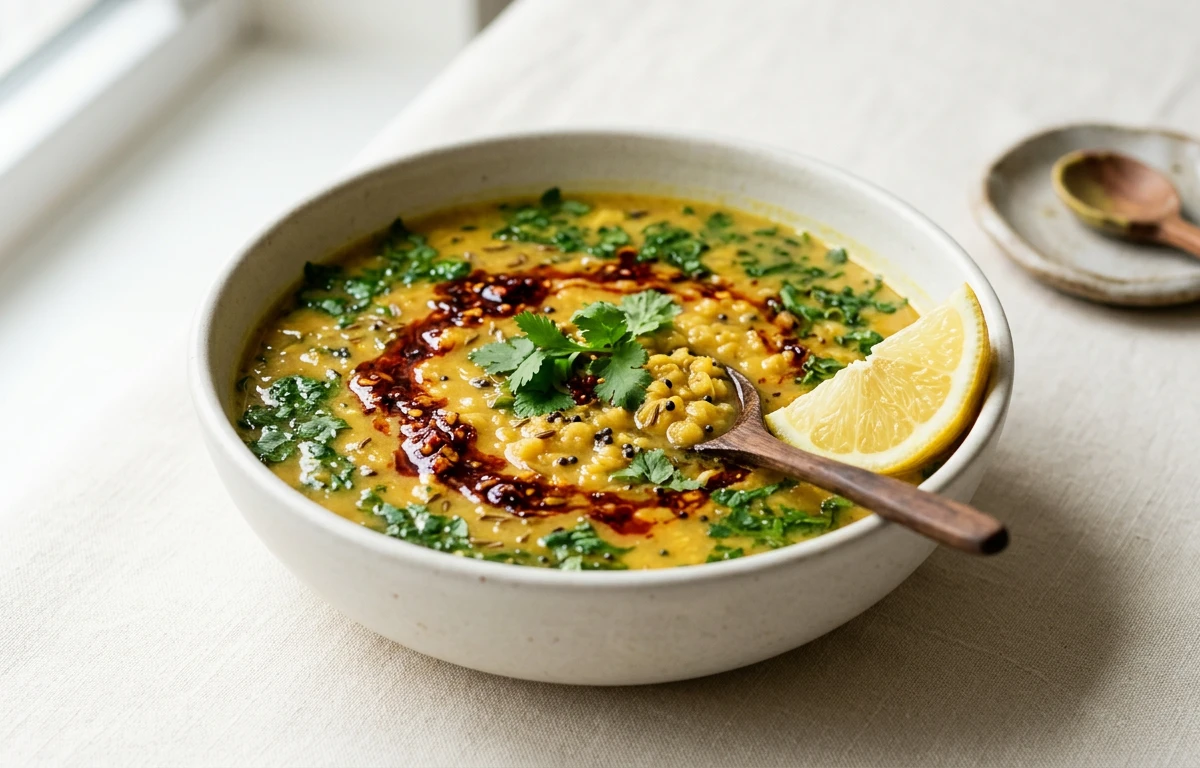
A comforting bowl of everyday Indian comfort food — creamy, lightly spiced toor dal served over fluffy steamed basmati rice. This humble combination of protein-rich lentils and fragrant rice is finished with a simple cumin tadka, making it soul-satisfying, nourishing, and ready in under 40 minutes.
For 4 servings
- prep · ~5 min
Wash and soak the dal and rice.
1.Wash the toor dal under running water until water runs clear.2.Wash the basmati rice in a separate bowl and soak in 4 cups of water for 15 minutes, then drain. - pressure cook · ~15 min
Pressure cook the dal.
1.Add the washed toor dal to the pressure cooker with 3 cups of water, turmeric, and a pinch of salt.2.Close the lid and pressure cook on medium heat for 3-4 whistles.3.Let the pressure release naturally, then open the lid and whisk the dal until smooth.TIPDon't add all the salt yet — finish seasoning after tempering to control the final taste. - steam · ~10 min
Cook the rice.
1.Bring 4 cups of water to a rolling boil in a heavy-bottomed pot.2.Add the soaked and drained rice with a pinch of salt.3.Cook uncovered for 8-10 minutes until rice is tender but not mushy.4.Drain any excess water and set aside.TIPFor fluffier rice, let the drained rice sit covered for 5 minutes off the heat. - temper · ~10 min
Make the tadka.
1.Heat ghee in a small pan over medium heat until it shimmers.2.Add cumin seeds and let them splutter for 30 seconds.3.Add minced garlic, grated ginger, and slit green chili; sauté for 1 minute until fragrant.4.Add chopped onion and cook until translucent and golden (5-7 minutes).5.Add chopped tomato, red chili powder, and remaining salt; cook until tomato softens and oil separates (3-4 minutes).TIPWatch the garlic closely — it burns fast and turns bitter. - simmer · ~7 min
Simmer the dal with tadka.
1.Pour the prepared tadka into the pressure-cooked dal.2.Stir well and adjust consistency with a splash of hot water if needed.3.Simmer on low heat for 5-7 minutes, letting the flavors meld together. - garnish
Garnish with fresh coriander leaves.
- assemble · ~1 min
Assemble the plates.
1.Spoon a generous portion of steamed rice onto each plate.2.Ladle the hot dal alongside or over the rice.3.Serve immediately.
What to keep in mind.
7 tips from the recipe — small details that make a real difference to the final dish.
- 1Soak the basmati rice for at least 15 minutes for fluffier, separate grains.
- 2Whisk the pressure-cooked dal vigorously until smooth for a creamy texture.
- 3Do not skip the natural pressure release — it finishes cooking the dal gently.
- 4Add the tadka only after the dal is cooked to preserve its fresh, aromatic punch.
- 5For a richer dal, substitute half the ghee with butter in the tadka.
- 6Let the rice sit covered for 5 minutes after draining to steam and fluff up.
- 7Adjust dal consistency with hot water — it thickens as it cools.
Adapt it for your goals.
Vegan
Replace ghee with any neutral oil (like coconut or sunflower) for the tadka — the cumin and garlic will still provide the same robust flavor, making the dish completely plant-based.
low oilLow-oil
Use only 1 teaspoon of ghee or oil for the tadka and dry-roast the cumin seeds briefly before adding a splash of water — reduces fat without losing the tempering effect.
high proteinHigh-protein
Add 1/2 cup of masoor dal (red lentils) along with the toor dal for an extra protein boost; the flavor profile remains similar but the dal becomes slightly thicker and richer.
jainJain
Skip the onion and garlic, and use asafoetida (hing) in the tadka along with cumin seeds and ginger; the hing mimics the savory allium notes, keeping it Jain-friendly.
spicySpicy
Add 1-2 dried red chilies broken into the hot ghee before the cumin seeds, and increase the green chili to 2 — gives a smoky, fiery heat that penetrates the dal.
Why this is on our healthy list.
Rich in Plant Protein
Toor dal provides a solid vegetarian protein source, essential for muscle repair and keeping you full longer.
High in Dietary Fiber
Lentils and basmati rice offer a good dose of fiber, which supports healthy digestion and stable blood sugar levels.
Natural Anti-inflammatory
Turmeric and ginger in the dal are known for their anti-inflammatory properties, aiding in joint and immune health.
Iron Boost
Pigeon peas (toor dal) are a good plant-based source of iron, important for energy and red blood cell production.
Frequently asked questions
Yes, simmer the toor dal in a pot with plenty of water for 35-40 minutes until soft, skimming any foam. You may need to add more water as it cooks.