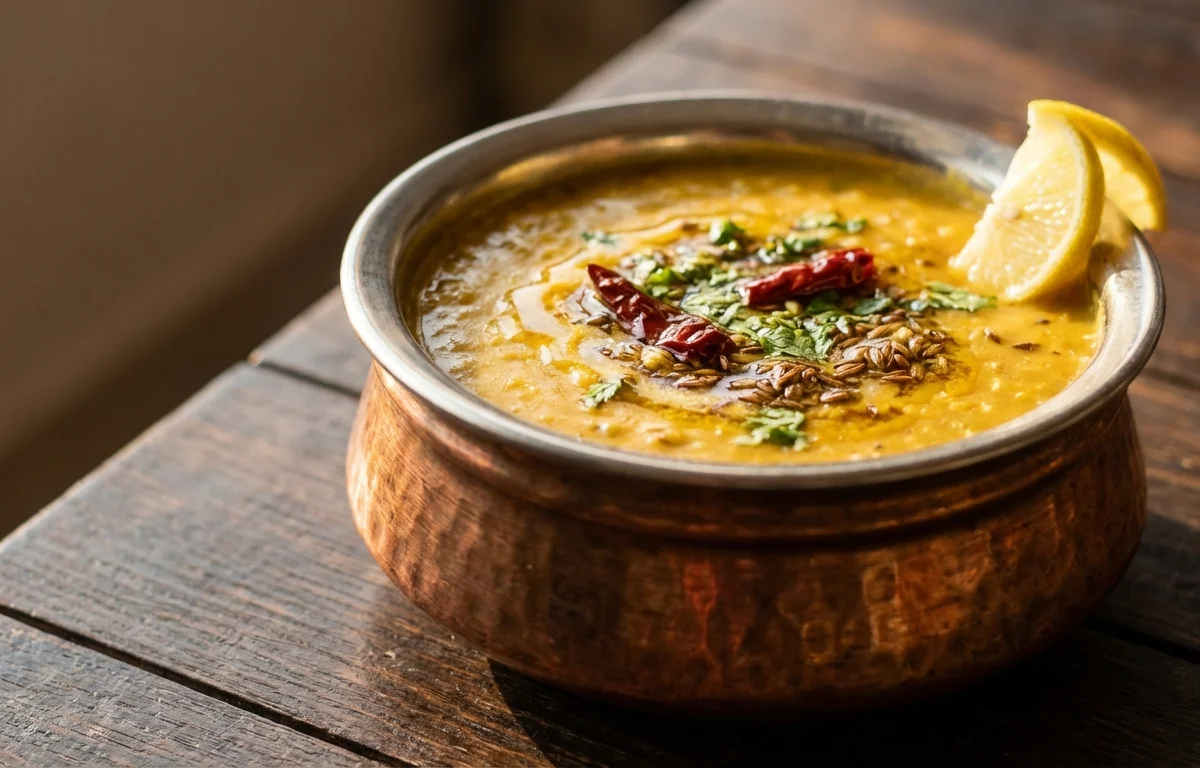
Dal Fry
A comforting yellow lentil dish with a soft, creamy texture and a fragrant onion-tomato tempering. It is simple enough for everyday meals yet full of warm spices that make it taste like a proper home-style Indian favorite.
For 4 servings
- prep
Rinse the dal and measure the ingredients.
Rinse the toor dal in a few changes of water until the water runs clearer. Chop the onion, tomato, ginger, garlic, green chili, and coriander leaves so everything is ready before you start cooking.
- pressure cook · ~20 min
Pressure cook the dal until soft.
1.Add toor dal, 3 cups water, turmeric powder, and salt to a pressure cooker.2.Close the cooker and cook on medium heat for 3 to 4 whistles, until the dal is very soft.3.Let the pressure release naturally before opening the lid.4.Mash the cooked dal lightly with a ladle for a smoother texture.TIPA soft, well-cooked dal gives Dal Fry its creamy body, so do not stop cooking when the lentils are still grainy. - temper · ~7 min
Make the tempering.
1.Heat ghee in a pan over medium heat.2.Add cumin seeds and let them crackle for 20 to 30 seconds.3.Add asafoetida and stir briefly.4.Add onion and cook until light golden, about 5 to 6 minutes.TIPKeep the heat medium so the cumin blooms in the ghee without burning. - saute · ~7 min
Cook the aromatics and tomatoes.
1.Add ginger, garlic, and green chili to the pan and sauté for 1 minute.2.Add tomato and cook until soft and pulpy, about 4 to 5 minutes.3.Add red chili powder, coriander powder, and garam masala.4.Mix well and cook for 30 seconds so the spices lose their raw smell. - simmer · ~7 min
Add the dal and simmer.
Pour the cooked dal into the pan and mix well with the onion-tomato tempering. Add 1 cup water if needed for a loose but creamy consistency, then simmer for 5 to 7 minutes so the flavors come together.
- garnish
Finish with coriander leaves and lemon juice.
- serve
Serve the dal hot.
Serve Dal Fry hot with rice, jeera rice, roti, or plain paratha.
What to keep in mind.
8 tips from the recipe — small details that make a real difference to the final dish.
- 1Cook the toor dal until it mashes easily between your fingers; even slightly undercooked dal will taste grainy in Dal Fry.
- 2Mash only lightly after pressure cooking so the dal stays creamy but still has a little body.
- 3Let the cumin crackle fully in hot ghee before adding onion; this perfumes the fat that flavors the whole dish.
- 4Cook the onions to light golden, not deep brown, for a sweeter home-style North Indian finish.
- 5Sauté the tomatoes until the masala looks pulpy and the ghee starts separating slightly from the sides.
- 6Add extra hot water, not cold, when loosening the dal so it keeps simmering smoothly.
- 7Stir in lemon juice after turning off the heat to keep its fresh brightness from becoming dull.
- 8Dal Fry thickens as it sits, so keep it slightly looser than you want if serving after a few minutes.
Adapt it for your goals.
Vegan
Replace ghee with a neutral oil or coconut oil for a dairy-free version that still carries the tempering spices well.
jainJain
Skip onion and garlic, increase ginger and hing slightly, and cook the tomato-spice base a little longer for depth.
restaurant styleRestaurant-style
Finish with a little extra ghee and a stronger squeeze of lemon for a richer, more dhaba-like Dal Fry.
mixed dalMixed-dal
Use part moong dal or masoor dal with toor for a softer texture and a slightly different earthy-sweet flavor.
Why this is on our healthy list.
Plant-Based Protein and Fiber
Toor dal provides satisfying plant protein and fiber, making this dish filling and well suited to a simple everyday meal.
Digestive Spice Support
Ginger, garlic, cumin, and asafoetida are traditional aromatics that add flavor while making a lentil dish feel easier to digest.
Tomato and Turmeric Goodness
Tomato and turmeric bring beneficial plant compounds along with color and warmth, adding more than just taste to the dal.
Frequently asked questions
Yes. Simmer the rinsed toor dal in a pot with water, turmeric, and salt until very soft, then mash lightly before adding to the tempering.



.webp)