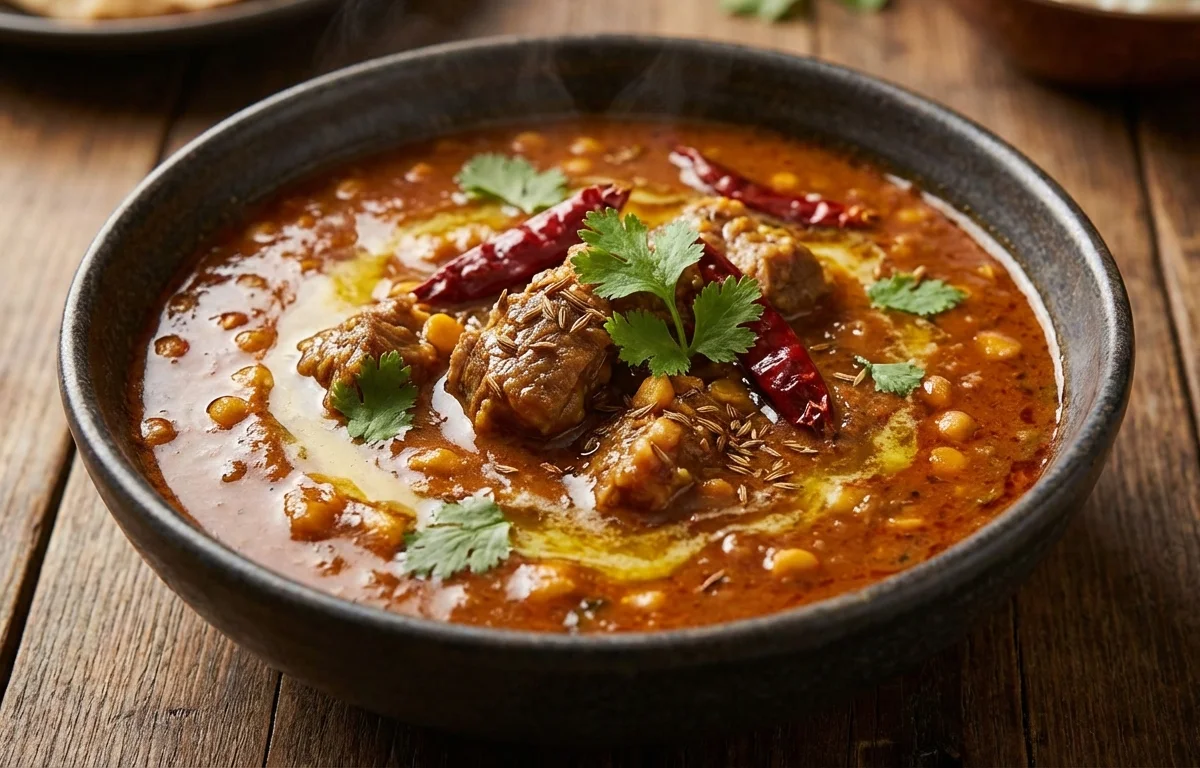
Dal Gosht
A hearty, slow-cooked North Indian classic that brings together tender chunks of mutton and creamy chana dal in one deeply spiced pot. This protein-packed curry is rich with ginger, garlic, and whole garam masala, simmered low until the meat falls apart and the lentils melt into a thick, luscious gravy. Perfect with hot rotis or steamed rice.
For 4 servings
- prep · ~30 min
Marinate the mutton.
In a large bowl, combine the washed mutton pieces with whisked yogurt, turmeric powder, and half the salt. Mix well to coat each piece. Cover and set aside for 30 minutes while you prep the other ingredients.
- pressure cook · ~20 min
Pressure cook the meat and dal.
1.Add the marinated mutton to a pressure cooker along with the soaked and drained chana dal.2.Pour in 3 cups of water and close the lid tightly.3.Cook on high heat until you get one whistle, then reduce the heat to low and cook for 15-18 minutes.4.Turn off the heat and let the pressure release naturally. Do not force open.TIPLetting the pressure release naturally ensures the mutton stays tender and the dal absorbs flavors beautifully. - temper · ~2 min
Make the tempering.
1.Heat ghee in a heavy-bottomed pan over medium heat.2.Add cumin seeds, black peppercorns, crushed cardamom, cloves, cinnamon stick, and bay leaf.3.Sauté for 30-40 seconds until the spices crackle and turn fragrant.TIPKeep the heat medium — whole spices burn quickly and become bitter. - saute · ~12 min
Sauté the onions and ginger-garlic paste.
1.Add the finely sliced onions to the tempering and cook until deeply golden brown, stirring often — this takes about 8-10 minutes.2.Add the ginger-garlic paste and slit green chilies. Sauté for another 1-2 minutes until the raw smell disappears.TIPGetting the onions deeply golden, not just translucent, is key to building a rich curry base. - saute · ~6 min
Cook the tomato and spice base.
1.Add the chopped tomatoes, red chili powder, and coriander powder to the pan.2.Cook on medium heat, stirring regularly, until the tomatoes soften completely and the ghee starts to separate from the mixture — about 5-6 minutes. - simmer · ~15 min
Combine and simmer the dal gosht.
1.Open the pressure cooker and gently pour the cooked mutton-dal mixture into the pan with the tomato-onion base.2.Add the remaining salt and stir everything together thoroughly.3.Bring the gravy to a gentle boil, then lower the heat and let it simmer uncovered for 10-15 minutes until it reaches a thick, creamy consistency.TIPIf the gravy feels too thick, add a splash of hot water. It should coat the back of a spoon but not be runny. - garnish · ~5 min
Finish with garam masala and garnish.
Sprinkle garam masala and freshly chopped coriander leaves over the curry. Stir once, switch off the heat, and let it rest for 5 minutes before serving.
TIPThe resting time allows the garam masala aroma to bloom throughout the dish.
What to keep in mind.
6 tips from the recipe — small details that make a real difference to the final dish.
- 1For the deepest flavor, brown the mutton in ghee before pressure cooking instead of just marinating.
- 2Soak the chana dal for at least 30 minutes to ensure it cooks evenly with the mutton.
- 3Do not skip the natural pressure release — it prevents the mutton from becoming chewy and the dal from turning mushy.
- 4Cook the onions until they are deeply caramelized (dark golden brown) to build a rich, sweet base for the gravy.
- 5Let the ghee separate from the tomato-onion paste (step 5) before adding the meat — this indicates the masala is fully cooked.
- 6Rest the finished dal gosht for 5 minutes before serving to let the final garam masala aroma infuse the dish.
Adapt it for your goals.
High-Protein
Swap the chana dal for an equal quantity of horse gram (kollu) or double the mutton to 1 kg for a protein-dense version favored by athletes and bodybuilders.
Low OilLow-Oil
Replace ghee with mustard oil (2 tbsp) and skip the final tempering of garam masala in oil — just sprinkle it directly on the finished dish to cut fat while retaining flavor.
VeganVegan
Substitute mutton with 400 g of firm tofu (pressed and cubed) or soy chunks, and replace yogurt with 1/4 cup of raw cashew paste blended with water. Cook for a shorter time to avoid mushy tofu.
Why this is on our healthy list.
Excellent Source of Complete Protein
The combination of bone-in lamb and chickpea lentils provides all essential amino acids, making this a one-pot protein powerhouse for muscle repair and satiety.
Rich in Iron and Zinc
Lamb is naturally high in heme iron and zinc, which support healthy red blood cells and immune function, especially when paired with turmeric and black pepper to enhance absorption.
Supports Gut Health
The soaked chana dal is rich in soluble fiber, which aids digestion and helps maintain steady blood sugar levels, while the yogurt adds probiotics.
Anti-Inflammatory Spices
The whole spices like cumin, cardamom, cinnamon, and cloves are known for their antioxidant and anti-inflammatory properties, helping reduce oxidative stress.
Frequently asked questions
Yes, but bone-in pieces are preferred as the marrow and collagen enrich the gravy. If using boneless, reduce pressure cooking time by 3-4 minutes to avoid drying out the meat.


.webp)