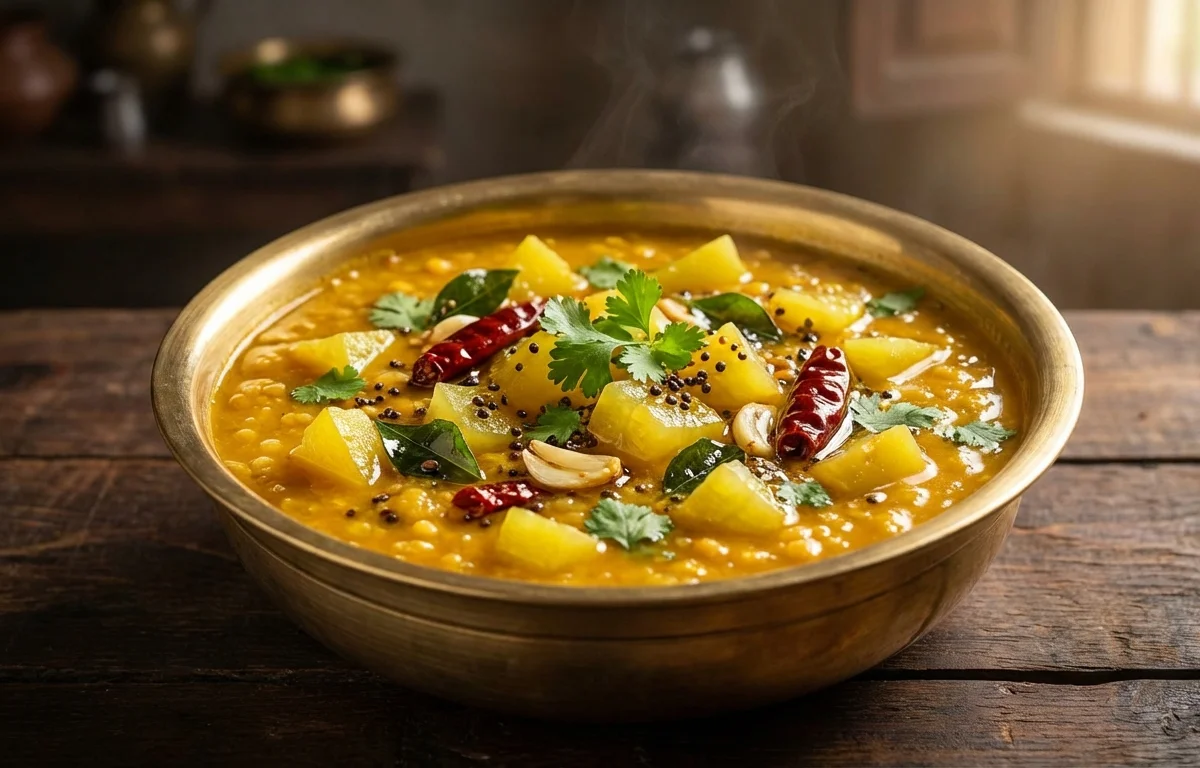
Dosakaya Pappu
Tangy yellow cucumber dal from Andhra cuisine that tastes light yet comforting. Soft toor dal cooks with juicy dosakaya, green chili, and a simple tempering for a homestyle dish that pairs perfectly with rice.
For 4 servings
- prep · ~10 min
Prep the dosakaya and dal.
1.Rinse the toor dal well until the water runs mostly clear.2.Taste a small piece of dosakaya to check for bitterness before using it.3.Cube the dosakaya into small pieces for even cooking.4.Chop the tomato and slit the green chilies.TIPIf the dosakaya tastes bitter, discard it and use another one so the dal does not turn bitter. - pressure cook · ~20 min
Cook the dal with dosakaya.
Add toor dal, dosakaya, tomato, green chili, turmeric powder, salt, and water to a pressure cooker. Cook for 4 whistles on medium heat, then let the pressure drop naturally.
- mix · ~3 min
Mash the dal lightly.
Open the cooker and mash the dal gently with the back of a ladle until the mixture is creamy but still has some cucumber pieces. Add a splash of water if needed to adjust to a pourable dal consistency.
- temper · ~2 min
Make the tempering.
1.Heat oil in a small pan over medium heat.2.Add mustard seeds and let them splutter.3.Add cumin seeds, garlic, dried red chili, curry leaves, and asafoetida.4.Cook for 20 to 30 seconds until fragrant.TIPKeep the heat moderate so the garlic and spices do not burn. - simmer · ~3 min
Finish the pappu.
Pour the hot tempering over the cooked dal and mix well. Simmer for 2 to 3 minutes so the flavors come together.
- garnish
Garnish with cilantro.
- serve
Serve hot with rice.
What to keep in mind.
7 tips from the recipe — small details that make a real difference to the final dish.
- 1Always taste the dosakaya before chopping the whole thing; one bitter cucumber can ruin the entire pappu.
- 2Cut the dosakaya into small, even cubes so it softens with the dal without turning mushy.
- 3Let the pressure release naturally; quick-releasing can leave the toor dal less creamy.
- 4Mash only lightly after cooking so you keep a few juicy dosakaya pieces for texture.
- 5Temper the garlic just until fragrant and pale golden; burnt garlic will make the dal taste harsh.
- 6If the dal thickens as it rests, loosen it with hot water before serving rather than cold water.
- 7This pappu tastes even better after a short 10-minute rest, once the tempering perfumes the dal fully.
Adapt it for your goals.
Low-oil
Use just 1 teaspoon oil for the tempering and keep the spices brief in the pan; good if you want a lighter everyday dal.
no garlicNo-garlic
Skip the garlic in the tempering for a simpler, more satvik-style version that still gets aroma from cumin, curry leaves, and hing.
spicierSpicier
Add an extra green chili while pressure cooking or one more dried red chili in the tadka for a sharper Andhra heat.
moong dal versionMoong-dal-version
Replace some or all of the toor dal with moong dal for a softer, lighter pappu that cooks faster and feels gentler.
Why this is on our healthy list.
Protein-Rich Lentil Base
Toor dal brings plant protein and makes the dish filling while still feeling light enough for an everyday meal.
Hydrating Vegetable Content
Dosakaya adds water-rich bulk and freshness, which helps this pappu feel comforting without being heavy.
Fiber From Dal and Vegetables
The combination of split pigeon peas, tomato, and dosakaya provides fiber that supports a satisfying, balanced plate with rice.
Digestive Spice Support
Cumin, asafoetida, garlic, and curry leaves are classic tempering ingredients that add flavor while making dal-based dishes feel easier to eat.
Frequently asked questions
Some yellow cucumbers can be bitter. If you add a bitter one, the entire pot of pappu will taste unpleasant and cannot be fixed easily.



.webp)