Egg Pulimunchi
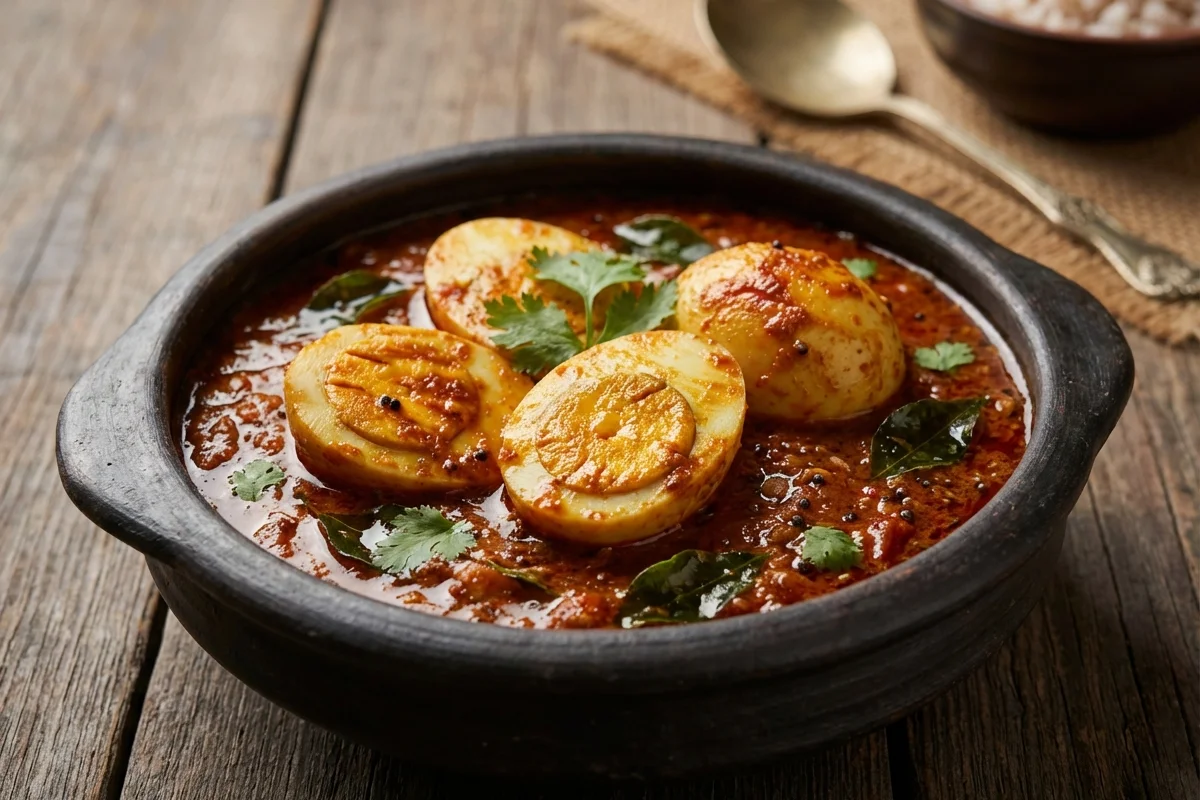
Hard-boiled eggs simmered in a bold Mangalorean-style masala with tamarind, coconut, red chilies, and garlic. It is tangy, spicy, and deeply savory, making a small but punchy curry to pair with rice or neer dosa.
For 4 servings
- boil · ~15 min
Boil the eggs.
Place the eggs in a pan, cover with water, and bring to a boil. Cook for 10 minutes, cool, peel, and make a few light slits on each egg.
TIPLight slits help the masala cling to the eggs and flavor them better. - prep · ~15 min
Soak the tamarind.
Soak the tamarind in a little warm water for 15 minutes, then squeeze out the pulp and discard the fibers.
- roast · ~6 min
Roast the masala ingredients.
1.Heat a small pan over low to medium heat.2.Add the grated coconut and roast until lightly golden and aromatic, 3 to 4 minutes.3.Add dried red chilies, garlic, cumin seeds, and black peppercorns.4.Roast for 1 to 2 minutes more, stirring often so the coconut does not burn.TIPKeep the heat moderate; dark brown coconut will make the curry taste bitter. - mix · ~3 min
Grind the masala.
Transfer the roasted mixture to a grinder with the tamarind pulp and 0.75 cup water. Grind to a smooth, thick paste.
- saute · ~7 min
Cook the onion base.
1.Heat oil in a kadai over medium heat.2.Add curry leaves and sliced onion.3.Cook until the onion turns soft and lightly golden, 5 to 6 minutes.4.Add turmeric powder and stir for a few seconds. - simmer · ~7 min
Simmer the masala.
Add the ground paste to the kadai and cook for 2 minutes. Pour in the remaining water, add salt, and bring the curry to a gentle simmer.
- simmer · ~8 min
Add the eggs and finish the curry.
Add the boiled eggs to the simmering curry and spoon some masala over them. Cook on low heat for 6 to 8 minutes, until the gravy thickens slightly and the eggs take on the flavor.
TIPDo not boil hard at this stage; a gentle simmer keeps the masala smooth and stops it from catching. - serve
Serve the Egg Pulimunchi hot.
What to keep in mind.
7 tips from the recipe — small details that make a real difference to the final dish.
- 1Make only shallow slits in the boiled eggs so they absorb masala without breaking apart in the curry.
- 2Roast the coconut just to light golden; darker roasting can overpower the tangy tamarind with bitterness.
- 3If your dried red chilies are very hot, remove a few seeds before roasting to keep the heat balanced.
- 4Cook the onion until lightly golden, not deeply browned, so the gravy stays bright and tangy rather than sweet-heavy.
- 5Let the curry rest for 10 to 15 minutes after cooking; the eggs absorb more of the pulimunchi flavor as it sits.
- 6If making ahead, prepare the masala base first and add the eggs only when reheating so they do not turn rubbery.
- 7Store leftovers refrigerated for up to 2 days and reheat gently on low heat to keep the coconut masala from splitting.
Adapt it for your goals.
Extra-spicy
Use a few more dried red chilies and a touch more black pepper for a fierier Mangalorean-style finish.
milderMilder
Reduce the chilies and add a little extra coconut for a softer, creamier curry that is easier on the palate.
shallot basedShallot-based
Replace the onion with sliced shallots for a sweeter, more traditional coastal South Indian flavor.
vegetarian side styleVegetarian-side-style
Use the same pulimunchi masala with boiled potatoes instead of eggs for a similar tangy-spicy curry.
Why this is on our healthy list.
Protein From Eggs
Eggs make this curry filling and provide good-quality protein, which helps turn a small curry into a satisfying side.
Spice-Rich Ingredients
Garlic, cumin, black pepper, and dried red chilies add strong flavor along with plant compounds commonly valued in home cooking.
Coconut-Based Satiety
Fresh coconut adds richness and body, making the curry more satisfying so it pairs well with simple staples like rice or dosa.
Frequently asked questions
The light slits help the pulimunchi masala cling to the eggs and allow some of the tangy gravy to flavor them more deeply.