Egg Stuffed Dal Baati
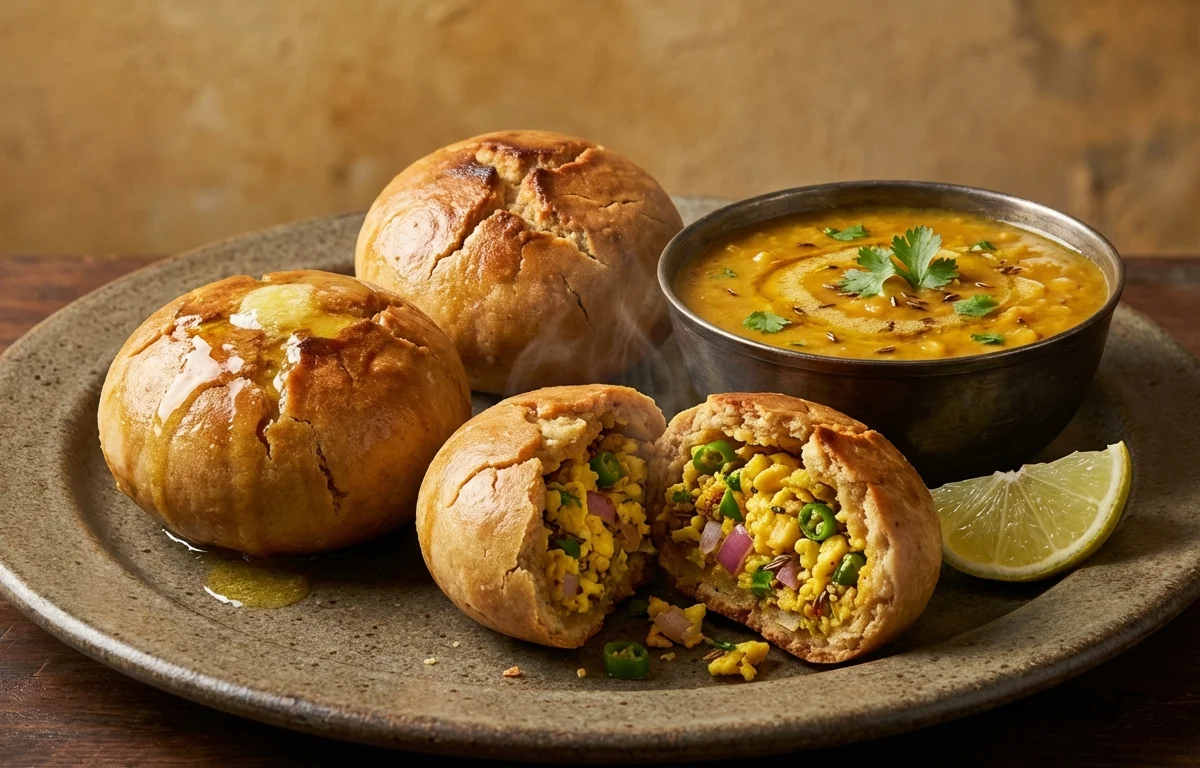
Crispy, golden wheat balls from Rajasthan with a twist — cracked open and stuffed with a spiced hard-boiled egg filling before baking. Served with a hearty, slow-simmered mixed dal that mops up every bite. A protein-packed, rustic meal that turns the classic dal baati into a satisfying one-dish feast.
For 8 servings
- prep
Soak the chana dal.
Wash and soak chana dal in enough water for 1 hour. Drain and set aside.
- prep
Hard boil the eggs.
Place eggs in a saucepan, cover with water and boil for 8-10 minutes. Cool under running water, peel and chop finely.
- saute · ~7 min
Prepare the egg stuffing.
1.Heat 2 tsp oil in a frying pan over medium heat.2.Add chopped onion and sauté until translucent (3-4 min).3.Add green chili and grated ginger, cook for 1 minute.4.Add chopped boiled eggs, red chili powder, garam masala and 1 pinch salt. Mix well and cook for 2 minutes.5.Turn off heat and stir in chopped coriander leaves. Let cool.TIPCool the stuffing completely before filling or it will tear the dough. - knead · ~20 min
Knead the baati dough.
1.In a large bowl, mix whole wheat flour, semolina, 0.5 tsp salt and 3 tbsp ghee.2.Rub the ghee into the flour until it resembles breadcrumbs.3.Gradually add water (about ¾ cup) and knead into a stiff, smooth dough.4.Cover with a damp cloth and rest for 15 minutes.TIPA stiff dough gives crisper baati. Do not make it soft like roti dough. - assemble · ~10 min
Shape the stuffed baatis.
1.Preheat oven to 180°C (350°F).2.Divide the dough into 8 equal balls.3.Flatten each ball into a small disc, place a spoonful of egg stuffing in the center.4.Gather the edges to seal and reshape into a smooth ball.5.Place on a greased baking tray, seam side down. - bake · ~25 min
Bake the baatis until golden.
1.Bake in preheated oven at 180°C (350°F) for 15 minutes.2.Flip each baati and bake for another 10 minutes until evenly golden and crisp.3.Remove and brush lightly with ghee while hot.TIPFor an even crispier crust, bake them a little longer until deeply golden. - boil · ~20 min
Cook the mixed dal.
1.Wash toor dal and yellow moong dal together.2.In a pressure cooker, add both dals, soaked chana dal, 3 cups water, turmeric powder and 1 pinch salt.3.Pressure cook on medium heat for 3-4 whistles until soft.4.Let the pressure release naturally, then whisk the dal lightly.TIPLet the pressure drop on its own; quick-releasing can leave the dal undercooked. - temper · ~5 min
Make the tadka for the dal.
1.Heat 1 tbsp ghee in a pan over medium heat.2.Add cumin seeds and let them crackle for 30 seconds.3.Add dried red chilies and crushed garlic, sauté until fragrant (30 sec).4.Add chopped tomato and cook until soft and mushy (3-4 min).TIPMash the tomato with the spatula while cooking for a smoother dal. - simmer · ~7 min
Simmer the dal with the tempering.
Pour the cooked dal into the tadka pan. Mix well and simmer on low heat for 5-7 minutes until it reaches a creamy consistency. Adjust water if needed. Finish with lemon juice.
- assemble · ~2 min
Assemble the dish for serving.
1.Place two stuffed baatis on each plate.2.Break one baati open slightly to show the egg stuffing.3.Pour a generous ladle of hot dal over the baatis.4.Drizzle a little ghee on top and garnish with fresh coriander leaves.TIPSoak baatis in dal just before eating, not ahead of time, so they stay crisp.
What to keep in mind.
8 tips from the recipe — small details that make a real difference to the final dish.
- 1Knead a stiff dough for the baati; a soft dough will make them dense instead of crisp.
- 2Cool the egg stuffing completely before filling, or the warm moisture will tear the dough.
- 3Flip the baatis halfway through baking to ensure they brown evenly on both sides.
- 4Brush the hot baatis generously with ghee immediately after baking for authentic flavor.
- 5Use a pressure cooker for the dal to soften lentils quickly without constant stirring.
- 6Let the pressure release naturally from the cooker so the dal cooks through evenly.
- 7Soak the chana dal for at least 1 hour to ensure it softens at the same rate as the other lentils.
- 8Serve dal over baatis just before eating so the crust stays crisp for longer.
Adapt it for your goals.
Vegetarian
Replace the egg stuffing with a spiced potato-pea mixture (aloo matar) for a classic vegetarian baati that still packs the same rustic texture.
veganVegan
Use a plant-based egg alternative or a seasoned tofu scramble for the stuffing and replace ghee with coconut oil to make the entire dish vegan-friendly.
high proteinHigh-protein
Add a spoonful of crumbled paneer or extra egg white to the stuffing and increase the chana dal proportion in the lentil mix for a protein boost without changing the dish's character.
low oilLow-oil
Skip brushing the baked baatis with ghee and use an oil spray on the tray instead; the semolina still provides crispiness with less fat.
jainJain
Omit the onion and garlic from both the stuffing and the dal tadka; use asafoetida (hing) and a little extra ginger-green chili to maintain the savory depth.
Why this is on our healthy list.
Rich in Plant Protein
The trio of toor dal, moong dal, and chana dal provides a complete range of essential amino acids when paired with the whole wheat baati.
Good Source of Iron
Whole wheat flour and lentils both contribute dietary iron, which supports healthy blood oxygen transport.
Contains Gut-Friendly Fiber
The combination of whole wheat, semolina, and lentils offers both soluble and insoluble fiber to aid digestion and promote satiety.
Traditionally Energizing Meal
The ghee in the baati and dal tadka provides healthy fats that help the body absorb fat-soluble vitamins from the spices and tomatoes.
Frequently asked questions
Yes, you can prepare the dough up to 6 hours ahead and keep it covered at room temperature. Resting actually helps the gluten relax for easier rolling.