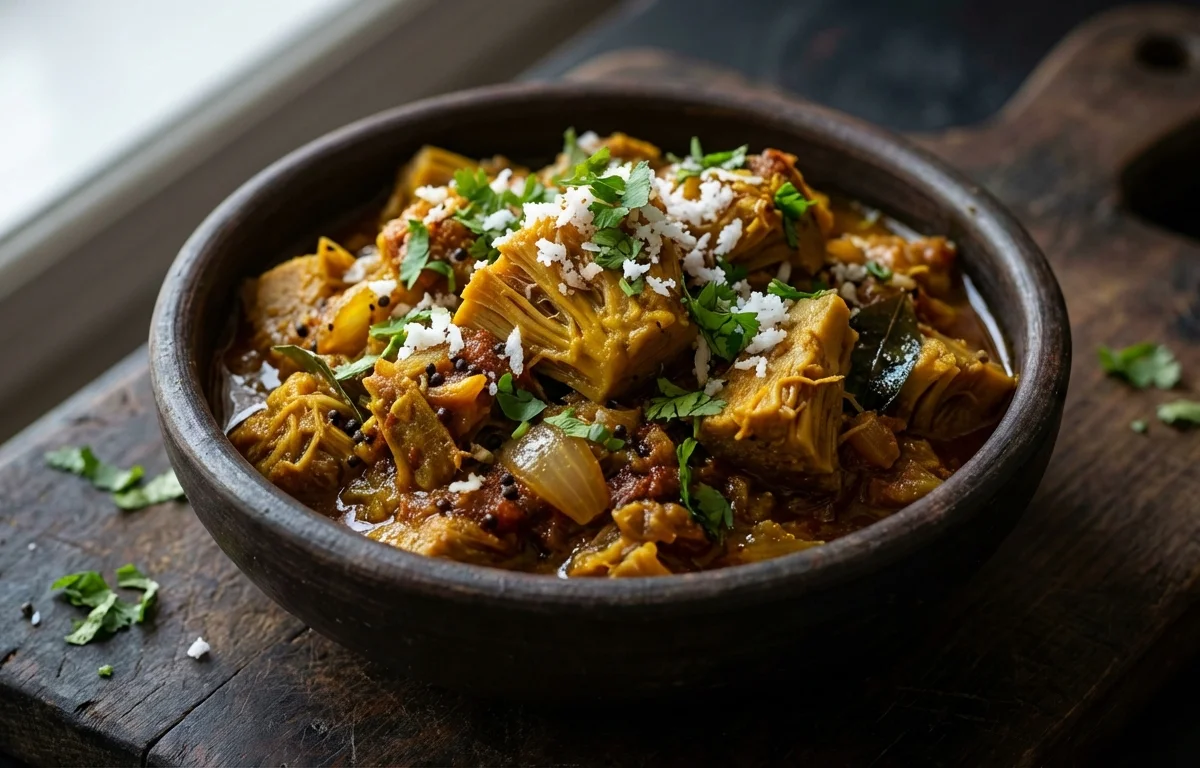
Fanasachi Bhaji
Tender raw jackfruit cooked with coconut, peanuts, and a gentle Maharashtrian spice base makes this bhaji earthy, lightly sweet, and deeply comforting. It pairs beautifully with chapati, bhakri, or simple varan-bhaat.
For 4 servings
- prep · ~20 min
Prep the jackfruit and peanuts.
1.Oil your knife and hands lightly if the jackfruit feels sticky.2.Cut the raw jackfruit into medium cubes after removing the peel and hard core.3.Soak the peanuts in water for 15 minutes, then drain and crush them coarsely.TIPWear gloves if needed, because raw jackfruit sap can cling to your hands. - boil · ~15 min
Boil the jackfruit until just tender.
Add the jackfruit and 3 cups water to a pot. Bring to a boil, cook until just tender but not mushy, then drain well.
TIPDo not overcook here; the pieces should hold their shape for the bhaji. - temper · ~2 min
Make the tempering.
1.Heat oil in a pan over medium heat.2.Add mustard seeds and let them splutter.3.Add cumin seeds, asafoetida, turmeric powder, green chili, and curry leaves.4.Stir for a few seconds until fragrant. - saute · ~6 min
Cook the onion and garlic.
Add onion and crushed garlic to the pan. Cook until the onion turns soft and lightly golden.
- mix · ~2 min
Add the coconut, peanuts, and spices.
Stir in grated coconut, crushed peanuts, red chili powder, goda masala, jaggery, and salt. Mix well and cook for 1 to 2 minutes.
- simmer · ~10 min
Cook the jackfruit with the masala.
Add the boiled jackfruit and 1/2 cup water. Mix gently, cover, and cook on low heat until the flavors come together and the bhaji turns semi-dry.
TIPStir gently so the jackfruit stays in pieces and does not break down too much. - garnish
Finish with cilantro.
- serve
Serve hot with chapati, bhakri, or rice.
What to keep in mind.
7 tips from the recipe — small details that make a real difference to the final dish.
- 1Oil the knife, board, and hands before cutting raw jackfruit to stop the sticky sap from clinging.
- 2Boil the jackfruit only until just tender; it should pierce easily but still hold neat cubes.
- 3Drain the boiled jackfruit very well so the bhaji finishes semi-dry instead of watery.
- 4Crush the soaked peanuts coarsely, not finely, so they give body and a little bite to the masala.
- 5Cook the onion until lightly golden, not deeply browned, to keep the Maharashtrian flavor base gentle.
- 6After adding coconut and peanuts, stir for a minute to remove any raw taste before the jackfruit goes in.
- 7Let the bhaji rest for 5 minutes off the heat; the coconut, goda masala, and jaggery meld better.
Adapt it for your goals.
No-onion
Skip the onion for a simpler, more vrat-style feel; increase coconut slightly for body and sweetness.
spicierSpicier
Add one extra green chili or a little more red chili powder if you want a sharper heat against the sweet jackfruit.
dry bhajiDry-bhaji
Use less finishing water and cook uncovered at the end for a drier bhaji that pairs especially well with bhakri.
jainJain
Omit onion, garlic, and asafoetida, and rely on curry leaves, coconut, peanuts, and goda masala for flavor.
Why this is on our healthy list.
Fiber-Rich Vegetable Base
Raw jackfruit brings hearty texture and fiber, making this bhaji filling and well suited to a satisfying meal.
Good Fats from Coconut and Peanuts
Fresh coconut and peanuts add richness, help carry the spices, and contribute lasting satiety.
Plant-Based and Naturally Dairy-Free
This bhaji gets its depth from spices, coconut, and peanuts rather than dairy, fitting many everyday vegetarian meals.
Frequently asked questions
Yes, if it is young green jackfruit in brine or water, not ripe sweet jackfruit. Rinse well, drain, and reduce the initial boiling time.



.webp)