
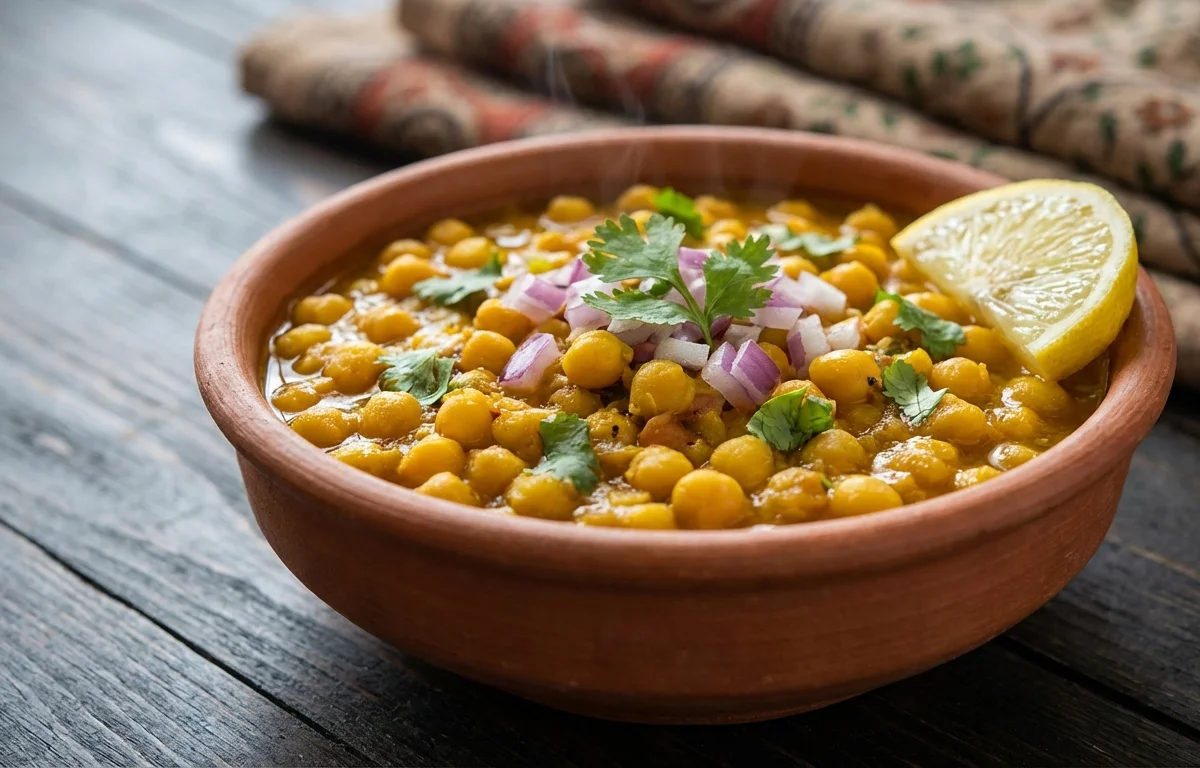
Ghugni
A comforting bowl of dried yellow peas simmered with onion, tomato, ginger, and warm spices until thick and flavorful. This eastern Indian street favorite is hearty, lightly tangy, and perfect as a small meal or side.
For 4 servings
- prep
Soak the yellow peas.
Rinse the dried yellow peas well, cover with plenty of water, and soak overnight. Drain before cooking.
- pressure cook · ~20 min
Cook the peas until soft.
Add the soaked yellow peas, water, and salt to a pressure cooker. Cook until the peas are soft but still holding their shape.
TIPDo not overcook the peas into a mash. Ghugni tastes best when the peas are tender with a little bite. - saute · ~10 min
Cook the base masala.
1.Heat oil in a pan over medium heat.2.Add bay leaf and cumin seeds and let them sizzle for a few seconds.3.Add onion and cook until light golden, 5 to 7 minutes.4.Add ginger, garlic, and green chili and cook for 1 minute.5.Add tomato, turmeric powder, red chili powder, coriander powder, cumin powder, and garam masala.TIPCook the tomatoes until soft and jammy so the gravy tastes rounded, not raw. - simmer · ~10 min
Simmer the ghugni.
Add the cooked peas along with some of their cooking liquid to the pan. Mix well and simmer until the curry thickens and the flavors come together.
- garnish
Finish with lemon juice and coriander leaves.
Turn off the heat and stir in lemon juice. Scatter chopped coriander leaves on top.
- serve
Serve the ghugni hot.
What to keep in mind.
6 tips from the recipe — small details that make a real difference to the final dish.
- 1After pressure cooking, the peas should press easily between fingers but not split into a paste.
- 2Brown the onions to light golden only; very dark onions can make this ghugni taste bitter.
- 3Cook the tomato-spice mixture until the oil begins to separate for a fuller, street-style flavor.
- 4Mash a small spoonful of cooked peas into the gravy while simmering to thicken it naturally.
- 5Add lemon juice only after switching off the heat so the tang stays bright and fresh.
- 6Ghugni thickens as it rests, so loosen leftovers with a splash of hot water before reheating.
Adapt it for your goals.
No-garlic
Skip the garlic for a lighter, more satvik-style version that still gets depth from ginger, cumin, and bay leaf.
spicierSpicier
Increase green chili and red chili powder for a hotter street-style ghugni with a sharper kick.
jhal muri style toppingJhal-muri-style topping
Top with chopped onion, extra coriander, green chili, and more lemon juice for a chaat-like serving.
low oilLow-oil
Use less oil and add a splash of water while sautéing the masala to keep the dish lighter.
Why this is on our healthy list.
Legume-Based Protein
Yellow peas make this dish filling and provide plant protein that helps turn it into a satisfying small meal.
Good Fiber Content
The peas, onion, and tomato contribute fiber, which supports fullness and steady digestion.
Rich in Aromatic Phytonutrients
Ginger, garlic, cumin, coriander, and turmeric add flavorful plant compounds along with depth and warmth.
Frequently asked questions
Yes. Simmer the soaked yellow peas in a covered pot until tender but still holding shape; it will simply take longer.



-curry.webp)
.webp)