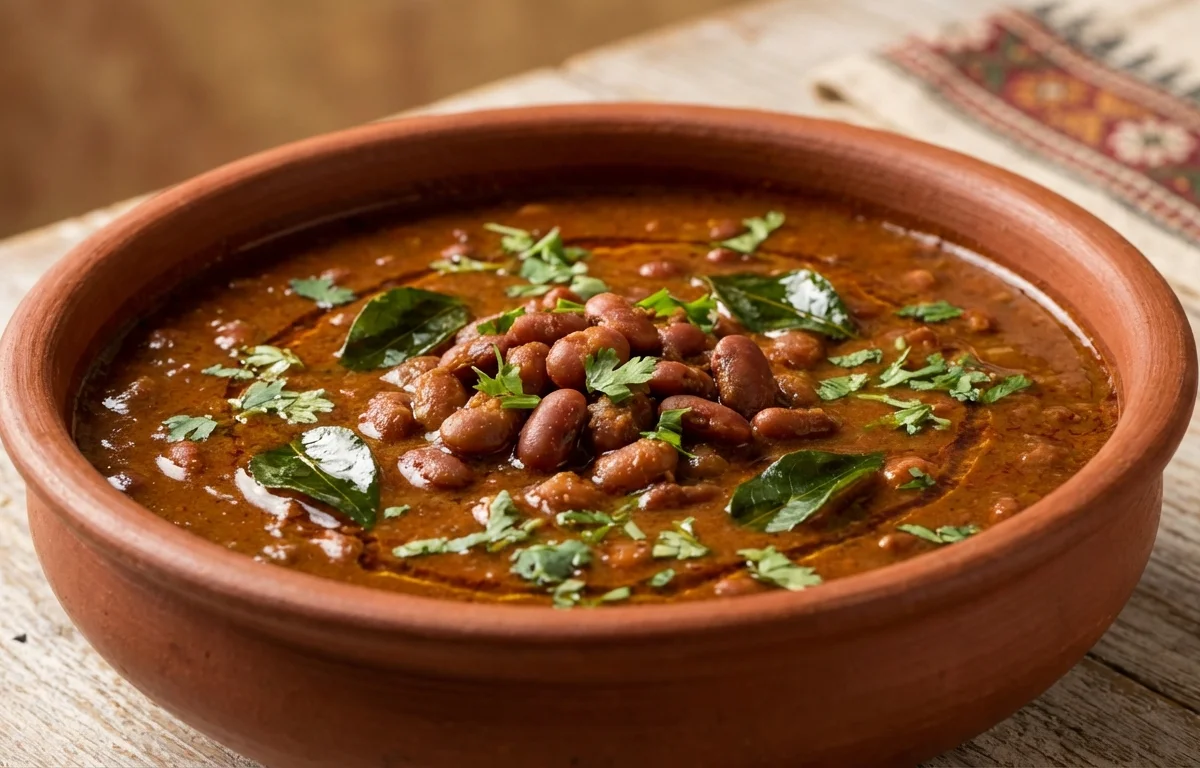
Goan Tondak Curry
A homestyle Goan curry made with black-eyed peas and potato in a roasted coconut masala. It has a warm, earthy flavor with a gentle tang from tamarind, and tastes especially good with plain rice.
For 4 servings
- prep · ~480 min
Soak the black-eyed peas.
Wash the black-eyed peas well and soak them in enough water overnight or for 8 hours. Drain before cooking.
- pressure cook · ~25 min
Cook the black-eyed peas and potato.
1.Add the soaked black-eyed peas, potato, 2 cups water, turmeric powder, and salt to a pressure cooker.2.Pressure cook until the peas are tender and the potato is soft, about 4 to 5 whistles.3.Let the pressure drop naturally, then open the cooker.TIPCook the peas until soft but not mushy so they hold their shape in the curry. - roast · ~8 min
Roast the masala ingredients.
1.Heat a pan over medium heat and add 1 tsp oil.2.Add the coconut, onion, dried red chili, coriander seeds, cumin seeds, and black peppercorns.3.Roast until the coconut turns light golden and the onion softens, stirring often so nothing burns.4.Take the pan off the heat and cool slightly.TIPKeep the heat medium-low once the coconut starts coloring, because it can go from golden to burnt quickly. - mix · ~3 min
Grind the masala.
Transfer the roasted mixture to a grinder with tamarind paste and 0.5 cup water. Grind to a smooth, thick paste.
- simmer · ~10 min
Simmer the curry.
1.Add the ground masala to the cooked black-eyed peas and potato.2.Pour in the remaining 0.5 cup water and mix well.3.Bring the curry to a gentle simmer and cook for 8 to 10 minutes, stirring now and then. - temper · ~1 min
Make the tempering.
1.Heat the remaining 1 tsp oil in a small pan.2.Add mustard seeds and let them splutter.3.Add curry leaves and cook for a few seconds until fragrant. - assemble · ~1 min
Pour the tempering over the curry.
Add the hot tempering to the simmering curry and mix gently. Cook for 1 more minute so the flavors come together.
- serve
Serve the Goan Tondak Curry hot.
What to keep in mind.
7 tips from the recipe — small details that make a real difference to the final dish.
- 1Soak the black-eyed peas fully overnight; under-soaked peas can stay firm even after 5 whistles.
- 2Cube the potato evenly so it softens at the same rate as the peas and does not break apart unevenly.
- 3Roast the coconut only to light golden, not deep brown, or the curry can taste bitter instead of warm and nutty.
- 4Cool the roasted masala slightly before grinding for a smoother paste and less steam pressure in the grinder.
- 5Simmer gently after adding the coconut masala; a hard boil can make the paste catch at the bottom.
- 6If the curry thickens on standing, loosen it with a splash of hot water before serving with rice.
- 7This curry tastes even better after resting 20 to 30 minutes, when the tamarind and roasted spice flavors meld.
Adapt it for your goals.
No-onion
Skip the onion in the roasted masala for a simpler, more austere version that still keeps the coconut-spice character.
spicierSpicier
Add 1 to 2 extra dried red chilies or a few more peppercorns if you want a hotter, more robust curry with rice.
mixed vegetableMixed-vegetable
Add cubes of raw banana or a few pieces of pumpkin along with the potato for a more traditional homestyle variation.
thinner rice pairingThinner-rice-pairing
Use a little extra hot water while simmering if you prefer a looser curry to mix easily with plain steamed rice.
Why this is on our healthy list.
Legume-Based Protein and Fiber
Black-eyed peas bring plant protein and fiber, making the curry more filling and steadying than a potato-only dish.
Spice-Rich Without Heavy Cream
The curry gets richness from coconut and roasted spices rather than dairy, giving body and flavor with simple pantry ingredients.
Includes Potassium-Rich Vegetables
Potato adds comforting starch along with minerals, while the curry remains balanced by tamarind, spices, and legumes.
Frequently asked questions
Yes. Skip the soaking and pressure-cooking step, add the canned peas after cooking the potato, and simmer them with the masala briefly so they do not turn mushy.