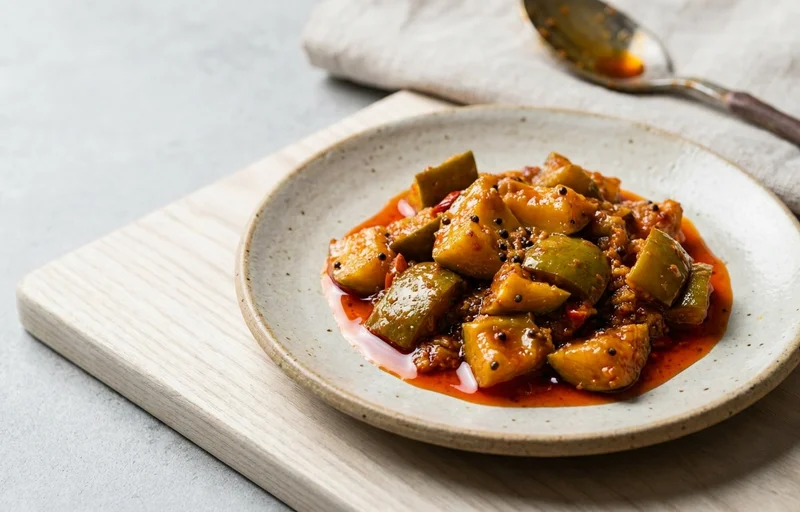
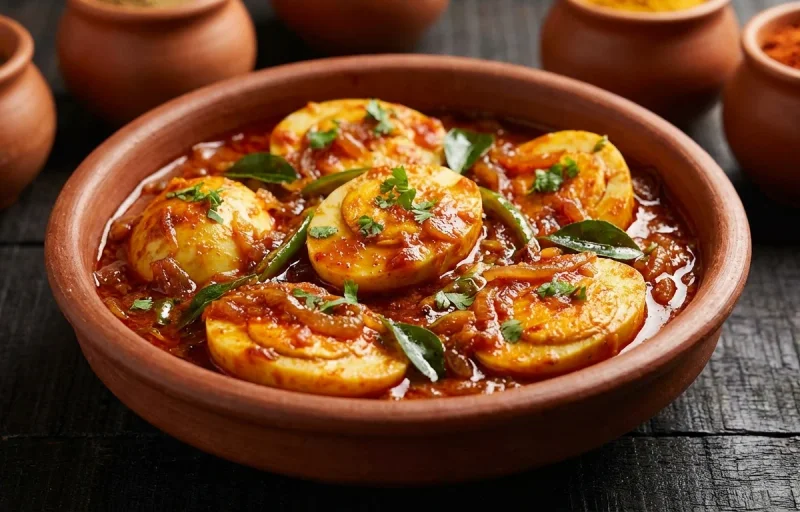
Gongura Royyalu
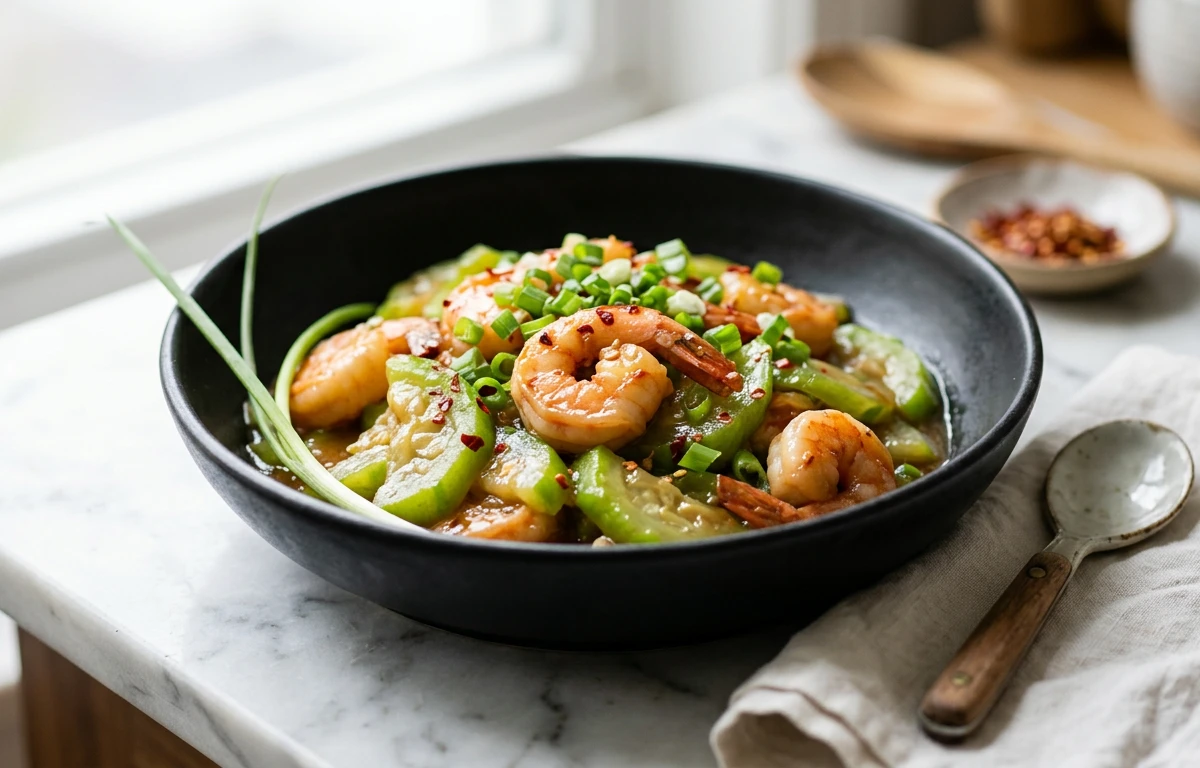
A fiery, tangy Andhra-style prawn curry cooked with fresh gongura leaves. The sourness of sorrel leaves perfectly balances the sweetness of juicy prawns, tempered with garlic and red chilies. A rustic coastal classic ready in under 30 minutes.
For 4 servings
- prep · ~5 min
Prepare the gongura paste.
1.Wash the gongura leaves thoroughly and pick them off the stems.2.Heat a pan on medium and dry roast the gongura leaves until wilted and dark green (2-3 min).3.Transfer to a plate, cool slightly, and blend into a coarse paste with 2 tbsp water. Set aside.TIPDon't skip wilting the leaves — it removes excess moisture and intensifies the sour flavor. - temper · ~2 min
Make the tempering.
1.Heat oil in a kadai or wide pan over medium heat until shimmering.2.Add mustard seeds and let them crackle (30 sec).3.Add cumin seeds, dried red chilies, and curry leaves. Sauté until fragrant (20 sec). - saute · ~10 min
Build the aromatic base.
1.Add crushed garlic and sauté until golden and fragrant (1 min).2.Add chopped onions and cook until translucent (4-5 min).3.Add slit green chilies and chopped tomatoes. Cook until tomatoes turn mushy and oil separates (4-5 min). - saute · ~1 min
Cook the masala.
1.Lower the heat and add turmeric powder, red chili powder, and coriander powder.2.Sauté the spice powders for 30 seconds until aromatic. Be careful not to burn them.TIPKeep the heat low — high heat will burn the spice powders and turn the dish bitter. - simmer · ~7 min
Add gongura paste and prawns.
1.Add the prepared gongura paste and salt. Mix well and cook for 2 minutes.2.Add the cleaned prawns and stir to coat them well with the masala.3.Pour in ¼ cup water, cover, and simmer on low heat until prawns are cooked through and curled (5-7 min).TIPDon't overcook the prawns — they turn rubbery. They're done the moment they curl into a C-shape. - simmer · ~2 min
Finish the curry.
1.Remove the lid and cook on high heat for 1-2 minutes to dry up any excess moisture.2.The dish is ready when the oil glistens on the surface and the masala clings to the prawns. - garnish
Garnish with fresh coriander leaves and serve hot.
What to keep in mind.
6 tips from the recipe — small details that make a real difference to the final dish.
- 1To reduce bitterness, squeeze and discard the gongura leaf stems before dry-roasting.
- 2Use fresh, not frozen, prawns for the best texture and sweetness in this curry.
- 3If gongura is unavailable, substitute with spinach plus a squeeze of lemon juice.
- 4Rub the prawns with a pinch of turmeric and salt before cooking to remove any fishy odor.
- 5Taste the gongura paste before adding — if too sour, add a pinch of sugar to balance.
- 6For deeper flavor, let the curry rest for 10 minutes before serving to meld the tang and spice.
Adapt it for your goals.
Low-oil
Replace 2 tbsp oil with 1 tbsp and use a non-stick pan. Add 2 tbsp of water during the onion-tomato sauté to prevent sticking — ideal for those cutting down on fats.
mild heatMild-heat
Reduce dried red chilies to one and remove seeds, skip the green chilies, and halve the red chili powder. A kid-friendly version that still delivers gongura's signature tang.
fish swapFish swap
Substitute prawns with 400g of boneless firm fish like kingfish or tilapia, cut into chunks. Add after the gongura paste and cook for 5-7 minutes — perfect for coastal fish lovers.
chicken versionChicken version
Use 400g of boneless chicken thighs, cube them, and sauté with the onion-tomato base. Simmer covered for 15-20 minutes until tender, then add the gongura paste. A heartier protein option.
vegetarian (no prawn)Vegetarian (no prawn)
Skip the prawns and add 1 cup of paneer cubes or boiled chickpeas at the end. Stir gently for 2 minutes — a plant-based version that stays true to the Andhra flavor profile.
Why this is on our healthy list.
Rich in Iron from Gongura
Gongura (sorrel leaves) is a traditional source of bioavailable iron, which helps in maintaining healthy red blood cells and energy levels.
High-Quality Lean Protein
Prawns provide a lean, low-calorie source of complete protein, essential for muscle repair and satiety without excess saturated fat.
Antioxidant Spice Blend
Mustard seeds, cumin, turmeric, and curry leaves deliver curcumin and other antioxidants that support immune function and reduce oxidative stress.
Digestive Support from Garlic
Crushed garlic in the tempering aids digestion and contains allicin, which supports cardiovascular health.
Low Carb, High Flavor
This dish is naturally low in carbohydrates and free from refined grains, making it suitable for low-carb or keto-friendly meal plans.
Frequently asked questions
Yes, but thaw and squeeze out excess water before dry-roasting. Frozen leaves are already wilted, so reduce dry-roasting time to 1-2 minutes to avoid mushiness.


.webp)