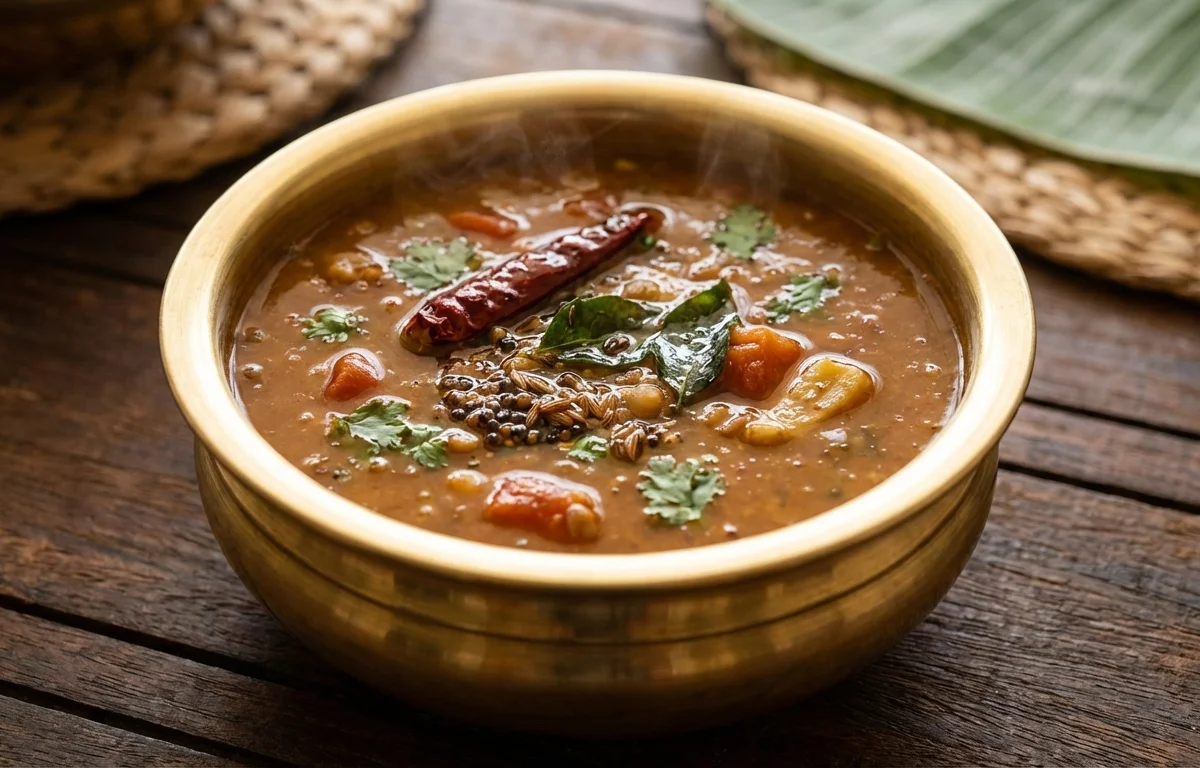
Hurali Saaru
A light, peppery Karnataka-style broth made with horse gram, tamarind, and a simple spice paste. It is warming, earthy, and perfect with hot rice as part of a comforting everyday meal.
For 4 servings
- prep · ~480 min
Soak the horse gram.
Wash the horse gram well, cover with plenty of water, and soak overnight. Drain before cooking.
- pressure cook · ~30 min
Pressure cook the horse gram.
Add the soaked horse gram and 3 cups water to a pressure cooker. Cook until very soft, about 6 to 8 whistles, then let the pressure drop naturally.
TIPCook it until soft enough to mash lightly; the cooking liquid gives the saaru its body. - boil · ~10 min
Extract the tamarind pulp.
Soak the tamarind in a little warm water for 10 minutes, squeeze well, and strain to get a smooth pulp.
- saute · ~4 min
Roast the spices for the masala.
1.Heat 1 tsp oil in a small pan over medium heat.2.Add coriander seeds, 0.5 tsp cumin seeds, black peppercorns, dried red chili, and garlic.3.Roast until fragrant and lightly colored, about 2 to 3 minutes.4.Turn off the heat and let the mixture cool slightly.TIPKeep the heat medium so the spices toast evenly without turning bitter. - mix · ~3 min
Grind the masala.
Grind the roasted spices with grated coconut and a little of the cooked horse gram liquid to make a smooth paste.
- simmer · ~10 min
Build the saaru.
1.Lightly mash a few spoonfuls of the cooked horse gram and return it to the cooker or a pot.2.Add the ground masala, tamarind pulp, jaggery, turmeric powder, salt, and the remaining 1 cup water.3.Mix well and bring the saaru to a gentle boil.4.Simmer for 8 to 10 minutes so the flavors come together. - temper · ~1 min
Make the tempering.
1.Heat the remaining 1 tsp oil in a small pan.2.Add mustard seeds and let them splutter.3.Add the remaining 0.5 tsp cumin seeds and curry leaves.4.Cook for a few seconds until fragrant. - garnish · ~1 min
Finish the saaru.
Pour the tempering over the simmering saaru and add coriander leaves. Give it one quick stir.
- serve
Serve hot.
Serve Hurali Saaru hot in small bowls or with steamed rice as part of a meal.
What to keep in mind.
7 tips from the recipe — small details that make a real difference to the final dish.
- 1Cook the horse gram until it crushes easily between your fingers; undercooked lentils make the saaru thin and gritty.
- 2Reserve all the cooking liquid from the horse gram, since that broth is what gives Hurali Saaru its earthy body.
- 3Roast the pepper, cumin, coriander, chili, and garlic only until fragrant; dark roasting can make the broth bitter.
- 4Mash just a small portion of the cooked horse gram before simmering to thicken the saaru without making it heavy.
- 5Add tamarind after the horse gram is fully cooked; acidity can slow softening if added too early.
- 6Keep the saaru at a gentle simmer after adding the ground paste so the coconut stays smooth and does not split.
- 7Pour the hot tempering directly over the finished saaru and cover for a minute to trap the curry leaf aroma.
Adapt it for your goals.
No-coconut
Skip the grated coconut for a lighter, more brothy saaru with a sharper pepper-tamarind profile.
spicierSpicier
Increase black pepper and dried red chili for a hotter, more warming version that is especially good in cool weather.
garlic freeGarlic-free
Omit the garlic in the masala for a cleaner, more traditional lentil-spice flavor if you avoid alliums.
thicker rice mixThicker-rice-mix
Mash more of the cooked horse gram and reduce a little water to make a thicker saaru that mixes beautifully with hot rice.
Why this is on our healthy list.
Protein-Rich Horse Gram
Horse gram contributes plant protein and makes this light broth more sustaining than a plain rasam-style soup.
Digestive Spice Support
Cumin, coriander, pepper, garlic, and curry leaves add aroma while traditionally helping make lentil-based dishes feel easier to digest.
Balanced, Light Broth
With modest oil and plenty of cooking liquid, this saaru feels warming and comforting without being overly rich.
Frequently asked questions
Yes. Simmer the soaked horse gram in a pot until completely soft, adding extra water as needed; it will just take much longer than pressure cooking.