Kadhi with Egg Pakora
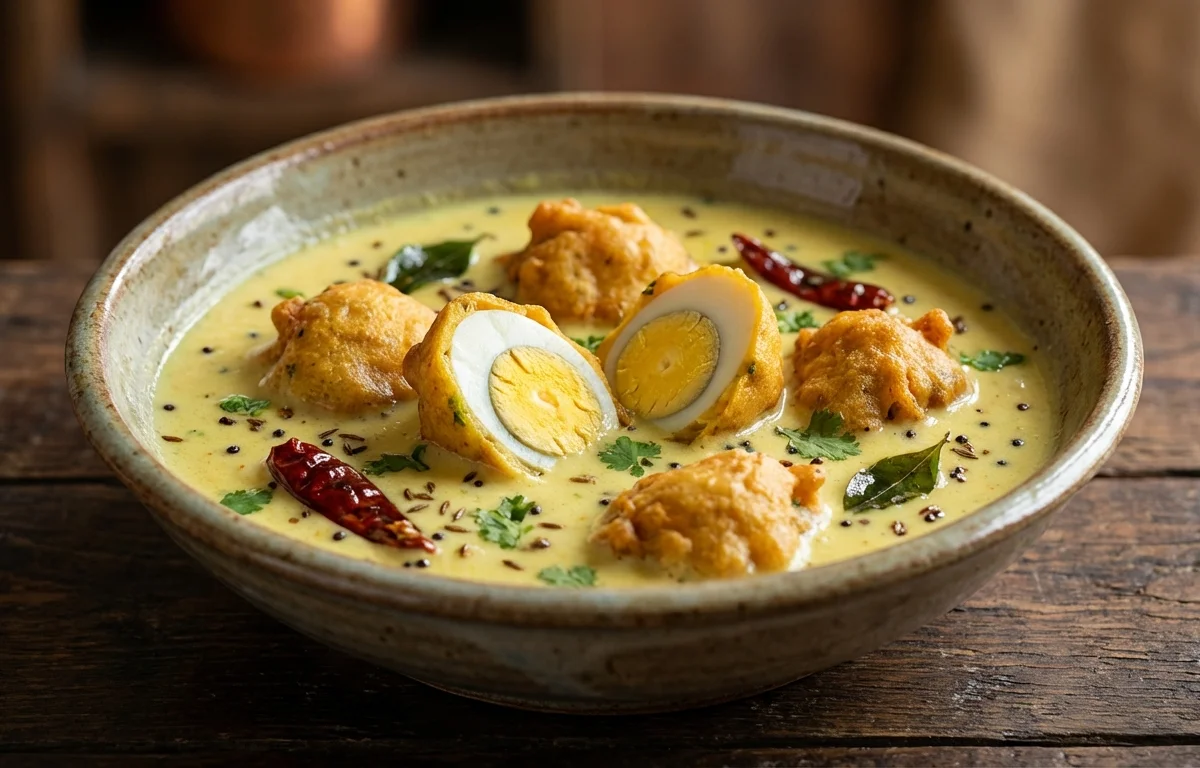
Crispy egg pakoras dunked in a creamy, tangy yogurt and gram flour gravy. This Punjabi-style kadhi gets a hearty protein boost from soft boiled egg fritters, making it a comforting one-bowl meal with steamed rice.
For 4 servings
- prep · ~15 min
Prepare the kadhi batter and boil the eggs.
1.In a large bowl, whisk 1 cup besan with 1.5 cups yogurt and 4 cups water until smooth with no lumps.2.Stir in 1 pinch turmeric powder, 0.25 tsp red chili powder, and 0.25 tsp salt into the kadhi mixture.3.Hard boil 4 eggs for 10 minutes, cool under tap water, peel, and slice in half. Set aside. - simmer · ~30 min
Simmer the kadhi.
Pour the besan-yogurt mixture into a deep pot. Bring it to a boil on high heat, stirring continuously to prevent curdling. Reduce heat to low and gently simmer uncovered for 25 minutes, stirring occasionally. The kadhi should thicken and the raw smell of besan should disappear.
TIPStir frequently in the first 5 minutes after boiling to prevent lumps forming. - prep · ~5 min
Make the egg pakora batter.
1.In a mixing bowl, take 3 tablespoons from the sifted besan reserved for the batter.2.Add 1 pinch turmeric powder, 0.25 tsp red chili powder, 0.25 tsp salt, half of the chopped onion, half the grated ginger, and half the chopped green chili.3.Add water, 1 tablespoon at a time, whisking to make a thick batter that coats the back of a spoon. - fry · ~10 min
Fry the egg pakoras.
1.Heat 2 cups of oil in a deep pan or kadai on medium-high heat.2.Dip each boiled egg half into the thick besan batter, ensuring it is well coated.3.Carefully slide the coated eggs into the hot oil one by one. Fry 2-3 at a time without crowding.4.Fry for 2-3 minutes, turning once, until golden brown and crisp. Drain on paper towels. - temper · ~3 min
Make the final tempering for the kadhi.
1.In a small pan, heat 1 tablespoon ghee on medium heat.2.Add 1 teaspoon cumin seeds and let them crackle for 30 seconds.3.Add 1 pinch fenugreek seeds, 1 pinch asafoetida, and 2 dried red chilies. Sauté for 15 seconds until fragrant.4.Pour this tempering immediately over the simmered kadhi and stir. - assemble · ~5 min
Add egg pakoras to the kadhi.
Gently slide all the fried egg pakoras into the hot kadhi gravy. Let them soak in the kadhi on a low simmer for exactly 5 minutes. This warms the pakoras and allows them to absorb some gravy while staying slightly crisp on the inside.
TIPDon't soak the pakoras for too long before serving; add them just 5 minutes ahead to keep the texture contrast. - garnish · ~1 min
Finish and serve.
Sprinkle a pinch of garam masala and chopped fresh coriander leaves on top. Serve hot in individual katoris with steamed rice.
What to keep in mind.
6 tips from the recipe — small details that make a real difference to the final dish.
- 1Whisk the besan-yogurt mixture thoroughly to avoid any lumps before boiling.
- 2Stir the kadhi continuously in the first 5 minutes after it comes to a boil to prevent curdling.
- 3Pat the boiled egg halves dry with a paper towel before battering to help the coating stick.
- 4Fry the egg pakoras only 2-3 at a time to keep the oil temperature steady and ensure even browning.
- 5Add the fried egg pakoras to the kadhi exactly 5 minutes before serving to maintain a crisp exterior.
- 6For a thicker kadhi, simmer uncovered for an extra 5-10 minutes, stirring occasionally.
Adapt it for your goals.
Vegetarian
Omit the egg pakoras entirely and instead drop small spiced onion or potato fritters (pakoras) directly into the simmering kadhi for a classic vegetarian version.
low oilLow-oil
Air-fry or bake the egg pakoras at 200°C (400°F) for 10-12 minutes, flipping halfway, instead of deep-frying to reduce oil without sacrificing crunch.
jainJain
Skip the onion, garlic, and ginger; replace with a pinch of asafoetida in the batter. Use a tadka of cumin, fennel seeds, and dried red chilies in ghee for a Jain-friendly kadhi.
high proteinHigh-protein
Add a cup of boiled chickpeas or paneer cubes to the kadhi along with the egg pakoras for an extra protein punch.
spicierSpicier
Increase the green chilies to 4-5 and add a teaspoon of crushed black pepper or chopped fresh curry leaves to the tempering for a fiery kick.
Why this is on our healthy list.
Rich in Protein
Eggs provide high-quality complete protein, while chickpea flour adds plant-based protein, making this dish a substantial meal.
Gut-Friendly Probiotics
The yogurt base is a natural source of probiotics, which support digestive health when fermented.
Gluten-Free Naturally
Both chickpea flour and yogurt are naturally gluten-free, making this safe for those with gluten intolerance.
Low in Saturated Fat
The use of ghee in small amounts for tempering keeps saturated fat moderate, especially if the pakoras are fried in vegetable oil.
Frequently asked questions
Yes, but ensure they are fresh and boiled exactly 10 minutes so the yolks are set but not rubbery. Pat them dry before battering.



.webp)