
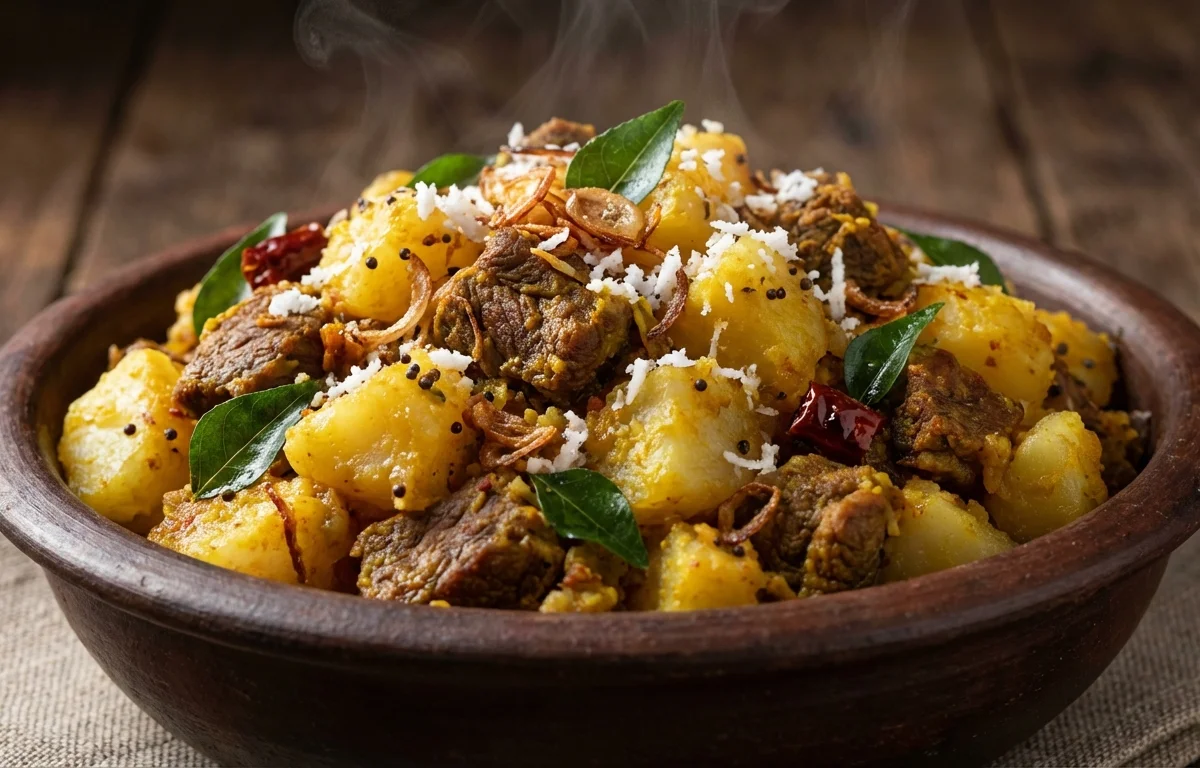
Kappa Biryani
A hearty Kerala-style tapioca and meat dish where soft kappa is cooked with a spicy masala and layered together like a rustic biryani. It is filling, bold, and deeply satisfying with coconut oil and curry leaves in every bite.
For 4 servings
- prep
Prepare the tapioca and beef.
1.Peel the tapioca well and cut it into medium cubes.2.Wash the beef and cut it into medium pieces.3.Slice the onion, chop the tomato, slit the green chili, and crush the ginger and garlic. - boil · ~20 min
Boil the tapioca until tender.
1.Add tapioca, 3 cups water, and half of the salt to a pot.2.Bring to a boil and cook until the pieces are soft but not falling apart, about 18 to 20 minutes.3.Drain the water well and lightly mash a few pieces so the final dish holds together.TIPDo not overcook the tapioca or it turns gluey when mixed with the masala. - pressure cook · ~25 min
Pressure cook the beef.
1.Add beef, turmeric powder, a pinch of the remaining salt, black pepper, and 1/2 cup water to a pressure cooker.2.Cook on medium heat until the beef is tender, about 18 to 20 minutes after pressure builds.3.Let the pressure drop naturally and keep the cooking liquid in the cooker.TIPThe beef should be tender but not shredded so it stays distinct in the final mix. - saute · ~15 min
Cook the masala base.
1.Heat coconut oil in a wide pan over medium heat.2.Add fennel seeds and curry leaves and cook for 20 seconds until fragrant.3.Add onion and green chili, then cook until the onion turns light golden, 6 to 8 minutes.4.Add ginger and garlic and sauté for 1 minute.5.Add tomato and cook until soft and pulpy, 4 to 5 minutes. - saute · ~8 min
Season the masala and add the beef.
1.Add red chili powder, coriander powder, garam masala, and the remaining salt.2.Mix for 20 to 30 seconds on low heat so the spices do not burn.3.Add the pressure-cooked beef with its cooking liquid and cook until the masala thickens and coats the meat, about 6 to 8 minutes.TIPKeep the masala fairly thick; a watery mix will make the kappa heavy and pasty. - mix · ~4 min
Fold in the tapioca.
Add the boiled tapioca to the beef masala and mix gently but thoroughly so the tapioca picks up the spices. Cook for 3 to 4 minutes on low heat, letting the flavors come together.
- garnish
Finish with coriander leaves.
- serve
Serve the kappa biryani hot.
What to keep in mind.
7 tips from the recipe — small details that make a real difference to the final dish.
- 1Drain the boiled tapioca very well before mixing, or the final kappa biryani can turn heavy and gummy.
- 2Lightly mash only a few tapioca cubes so the dish binds, while most pieces stay chunky and distinct.
- 3Let the pressure in the cooker drop naturally so the beef stays juicy and the fibers relax properly.
- 4Cook the onion to light golden, not deep brown, so the masala stays moist enough to coat the tapioca.
- 5Reduce the beef cooking liquid until thick before adding tapioca; excess gravy will make the cassava pasty.
- 6Fold the tapioca into the masala on low heat with a wide spatula to avoid breaking all the cubes.
- 7Rest the dish for 5 minutes after cooking so the tapioca absorbs the masala and the flavors settle.
Adapt it for your goals.
Mutton
Use mutton instead of beef for a deeper, gamier version; pressure-cook a little longer until tender.
extra spicyExtra-spicy
Increase green chilies and black pepper for a hotter Kerala-style finish that cuts through the richness of the tapioca.
chickenChicken
Swap in chicken for a lighter, quicker-cooking variation with the same masala and tapioca base.
dry styleDry-style
Reduce the beef liquid further and cook a bit longer after mixing for a drier, more roast-like kappa biryani.
Why this is on our healthy list.
Protein-Rich Main Dish
Beef adds satisfying protein that makes this tapioca-based dish more filling and balanced as a full meal.
Energy-Providing Cassava
Tapioca contributes substantial carbohydrates, making this a hearty dish well suited for an especially filling meal.
Aromatics With Added Value
Ginger, garlic, curry leaves, and spices add more than flavor, bringing plant compounds commonly used in traditional cooking.
Frequently asked questions
It should turn tender all the way through when pierced, but the cubes should still hold their shape and not crumble.

.webp)
.webp)