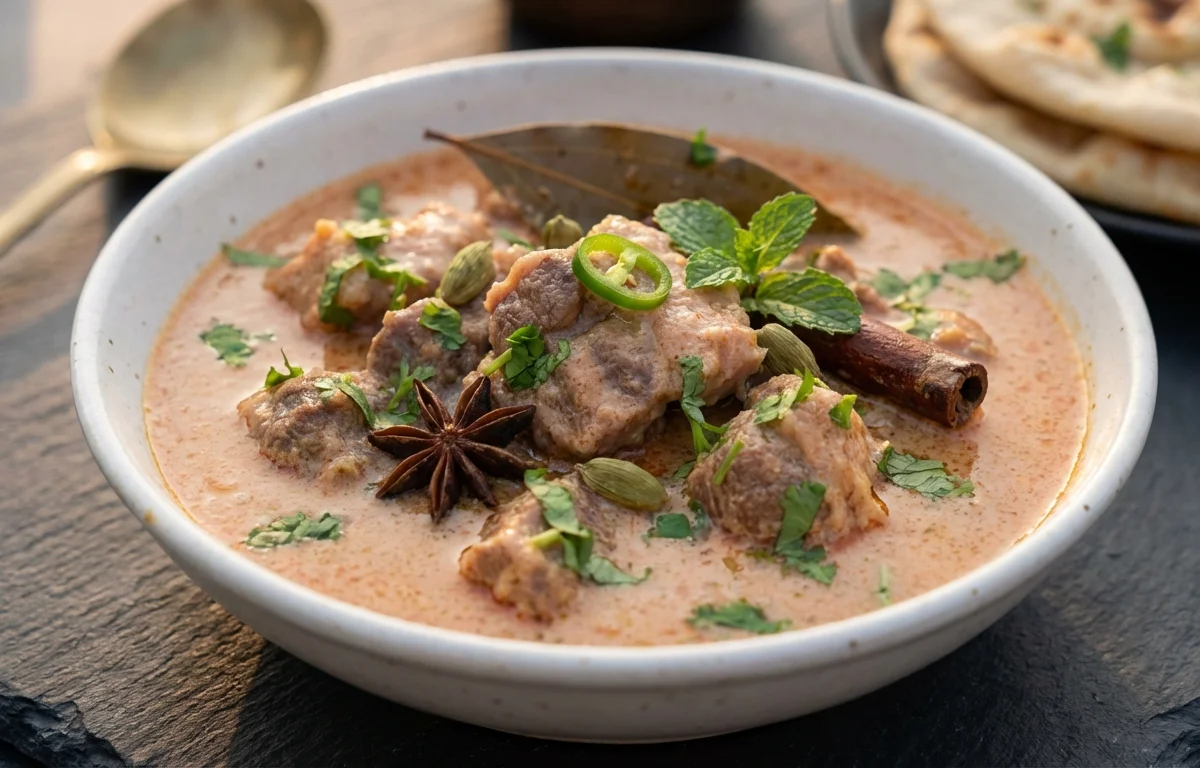
Kashmiri Daniwal Korma
A fragrant Kashmiri mutton curry where fresh coriander takes center stage. The gravy stays light and aromatic, with yogurt, fennel, dry ginger, and whole spices giving it warmth without heavy heat.
For 4 servings
- prep · ~10 min
Prep the mutton and whisk the yogurt.
1.Wash the mutton pieces and drain well.2.Finely chop the coriander leaves and keep them ready.3.Whisk the yogurt until smooth so it blends easily into the gravy. - saute · ~10 min
Heat the mustard oil and brown the mutton.
1.Heat mustard oil in a heavy pan until it reaches smoking point, then lower the heat slightly.2.Add the mutton pieces and sear them well, turning often, until lightly browned on all sides.3.Cook for 8 to 10 minutes so the meat picks up color and flavor.TIPSearing on medium-high heat builds the deep flavor this korma needs without adding onions. - temper · ~1 min
Add the whole spices and hing.
Add green cardamom, black cardamom, cloves, cinnamon, bay leaf, and asafoetida to the pan. Stir for 20 to 30 seconds until fragrant.
- mix · ~4 min
Stir in the yogurt and ground spices.
1.Lower the heat.2.Add the whisked yogurt a little at a time, stirring constantly so it does not split.3.Add fennel powder, ginger powder, and salt.4.Mix until the meat is coated and the masala looks smooth.TIPKeep the heat low while adding yogurt; high heat can make the gravy curdle. - simmer · ~40 min
Cook the korma with water.
Pour in the hot water and bring the curry to a gentle simmer. Cover and cook on low heat until the mutton is tender and the gravy is lightly reduced.
- simmer · ~9 min
Add the coriander and finish the gravy.
Add most of the chopped coriander leaves and simmer uncovered for 8 to 10 minutes. The gravy should stay light, aromatic, and slightly loose rather than thick.
TIPFresh coriander is the heart of daniwal korma, so add a generous amount near the end for its bright flavor. - garnish
Garnish with the remaining coriander.
- serve
Serve hot with steamed rice or flatbread.
What to keep in mind.
7 tips from the recipe — small details that make a real difference to the final dish.
- 1Let the mustard oil reach smoking point first, then cool slightly before searing to mellow its raw sharpness.
- 2Drain the washed mutton very well; extra surface moisture will steam the meat instead of browning it.
- 3Use full-fat yogurt and stir continuously on low heat to keep the gravy smooth and prevent splitting.
- 4Add hot, not cold, water after the yogurt so the pan temperature stays steady and the sauce stays cohesive.
- 5Do not over-reduce this korma; the gravy should remain light and slightly loose, not thick like onion-based curries.
- 6Add most of the coriander only near the end so it keeps its fresh green aroma instead of turning dull.
- 7If the mutton is still firm after simmering, cook longer in small splashes of hot water rather than boiling hard.
Adapt it for your goals.
Low-oil
Use 1 tablespoon mustard oil and brown the mutton in batches to keep flavor while making the curry a little lighter.
chickenChicken
Swap mutton for bone-in chicken for a faster version; reduce simmering time so the meat stays juicy.
extra herbyExtra-herby
Blend part of the coriander with the yogurt for a greener gravy and a more pronounced daniwal flavor.
milderMilder
Reduce black cardamom to half or omit it if you want a softer, less smoky spice profile.
Why this is on our healthy list.
Protein-Rich Main Dish
Bone-in mutton provides substantial protein, making this curry satisfying and well suited for a hearty meal.
Herb-Forward Gravy
A large amount of fresh coriander adds herbal freshness along with plant compounds and a lighter feel than heavy cream-based curries.
Digestive Spice Blend
Fennel, dry ginger, cardamom, and asafoetida are traditional warming spices often used to make rich meat dishes feel more balanced.
Frequently asked questions
This usually happens when yogurt is added over high heat or all at once. Lower the heat, whisk the yogurt smooth, and stir it in gradually.