Kathal ki Sabzi
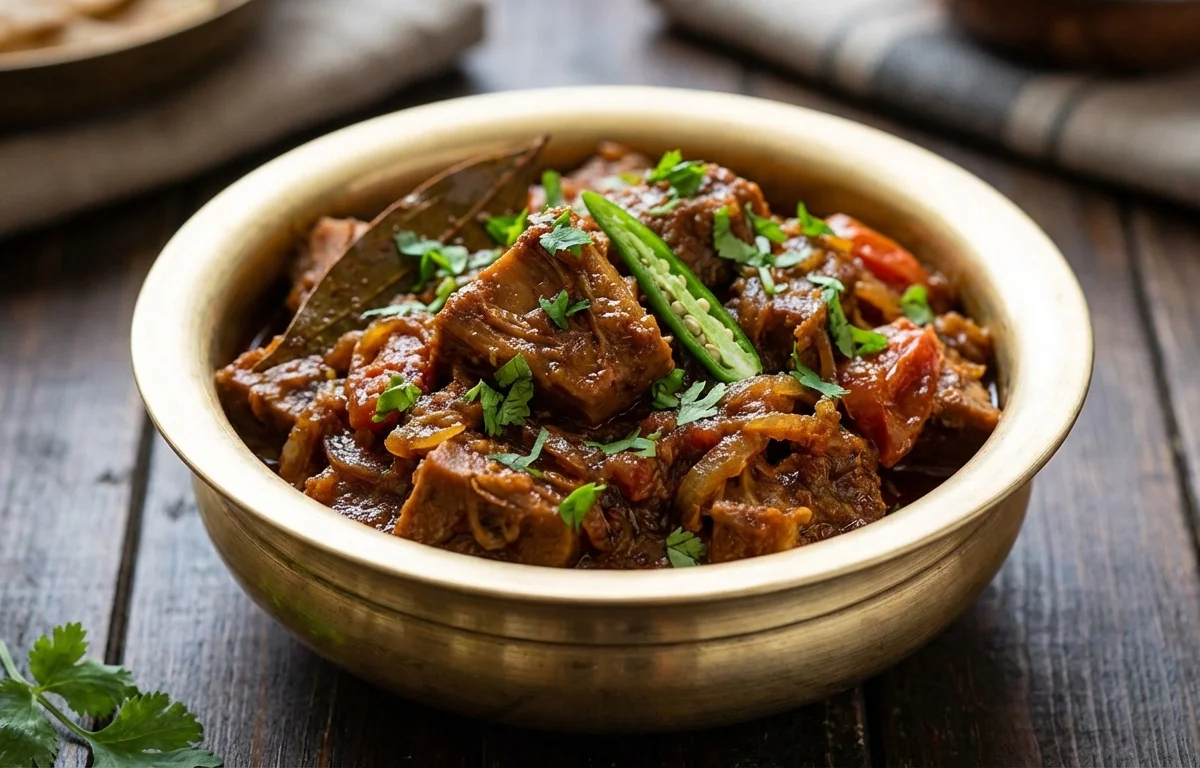
Tender young jackfruit cooked with onions, tomatoes, and everyday spices until it turns rich, savory, and full of flavor. This homestyle North Indian sabzi has a meaty bite and tastes wonderful with roti or paratha.
For 4 servings
- prep · ~10 min
Prepare the kathal.
1.Grease your knife and hands lightly with a few drops of oil to handle the kathal easily.2.Peel the young kathal if needed and cut it into medium pieces.3.Rinse the pieces well under running water.TIPA little oil on your hands helps with the sticky sap. - boil · ~12 min
Boil the kathal until just tender.
Add the kathal and 2 cups water to a pot. Bring to a boil and cook for 10 to 12 minutes until just tender but not mushy. Drain well and keep aside.
TIPDo not overcook the kathal here, or it can break apart later in the pan. - saute · ~8 min
Make the masala base.
1.Heat oil in a kadai over medium heat.2.Add cumin seeds and bay leaf and let them sizzle for 20 to 30 seconds.3.Add onion and cook until light golden, about 5 to 6 minutes.4.Add ginger, garlic, and green chili and cook for 1 minute until fragrant. - saute · ~8 min
Cook the tomatoes and spices.
1.Add tomato and mix well.2.Add turmeric powder, red chili powder, coriander powder, and salt.3.Cook until the tomatoes soften and the masala looks thick, about 5 to 6 minutes.4.Splash in 0.5 cup water and cook for 2 minutes.TIPCook the masala until the oil starts to show at the edges for fuller flavor. - saute · ~8 min
Coat the kathal in the masala.
Add the boiled kathal to the pan and mix gently so every piece gets coated well. Cook on medium heat for 6 to 8 minutes, stirring once or twice, until the sabzi turns flavorful and semi-dry.
- garnish
Finish with garam masala and coriander leaves.
Sprinkle garam masala and chopped coriander leaves over the sabzi and mix gently.
- serve
Serve hot.
Serve Kathal ki Sabzi hot with roti, paratha, or plain rice.
What to keep in mind.
7 tips from the recipe — small details that make a real difference to the final dish.
- 1Oil your knife, board, and hands before cutting fresh kathal so the sticky sap does not cling everywhere.
- 2Boil the jackfruit only until a knife slips in with slight resistance; overboiled pieces will shred while mixing.
- 3Drain the boiled kathal well before adding it to the kadai, or the sabzi can turn watery instead of semi-dry.
- 4Let the onions turn light golden, not deeply brown, so the masala stays balanced and does not taste bitter.
- 5Cook the tomato-spice masala until it looks thick and oil peeks at the edges; that is when the raw tomato taste is gone.
- 6Stir gently after adding kathal so the pieces stay intact and keep their meaty bite.
- 7This sabzi tastes even better after 30 minutes of resting, when the jackfruit absorbs the onion-tomato masala.
Adapt it for your goals.
Dry-style
Skip a little of the splash water and cook longer after adding kathal for a drier sabzi that pairs especially well with paratha.
gravy styleGravy-style
Add extra water after the masala cooks and simmer a few minutes for a light curry to serve with plain rice.
no onion no garlicNo-onion-no-garlic
Omit onion and garlic, increase tomatoes slightly, and lean on ginger, cumin, and coriander for a satvik-style version.
spicierSpicier
Add one extra green chili or a little more red chili powder if you want the sabzi to have more heat.
Why this is on our healthy list.
Fiber-Rich Vegetable Dish
Young jackfruit, onion, and tomato add fiber, making this sabzi a filling plant-based meal component.
Plant-Based and Satisfying
Kathal has a hearty, meaty texture, so this sabzi feels substantial while staying fully vegetarian.
Phytonutrients From Spices
Ginger, garlic, cumin, coriander, chili, and turmeric bring aromatic compounds along with flavor depth.
Frequently asked questions
Yes. Drain and rinse it well, then reduce or skip the boiling step if the pieces are already tender.



.webp)