Kollu Rasam
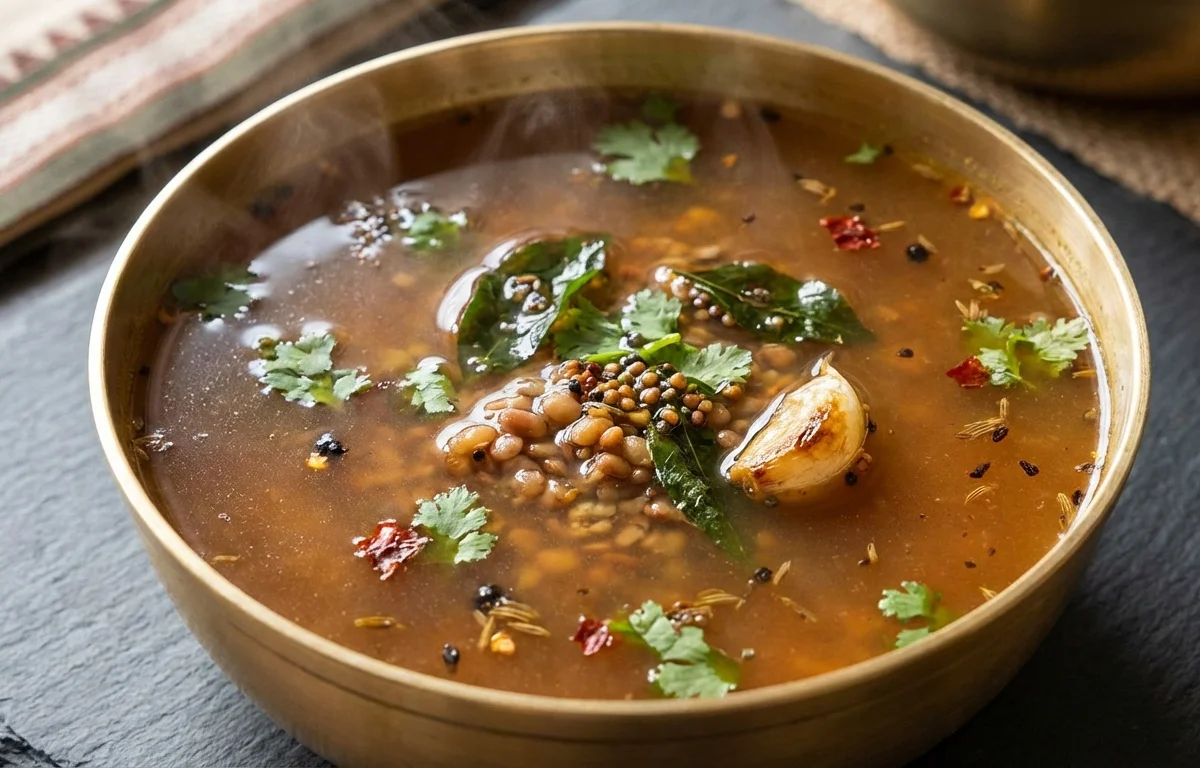
Peppery, tangy kollu rasam is a comforting South Indian soup made with horse gram stock, tamarind, tomato, and a fragrant tempering. Light yet full of flavor, it pairs beautifully with hot rice or can be sipped on its own.
For 4 servings
- pressure cook · ~25 min
Pressure cook the horse gram.
1.Add soaked horse gram and 3 cups water to a pressure cooker.2.Cook on medium heat for 6 to 8 whistles until the horse gram is soft.3.Cool slightly, then strain and reserve the cooking liquid.4.Lightly mash 2 tablespoons of the cooked horse gram and keep aside for the rasam.TIPDo not discard the cooking liquid; it gives the rasam its body and deep earthy flavor. - prep · ~5 min
Prepare the rasam base.
1.Extract thick tamarind water from the soaked tamarind.2.Lightly crush the black pepper, 1/2 tsp cumin seeds, and garlic.3.Crush the tomato by hand or mash it well. - boil · ~10 min
Boil the tamarind mixture.
Add tamarind extract, crushed tomato, mashed horse gram, crushed pepper-cumin-garlic mixture, turmeric powder, asafoetida, and salt to a pot. Pour in the reserved horse gram cooking liquid and bring it to a gentle boil until the raw tamarind smell fades.
TIPKeep the boil gentle so the rasam stays light and aromatic instead of turning flat. - simmer · ~7 min
Simmer until frothy.
Lower the heat and simmer the rasam for 5 to 7 minutes, just until it turns slightly frothy on top. Do not boil hard after this stage.
- temper · ~1 min
Make the tempering.
1.Heat ghee in a small pan over medium heat.2.Add mustard seeds and let them splutter.3.Add the remaining 1/2 tsp cumin seeds, dried red chili, and curry leaves.4.Cook for a few seconds until fragrant.TIPAdd curry leaves carefully because they can splutter when they hit the hot ghee. - assemble · ~1 min
Finish the rasam.
Pour the hot tempering over the rasam and mix gently. Add chopped coriander leaves and switch off the heat.
- serve
Serve the kollu rasam hot.
What to keep in mind.
7 tips from the recipe — small details that make a real difference to the final dish.
- 1Soak the horse gram overnight so it cooks evenly and gives a fuller-flavored stock.
- 2Strain the cooked horse gram liquid well; this keeps the rasam light while retaining its earthy taste.
- 3Mash only a little cooked horse gram into the broth for body without making it thick like dal.
- 4Simmer only until the rasam turns slightly frothy; a hard boil dulls the pepper, cumin, and garlic aroma.
- 5Cook the tamarind base until the raw smell disappears before adding the tempering.
- 6Pour the hot ghee tempering over the rasam at the end and cover briefly to trap the aroma.
- 7Leftover cooked horse gram can be used in sundal or chutney instead of discarding it.
Adapt it for your goals.
Vegan
Replace ghee with coconut oil or sesame oil in the tempering for a fully plant-based version with a slightly different South Indian aroma.
jainJain
Skip the garlic and asafoetida if needed, and increase crushed pepper and cumin for warmth and depth.
spicierSpicier
Add extra black pepper or one more dried red chili if you prefer a hotter, more medicinal-style rasam.
no tomatoNo-tomato
Omit the tomato and slightly increase tamarind for a sharper, more old-style kollu rasam profile.
Why this is on our healthy list.
Legume-Based Nourishment
Horse gram adds plant protein and fiber, making this rasam more sustaining than a plain spice broth.
Digestive Spice Support
Black pepper, cumin, garlic, and asafoetida are traditional rasam ingredients known for warming the palate and aiding digestion.
Light Yet Satisfying
Because it is broth-based and lightly tempered, this dish feels comforting without being heavy.
Frequently asked questions
Yes. Simmer the soaked horse gram in a pot until fully soft, then strain and use the cooking liquid the same way.