
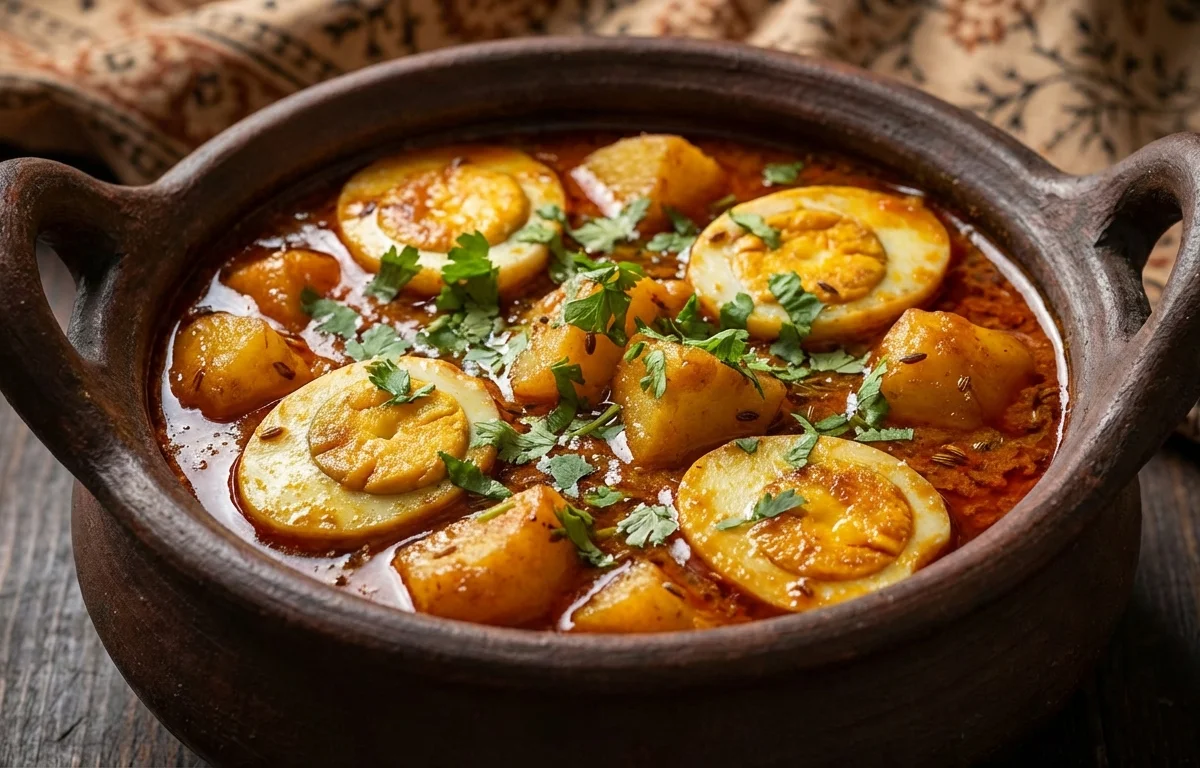
Koni Torkari
A light Bengali-style chicken curry with potatoes, onion, ginger, and warm whole spices. The gravy is thin, homely, and deeply comforting, making it a lovely match for plain rice in an everyday meal.
For 4 servings
- prep · ~10 min
Prep the chicken and vegetables.
1.Wash the chicken and drain it well.2.Peel and halve the potatoes.3.Slice the onion finely and chop the tomato.4.Make a paste from the ginger and garlic. - mix · ~5 min
Coat the chicken.
Mix the chicken with turmeric powder, red chili powder, and a little of the salt. Set it aside while you start the curry.
- saute · ~7 min
Brown the potatoes lightly.
Heat mustard oil in a kadai until it just starts to smoke lightly, then lower the heat. Add the potatoes and cook until lightly golden on the edges. Remove and keep aside.
TIPMustard oil tastes best after smoking briefly; it takes away the raw sharpness. - temper · ~1 min
Bloom the whole spices.
In the same oil, add bay leaf, cinnamon, green cardamom, and cloves. Let them sizzle for a few seconds until fragrant.
- saute · ~10 min
Cook the onion base.
1.Add the sliced onion and cook until soft and light golden.2.Add ginger-garlic paste and sauté until the raw smell goes away.3.Add tomato and cook until softened. - saute · ~5 min
Cook the masala.
Add cumin powder, coriander powder, the remaining salt, and sugar. Sprinkle a little water if needed and cook until the masala looks glossy and the oil starts to come out.
- saute · ~8 min
Seal the chicken in the masala.
Add the chicken and cook on medium heat, stirring well so each piece is coated. Cook until the chicken changes color and starts to release its juices.
- simmer · ~20 min
Simmer the curry with potatoes.
1.Return the potatoes to the kadai.2.Add the hot water and slit green chili.3.Bring the curry to a boil, then lower the heat.4.Cover and simmer until the chicken is cooked and the potatoes are tender.TIPKeep the gravy light and pourable; Koni Torkari is usually not a thick curry. - garnish
Garnish with cilantro.
- serve
Serve hot with plain rice.
What to keep in mind.
7 tips from the recipe — small details that make a real difference to the final dish.
- 1Smoke the mustard oil briefly, then reduce the heat before adding potatoes so the curry keeps its Bengali flavor without tasting harsh.
- 2Lightly browning the potato halves first helps them hold shape during simmering and keeps them from turning grainy in the thin gravy.
- 3Cook the onion only to light golden, not deep brown, or the torkari will lose its delicate homestyle taste.
- 4When the masala turns glossy and leaves a little oil at the edges, it is ready for the chicken; adding chicken too early can make the gravy taste raw.
- 5Use hot water for the gravy so the chicken keeps cooking steadily and the oil does not seize up in the kadai.
- 6Keep the final broth thin and pourable; this dish is meant to soak into plain rice rather than cling like a rich kosha curry.
- 7Rest the curry for 10 minutes after cooking so the potatoes absorb the spiced broth and the whole spices perfume the gravy more evenly.
Adapt it for your goals.
Low-oil
Use less mustard oil and skip deep browning the potatoes; the curry stays lighter while keeping its thin everyday style.
spicierSpicier
Add an extra slit green chili or a pinch more red chili powder for a sharper heat that still suits the light gravy.
no garlicNo-garlic
Omit garlic and increase ginger slightly for a simpler, gentler flavor preferred in some homes.
pressure cookerPressure-cooker
After bhunoing the masala and adding chicken, pressure cook briefly with potatoes and water for a faster weekday version.
Why this is on our healthy list.
Protein from Bone-In Chicken
Chicken makes the dish filling and satisfying, while bone-in pieces also enrich the light broth with deeper savory flavor.
Warming Digestive Spices
Ginger, garlic, cumin, coriander, and whole garam spices add aroma while contributing traditional digestive support.
Balanced Everyday Curry
With a thin gravy, modest oil, and potatoes for energy, this is a lighter homestyle curry compared with richer restaurant-style chicken dishes.
Frequently asked questions
Yes, but bone-in chicken gives the broth more flavor. If using boneless pieces, reduce the simmering time so they do not dry out.


-curry.webp)
.webp)