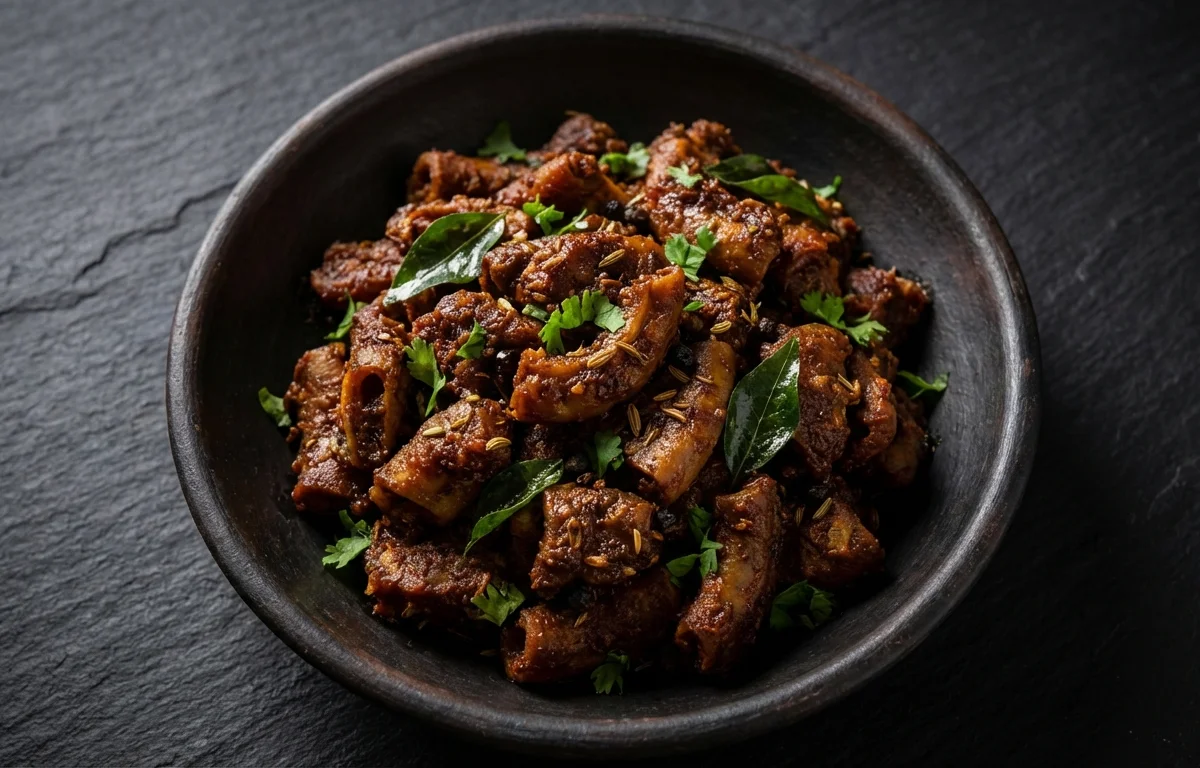
Kudal Varuval
A spicy Tamil-style goat intestine fry with deep roasted masala flavor and a chewy, satisfying bite. Cleaned well, pressure cooked till tender, then tossed with onion, ginger, garlic, and black pepper for a bold side dish.
For 4 servings
- prep · ~15 min
Clean the goat intestine well.
1.Rinse the goat intestine several times under running water.2.Rub it with turmeric powder and lemon juice to reduce any strong smell.3.Rinse again very well and cut into small bite-size pieces.TIPCleaning thoroughly is the key to good flavor and texture. - pressure cook · ~20 min
Pressure cook the intestine until tender.
1.Add the cleaned goat intestine to a pressure cooker with water.2.Cook on medium heat for 4 to 5 whistles, until tender but not mushy.3.Let the pressure drop naturally, then open and keep the cooked intestine aside.TIPIf there is too much liquid left, keep only a few spoonfuls for the final fry. - saute · ~12 min
Cook the masala base.
1.Heat oil in a wide pan over medium heat.2.Add fennel seeds, cumin seeds, and curry leaves and cook until fragrant.3.Add onion and green chili, then cook until the onion turns light golden.4.Add ginger and garlic and cook until the raw smell goes away.5.Add tomato and cook until soft and pulpy. - saute · ~1 min
Add the spice powders.
Add red chili powder, coriander powder, black pepper powder, garam masala, and salt. Mix well and cook for 1 minute so the spices lose their raw taste.
TIPKeep the heat low while adding spice powders so they do not burn. - fry · ~10 min
Fry the cooked intestine with the masala.
1.Add the pressure-cooked goat intestine to the pan.2.Toss well so every piece is coated with the masala.3.Add a few spoonfuls of the cooking liquid if needed to loosen the pan.4.Cook on medium heat, stirring often, until the masala clings to the pieces and the dish turns dry.TIPCook uncovered for the best varuval texture. - garnish
Finish with cilantro.
- serve
Serve hot with rice or parotta.
What to keep in mind.
7 tips from the recipe — small details that make a real difference to the final dish.
- 1After pressure cooking, test one piece by biting it; it should be tender with chew, not rubbery or mushy.
- 2Drain off excess cooking liquid before frying so the masala roasts onto the intestine instead of turning gravy-like.
- 3Slice the onions fine and cook them to light golden; this gives the varuval its deep, slightly sweet base.
- 4Keep the pan wide and uncovered in the final fry so moisture evaporates quickly and the pieces get a proper dry finish.
- 5Add the reserved cooking liquid only a spoon at a time; too much will make the masala separate and slow browning.
- 6A final dusting of black pepper just before switching off the heat sharpens the classic Tamil-style finish.
- 7This dish reheats well; warm it in a pan, not the microwave, to bring back the dry roasted texture.
Adapt it for your goals.
Extra-pepper
Increase black pepper and reduce red chili for a more traditional pepper-forward kudal varuval with sharper heat.
coconut oilCoconut-oil
Use coconut oil for the final fry to add a deeper South Indian aroma that pairs especially well with curry leaves and fennel.
with liverWith-liver
Add a little goat liver in the last few minutes for a mixed offal varuval with richer flavor and softer texture contrast.
dry roast styleDry-roast-style
Skip the tomato for a drier, darker fry where pepper, fennel, and browned onion stand out more strongly.
Why this is on our healthy list.
Rich in Protein
Goat intestine provides animal protein that makes this varuval filling and satisfying as a small side dish.
Contains Iron and B Vitamins
Organ meats are naturally known for iron and B vitamins, which can support an overall nutrient-dense meal.
Digestive Spice Support
Ginger, garlic, cumin, fennel, and black pepper add strong flavor and are traditionally used in hearty meat preparations.
Frequently asked questions
Wash it several times, rub well with turmeric and lemon juice, then rinse thoroughly before cutting and cooking.