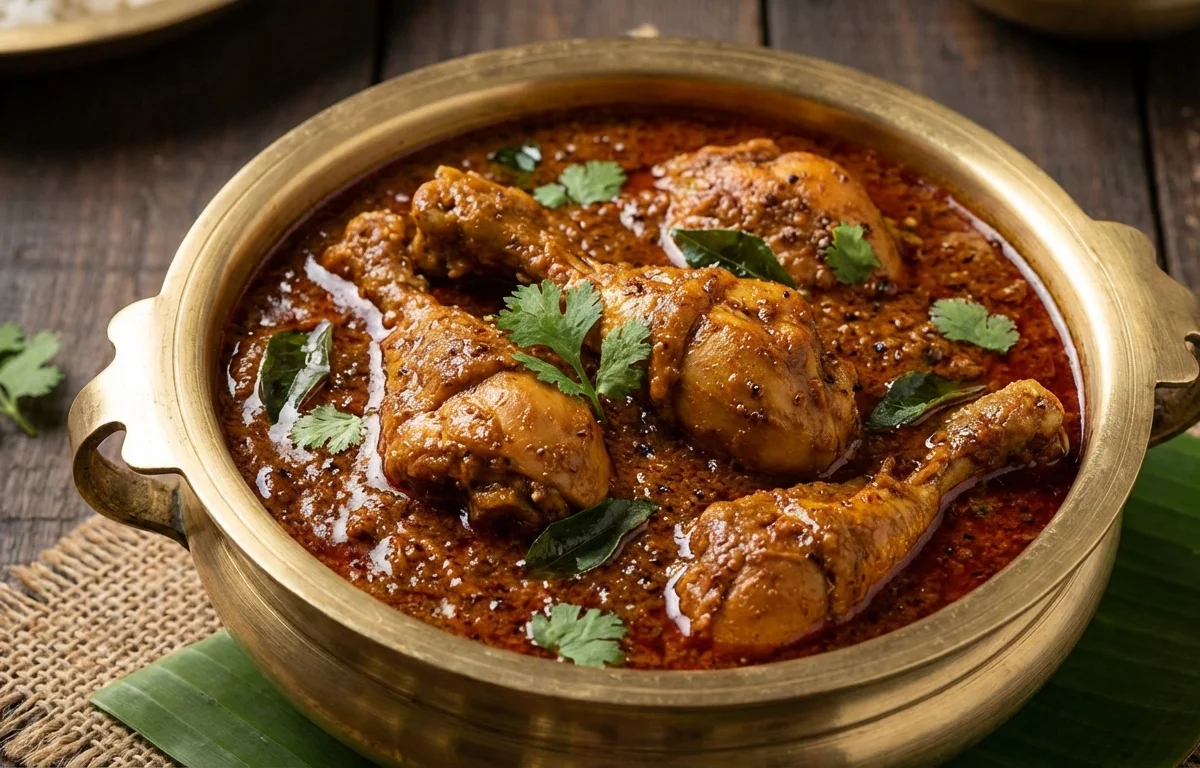
Kundapura Koli Saaru
A coastal Karnataka chicken curry with a deep roasted spice base, gentle heat, and a rich onion-coconut gravy. This homestyle saaru tastes even better after a short rest and pairs beautifully with neer dosa, rice, or idli.
For 4 servings
- prep
Prepare the chicken and aromatics.
1.Wash the chicken pieces and drain well.2.Slice the onions thinly.3.Peel the garlic and chop the ginger roughly.4.Keep the grated coconut, curry leaves, and tamarind paste ready. - roast · ~7 min
Roast the spices and coconut.
1.Heat a dry pan over low to medium heat.2.Add dried red chili, coriander seeds, cumin seeds, fenugreek seeds, and black peppercorns.3.Roast until fragrant and slightly darker, about 2 to 3 minutes.4.Add the grated coconut and roast until golden and nutty, about 4 to 5 minutes.TIPKeep the heat moderate and stir often so the coconut turns evenly golden without burning. - mix
Grind the masala.
Cool the roasted mixture slightly, then grind it with tamarind paste and 0.5 cup water to a smooth, thick masala.
- saute · ~11 min
Cook the onion base.
1.Heat oil in a deep pan over medium heat.2.Add curry leaves, then add the sliced onions.3.Cook until the onions turn deep golden, about 8 to 10 minutes.4.Add garlic, ginger, turmeric powder, and sauté for 1 minute.TIPThe dark golden onions give this saaru its signature depth, so do not rush this step. - saute · ~6 min
Coat the chicken in the base.
Add the chicken and salt. Cook for 5 to 6 minutes, stirring well, until the pieces lose their raw look and are coated in the onion mixture.
- simmer · ~25 min
Simmer the saaru.
1.Add the ground masala and mix well with the chicken.2.Pour in the remaining 2 cups water and stir.3.Add the jaggery and bring the curry to a gentle boil.4.Lower the heat, cover loosely, and simmer until the chicken is tender and the gravy thickens, about 20 to 25 minutes.TIPIf the gravy gets too thick before the chicken is done, splash in a little more water and continue simmering. - rest · ~10 min
Let the curry rest for 10 minutes.
- serve
Serve the Kundapura Koli Saaru hot.
What to keep in mind.
7 tips from the recipe — small details that make a real difference to the final dish.
- 1Roast the coconut only to an even golden brown; dark spots can make the saaru taste bitter.
- 2Let the roasted spices cool slightly before grinding, so the masala turns smooth instead of oily.
- 3Slice the onions thin and cook them to deep golden, not just soft, for the curry's signature depth.
- 4Bone-in chicken gives the gravy better body and flavor than boneless pieces in this style of saaru.
- 5Keep the simmer gentle after adding the coconut masala, or the gravy can catch at the bottom.
- 6Resting the curry for 10 to 15 minutes helps the tamarind, jaggery, and roasted spice flavors settle.
- 7This saaru tastes even better the next day; reheat on low heat with a small splash of water.
Adapt it for your goals.
Spicier
Add 2 to 4 extra dried red chilies or a few more peppercorns for a hotter, more robust saaru.
thinner saaruThinner-saaru
Increase the water slightly for a looser, more broth-like curry that pairs especially well with neer dosa.
mangalorean style touchMangalorean-style touch
Use coconut oil for sautéing to bring a more pronounced coastal aroma to the finished curry.
egg koli saaru styleEgg-koli-saaru-style
Replace chicken with boiled eggs for a simpler version that still works beautifully with the same roasted masala.
Why this is on our healthy list.
Protein-Rich Main Dish
Bone-in chicken makes this curry filling and provides substantial protein for a satisfying meal.
Spice-Forward Without Heavy Cream
The gravy gets richness from coconut, onions, and roasted spices rather than cream or butter.
Contains Aromatic Digestive Spices
Ginger, garlic, cumin, coriander, and pepper add flavor while contributing traditional digestive appeal.
Frequently asked questions
Yes, but bone-in pieces give a fuller-tasting gravy. If using boneless chicken, reduce the simmer time so the meat does not dry out.