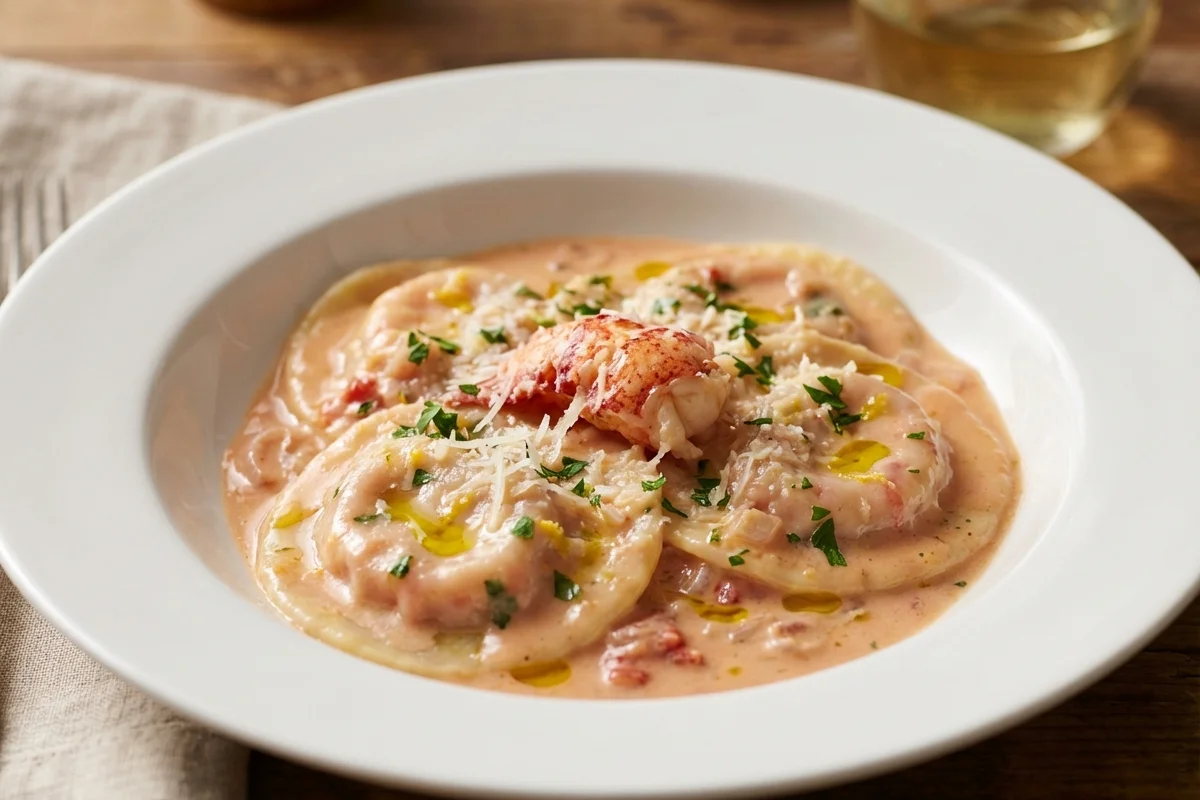
Lobster Ravioli
Delicate homemade pasta parcels filled with a luxurious blend of tender lobster, creamy ricotta, and fresh herbs. These elegant ravioli are coated in a silky, garlic-infused butter sauce that lets the sweet lobster flavor shine. A restaurant-quality dish you can make at home.
For 4 servings
- prep · ~40 min
Make the pasta dough.
1.Mound the flour on a clean work surface and create a well in the center.2.Crack the eggs into the well and add a pinch of salt.3.Using a fork, beat the eggs gently, gradually incorporating flour from the inner walls.4.Knead the shaggy dough by hand for 8-10 minutes until smooth and elastic.5.Wrap the dough in plastic wrap and rest at room temperature for 30 minutes.TIPIf the dough feels sticky, dust with a little more flour. If it feels dry, wet your hands slightly while kneading. - bake · ~12 min
Bake the lobster tails.
1.Heat the oven to 350°F (175°C).2.Brush the lobster meat with olive oil and place on a parchment-lined baking sheet.3.Bake for 10-12 minutes until just opaque and cooked through.4.Cool the lobster for 5 minutes, then finely chop into small, even pieces.TIPDon't overbake the lobster. It will cook briefly again when the ravioli are boiled. - mix · ~15 min
Prepare the lobster filling.
1.In a bowl, combine the chopped lobster, drained ricotta, and parmesan.2.Add the lemon zest, parsley, and a pinch of black pepper.3.Fold gently until all ingredients are just combined. Don't overmix.4.Refrigerate the filling for 15 minutes to firm up.TIPMake sure the ricotta is well-drained, otherwise the filling will be watery and leak from the ravioli. - knead · ~20 min
Roll out the pasta sheets.
1.Divide the rested dough into 4 equal portions.2.Flatten one portion into a rectangle and pass it through the widest setting of the pasta maker.3.Fold the sheet in thirds and pass it through the widest setting again. Repeat this folding process 2 more times.4.Continue rolling the sheet through progressively thinner settings until it's about 1mm thick.5.Repeat with the remaining dough portions, keeping rolled sheets covered with a damp towel.TIPWork with one portion of dough at a time, keeping the others wrapped to prevent drying. - assemble · ~15 min
Fill and shape the ravioli.
1.Lay one pasta sheet flat. Place heaping teaspoonfuls of filling in rows 3 inches apart.2.Brush a thin layer of water around each mound of filling.3.Gently lay a second pasta sheet over the top. Press around the filling to remove any air pockets.4.Cut into individual ravioli with a 3-inch round cutter or a sharp knife.5.Press the edges firmly with a fork to seal. Place finished ravioli on a floured baking sheet.TIPRemoving air pockets is essential — trapped air causes ravioli to burst open during boiling. - boil · ~5 min
Boil the ravioli.
1.Bring a large pot of water to a gentle boil. Add 1 tablespoon of salt.2.Carefully drop the ravioli into the water, giving them a gentle stir to prevent sticking.3.Cook for 3-4 minutes until the pasta is tender and the filling is heated through.4.Use a slotted spoon to gently lift the ravioli out. Drain briefly and reserve 1/2 cup of pasta water.TIPWatch for the ravioli to float — that's your signal they're nearly done. - saute · ~4 min
Make the garlic butter sauce.
1.In a large skillet over medium heat, melt the butter until it begins to foam.2.Add the sliced garlic and cook gently for 1-2 minutes until fragrant and barely golden.3.Remove the pan from heat and stir in the lemon juice and a pinch of black pepper.4.Splash in a small amount of reserved pasta water to create a light emulsion.TIPKeep the heat low to medium — garlic burns quickly and turns bitter. - assemble · ~2 min
Coat the ravioli in the sauce and serve.
1.Gently add the drained ravioli to the skillet with the butter sauce.2.Toss very gently for 30 seconds until each ravioli is coated in the silky sauce.3.Plate immediately and finish with extra parmesan, fresh parsley, and a hint of lemon zest.TIPToss with care — freshly made ravioli are delicate treasures.
What to keep in mind.
8 tips from the recipe — small details that make a real difference to the final dish.
- 1Drain ricotta in a fine-mesh sieve for at least 30 minutes to prevent a watery filling.
- 2Chill the filling for 15 minutes — it firms up, making ravioli assembly much easier.
- 3Seal ravioli edges with a fork to create a decorative crimp and ensure no filling leaks.
- 4Reserve 1/2 cup pasta water before draining — it helps emulsify the butter sauce.
- 5Cook ravioli in a gentle boil, not a rolling boil, to prevent them from tearing open.
- 6Toss ravioli with sauce using a gentle lifting motion to avoid breaking delicate pasta.
- 7Slice garlic thinly rather than mincing to infuse the butter without burning.
- 8Make the ravioli a day ahead and freeze on a tray, then transfer to a bag for later.
Adapt it for your goals.
Scallop ravioli
Replace lobster with chopped seared sea scallops for a similar sweet, tender filling that's more budget-friendly.
herb butter sauceHerb butter sauce
Swap garlic for 2 tablespoons of chopped fresh sage or tarragon in the butter sauce for a different aromatic profile.
lighter lemon cream sauceLighter lemon cream sauce
Instead of garlic butter, swirl 1/4 cup heavy cream and 1/4 cup reserved pasta water into the pan for a richer, tangier sauce.
Why this is on our healthy list.
High-Quality Protein
Lobster provides lean, high-quality protein essential for muscle repair and satiety.
Rich in B Vitamins
Lobster is a good source of vitamin B12 and niacin, supporting energy metabolism and nerve function.
Mineral Boost
Lobster delivers zinc, selenium, and copper, which support immune function and antioxidant defenses.
Calcium from Dairy
Ricotta and Parmesan contribute calcium for strong bones and teeth.
Frequently asked questions
Yes, thaw them overnight in the refrigerator, pat dry, and proceed as directed. Avoid thawing in water to prevent waterlogged meat.