Mansa Piaji
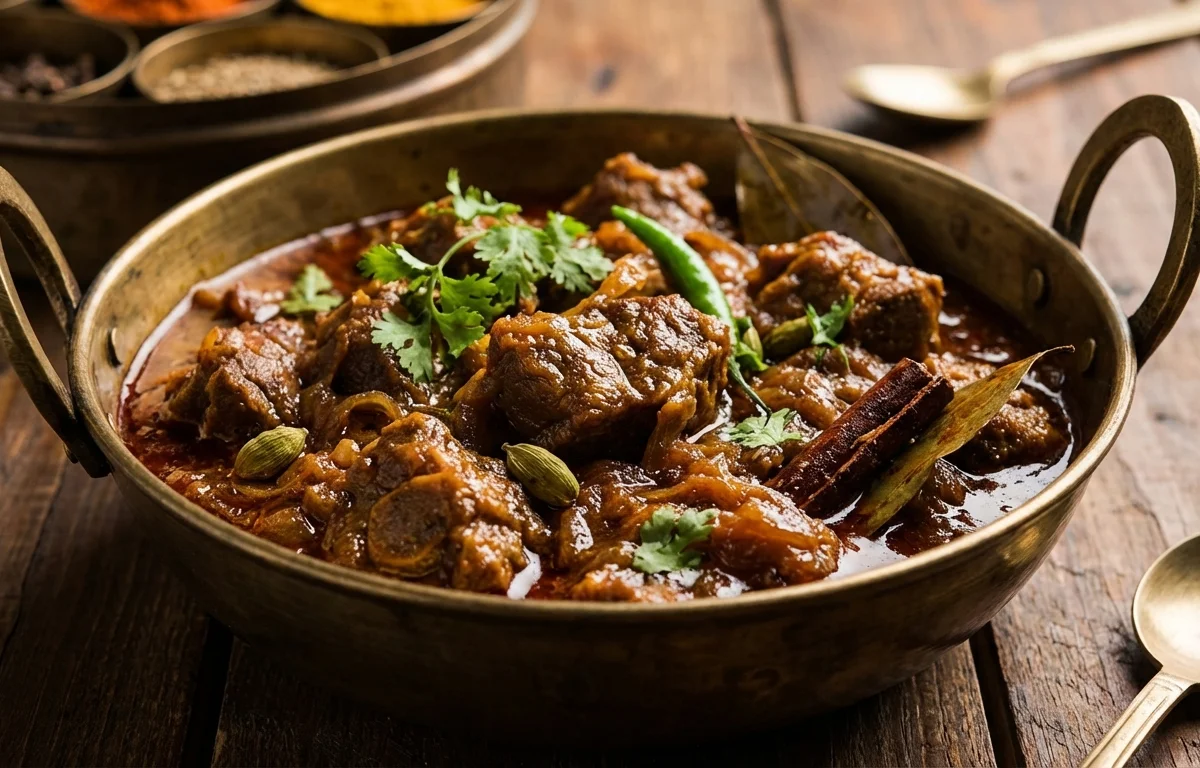
A classic Odia mutton curry where tender pieces of goat meat are slow-cooked in a rich, aromatic gravy dominated by sweet, caramelized onions. This traditional dish from Odisha is a true comfort food, perfect with steamed rice or rotis.
For 4 servings
Marinate the Mutton (15-30 minutes). In a large bowl, combine the mutton pieces with 0.5 tsp turmeric powder, 0.5 tsp red chili powder, 1 tsp of the ginger-garlic paste, and 1 tsp salt. Mix thoroughly to coat the meat. Set aside for at least 15 minutes at room temperature, or up to an hour in the refrigerator.
Caramelize the Onions (20-25 minutes). Heat mustard oil in a pressure cooker over medium heat until it's lightly smoking. Reduce heat to medium-low, add the bay leaves, cinnamon stick, cloves, and crushed green cardamom. Sauté for 30 seconds. Add the thinly sliced onions, a pinch of salt, and the optional sugar. Cook, stirring frequently, until the onions turn a deep, jammy golden brown. This slow process is crucial for the dish's signature flavor.
Prepare the Masala Base (8-10 minutes). Add the remaining ginger-garlic paste to the onions and sauté for 2 minutes until the raw aroma disappears. Add the chopped tomatoes and slit green chilies. Cook until the tomatoes soften and become mushy. Add the spice powders: remaining turmeric, red chili, coriander, and cumin. Stir well and cook for 2-3 minutes, adding a splash of water if needed to prevent burning, until oil begins to separate from the masala.
Sear the Mutton (8-10 minutes). Add the marinated mutton to the cooker. Increase the heat to medium-high and sear the meat, stirring continuously. This step, known as 'kasha', is vital for developing flavor. Continue until the mutton is well-browned and the masala coats it thickly, about 8-10 minutes.
Pressure Cook the Curry (25-30 minutes). Pour in 2 cups of hot water and the remaining salt. Stir everything together, scraping the bottom of the cooker. Bring the curry to a rolling boil. Secure the lid of the pressure cooker. Cook on high heat for the first whistle, then reduce the heat to low and cook for another 20-25 minutes. Turn off the heat and allow the pressure to release naturally.
Finish and Serve (5-10 minutes). Once the pressure has fully released, carefully open the lid. Check if the mutton is tender. Stir in the garam masala powder. If the gravy is too thin for your liking, simmer the curry without the lid for 5-7 minutes to thicken. Garnish with freshly chopped coriander leaves. Let the curry rest for 15-20 minutes before serving for the flavors to meld.
What to keep in mind.
5 tips from the recipe — small details that make a real difference to the final dish.
- 1Patience with Onions: The deep brown, almost jammy texture of the onions is the soul of this dish. Do not rush this step; cook them on medium-low heat.
- 2Authentic Oil: For the most authentic taste, use mustard oil and heat it until it just starts to smoke to mellow its pungent flavor.
- 3Hot Water Only: Always add hot water to the curry. Cold water can shock the meat, making it tough and slowing down the cooking process.
- 4The 'Kasha' Step: Searing the mutton with the masala (known as 'kasha' or 'bhuna') is crucial. Do this until the oil separates from the meat and masala mixture for a richer flavor.
- 5Resting is Key: Let the curry rest for at least 20-30 minutes after cooking. This allows the mutton to absorb the flavors of the gravy, making it more delicious.
Adapt it for your goals.
With Potatoes
Add 2 medium potatoes, peeled and quartered, along with the mutton before pressure cooking for a more wholesome curry.
Spicier VersionSpicier Version
Increase the amount of green chilies and red chili powder, or add a teaspoon of freshly ground black pepper along with the garam masala at the end.
Richer GravyRicher Gravy
For a richer, creamier texture, you can add 2 tablespoons of beaten curd (yogurt) after the tomatoes have cooked down. Make sure to lower the heat and stir continuously to prevent curdling.
Why this is on our healthy list.
Rich in Protein
Mutton is an excellent source of high-quality protein, which is essential for building and repairing tissues, muscle growth, and overall body function.
Iron Source
This dish provides a significant amount of heme iron from the mutton, which is easily absorbed by the body and helps in preventing anemia and boosting energy levels.
Immunity Support
The spices used, such as turmeric, ginger, and garlic, contain compounds with anti-inflammatory and antioxidant properties that can help support a healthy immune system.
Rich in B Vitamins
Goat meat is a good source of B vitamins, particularly Vitamin B12, which is crucial for nerve function and the formation of red blood cells.
Frequently asked questions
Bone-in curry cut pieces from the shoulder or leg are ideal. The bones add immense flavor to the gravy during the slow cooking process.