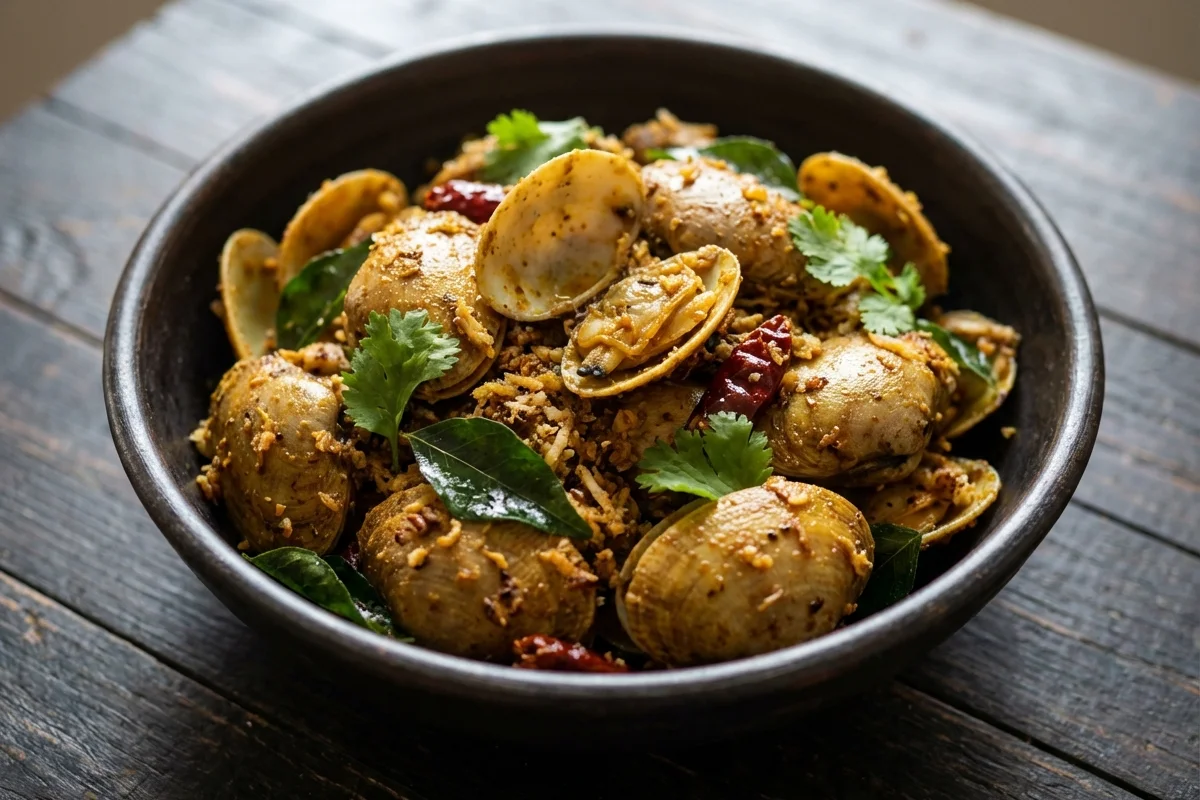
Marwai Sukka
A coastal clam stir-fry with fresh coconut, warm spices, and a punch of tamarind. This dry-style seafood dish is deeply savory, lightly spicy, and lovely with rice or neer dosa.
For 4 servings
- prep · ~10 min
Clean the clams well.
1.Rinse the clams under running water and scrub the shells well.2.Discard any cracked shells or clams that stay open when tapped.3.Set the cleaned clams aside while you prepare the masala. - roast · ~2 min
Roast the whole spices.
1.Heat a small pan on low heat.2.Add coriander seeds, cumin seeds, black peppercorns, and dry red chili.3.Roast for 1 to 2 minutes until fragrant, then cool slightly. - mix · ~3 min
Grind the sukka masala.
Grind the roasted spices with garlic, ginger, tamarind paste, turmeric powder, and half of the grated coconut to a coarse paste. Keep it slightly textured, not completely smooth.
- boil · ~5 min
Cook the clams until they open.
Place the clams in a pot over medium heat, cover, and cook for 4 to 5 minutes until the shells open and release their juices. Remove from heat and discard any clams that do not open.
TIPDo not overcook the clams or they turn chewy very quickly. - saute · ~7 min
Cook the onion base.
1.Heat oil in a wide pan over medium heat.2.Add onion and green chili, then cook until the onion turns soft and lightly golden.3.Add tomato and cook until it softens and loses its raw look. - saute · ~4 min
Cook the masala.
Add the ground masala to the pan and cook for 3 to 4 minutes, stirring often, until it smells rich and the oil starts to separate at the edges.
TIPKeep the heat medium-low so the coconut in the masala does not catch and burn. - simmer · ~4 min
Toss the clams with the masala.
Add the cooked clams and their strained cooking juices to the pan. Add salt, mix well, and cook for 3 to 4 minutes until the masala coats the clams and the mixture turns semi-dry.
- saute · ~2 min
Finish with coconut.
Add the remaining grated coconut and toss for 1 to 2 minutes until the dish looks dry, aromatic, and evenly coated.
- garnish
Garnish with coriander leaves.
- serve
Serve hot with rice or neer dosa.
What to keep in mind.
7 tips from the recipe — small details that make a real difference to the final dish.
- 1Strain the clam cooking liquid before adding it to the masala so no grit gets into the sukka.
- 2Keep the ground masala slightly coarse; that texture helps it cling better to the clam meat.
- 3Do not salt the clams early, because their natural juices can already be quite briny.
- 4Pull the clams off the heat as soon as they open to keep them tender rather than rubbery.
- 5Use a wide pan for the final toss so the masala dries evenly instead of steaming.
- 6Add the last handful of fresh coconut right at the end for a sweeter, fresher coastal finish.
- 7This dish is best eaten the day it is made, but you can prep the masala a few hours ahead.
Adapt it for your goals.
Extra-spicy
Increase the dried red chilies and green chilies for a hotter sukka that pairs especially well with plain rice.
mussel sukkaMussel-sukka
Swap clams for mussels if they are easier to find; the masala works beautifully with other briny shellfish too.
low coconutLow-coconut
Use a little less coconut for a sharper, spicier version where the tamarind and roasted spices stand out more.
shallot versionShallot-version
Replace onion with finely chopped shallots for a sweeter, more traditional coastal flavor profile.
Why this is on our healthy list.
Good Source of Seafood Protein
Clams provide satisfying protein, making this sukka filling while still feeling lighter than many richer seafood curries.
Rich in Aromatic Spices
Coriander, cumin, pepper, ginger, garlic, and chili add flavor depth without relying on heavy cream or butter.
Includes Fresh Coconut
Fresh coconut contributes texture and natural richness along with fiber, which helps make the dry masala more satisfying.
Frequently asked questions
They are done once the shells open. Remove them promptly, and discard any clams that stay shut after cooking.