
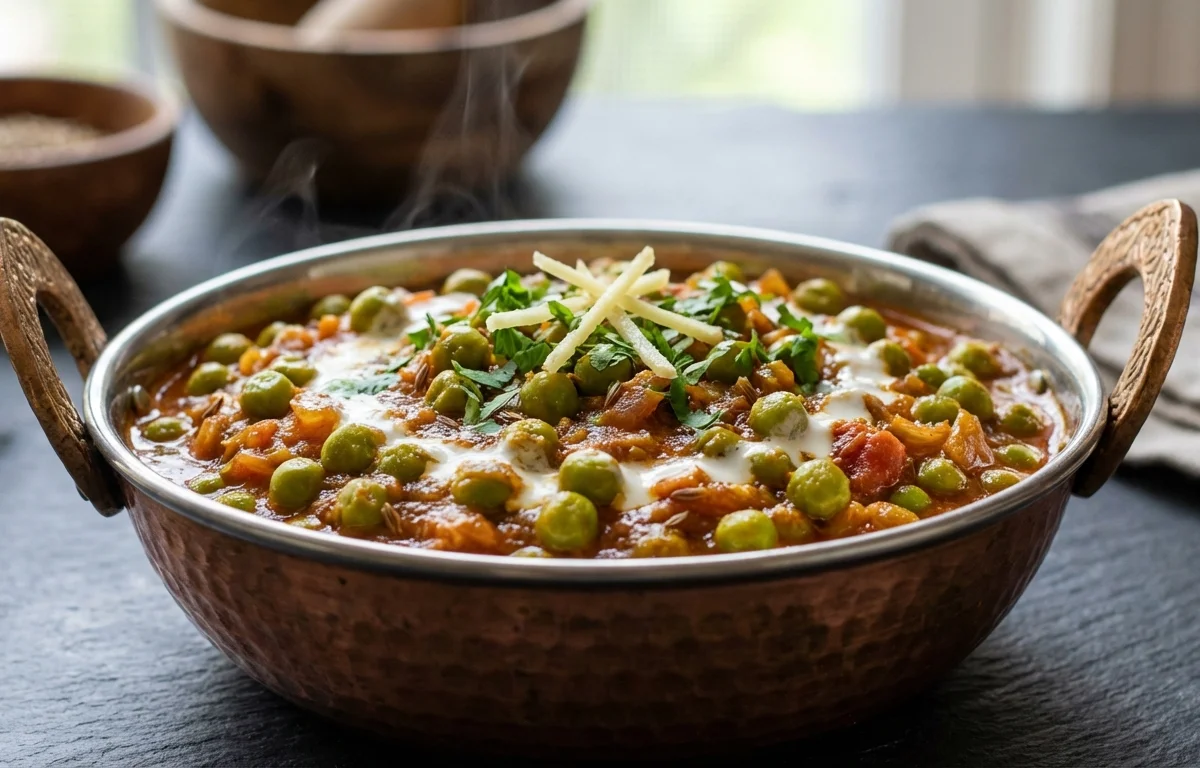
Matar Masala
A simple North Indian pea curry with a smooth onion-tomato gravy, gentle spices, and a fresh finish of coriander. It is comforting, easy to cook on a weekday, and pairs well with roti, paratha, or a small serving of rice.
For 4 servings
- prep · ~10 min
Prepare the peas and chop the vegetables.
1.If using fresh peas, rinse them well.2.Roughly chop the onion, tomato, ginger, and garlic.3.Slit the green chili and keep the coriander leaves ready.TIPFrozen peas can go straight into the pan; fresh peas may need 2 to 3 extra minutes of simmering. - saute · ~12 min
Cook the onion, tomato, ginger, and garlic.
1.Heat 1 tbsp oil in a pan over medium heat.2.Add onion and cook until soft and light golden, 5 to 6 minutes.3.Add ginger, garlic, and green chili, then cook for 1 minute.4.Add tomato and cook until soft and pulpy, 5 to 6 minutes.TIPCook the tomatoes until they lose their raw smell; this gives the gravy a fuller flavor. - mix · ~3 min
Blend the masala base.
Let the cooked mixture cool slightly, then blend it to a smooth puree without adding extra water.
- temper · ~1 min
Make the base for the curry.
1.Heat the remaining 1 tbsp oil in the same pan.2.Add cumin seeds and let them crackle for 20 to 30 seconds.3.Add turmeric powder, red chili powder, and coriander powder.4.Stir quickly for a few seconds so the spices do not burn.TIPKeep the heat low when adding the powdered spices so they bloom without turning bitter. - saute · ~5 min
Cook the ground masala.
Pour in the blended onion-tomato puree and cook over medium heat for 4 to 5 minutes, stirring often, until the oil begins to show at the edges.
- simmer · ~10 min
Add peas and simmer the curry.
1.Add green peas, salt, and water to the pan.2.Mix well and bring the curry to a gentle simmer.3.Cover and cook for 8 to 10 minutes until the peas are tender and the gravy is slightly thick. - garnish · ~1 min
Finish with garam masala and coriander leaves.
Sprinkle garam masala and chopped coriander leaves over the curry. Mix once and cook for 30 seconds more.
- serve
Serve hot.
Serve Matar Masala hot with roti, paratha, or a small bowl of rice.
What to keep in mind.
7 tips from the recipe — small details that make a real difference to the final dish.
- 1Blend the onion-tomato base only after it cools a bit, or the puree can splutter and turn too thin.
- 2Cook the blended masala until oil shows at the edges; that is the key cue that the gravy has lost its raw taste.
- 3If using frozen peas, add them straight from the freezer and reduce simmering slightly so they stay bright and sweet.
- 4For a smoother North Indian-style gravy, strain the blended masala before returning it to the pan.
- 5Keep the powdered spices on low heat in the tempering step and stir immediately to prevent bitterness.
- 6If the curry thickens too much as it stands, loosen it with a splash of hot water before serving.
- 7This matar masala tastes even better after 30 minutes of resting, when the peas absorb the masala flavors.
Adapt it for your goals.
Low-oil
Use less oil and add a splash of water while bhunoing the masala; you still get a tasty weekday curry with a lighter finish.
restaurant styleRestaurant-style
Finish with a spoon of cream or a small knob of butter for a richer, silkier gravy closer to dhaba-style matar masala.
potato matarPotato-matar
Add diced boiled potato with the peas for a heartier curry that pairs especially well with poori or paratha.
paneer matarPaneer-matar
Fold in paneer cubes near the end for a more filling version with extra protein and a softer, richer texture.
Why this is on our healthy list.
Plant-Based Protein and Fiber
Green peas add plant protein and fiber, making this curry more satisfying and helpful for steady fullness.
Rich in Vegetable Antioxidants
Tomatoes, onions, ginger, garlic, and coriander bring a range of protective plant compounds and everyday nutrients.
Moderately Light Gravy
Because the curry relies on a blended onion-tomato base instead of cream or nuts, it stays comforting without being too heavy.
Frequently asked questions
Yes. Frozen peas work very well here and can go straight into the pan; they usually need slightly less simmering than fresh peas.


