
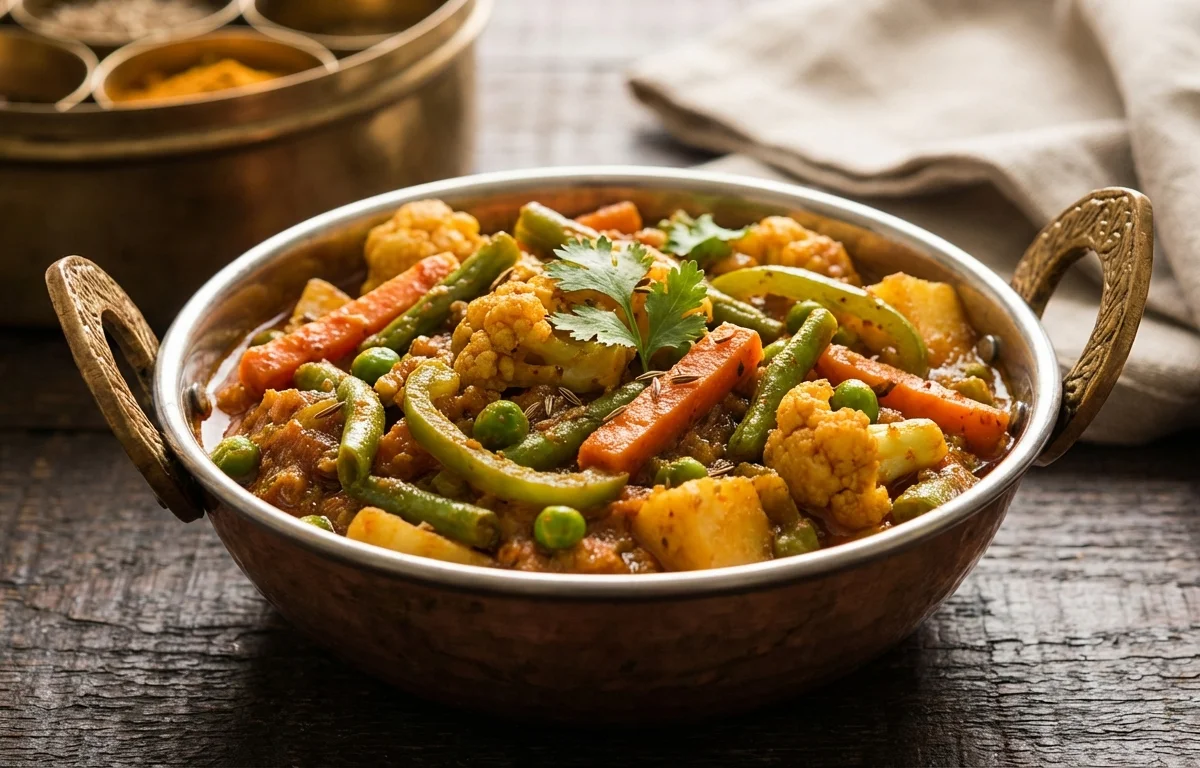
Mix Vegetable Sabzi
A colorful medley of seasonal vegetables cooked with simple Indian spices. This everyday dry sabzi is light, wholesome, and comes together in one pan—perfect for pairing with roti or dal chawal.
For 4 servings
- prep
Prep all the vegetables.
1.Peel and cube potatoes into bite-sized pieces.2.Dice carrots, cube bell pepper, cut cauliflower into small florets.3.Trim and chop green beans. Keep green peas ready.TIPKeep all vegetables similar in size so they cook evenly. - temper · ~1 min
Make the tempering.
1.Heat oil in a kadai or wide pan over medium heat.2.Add cumin seeds and let them splutter for 10 seconds.3.Add a pinch of asafoetida and stir. - saute · ~8 min
Build the aromatic base.
1.Add chopped onions and slit green chilies. Sauté until onions turn translucent (3-4 min).2.Add grated ginger and minced garlic. Cook until the raw smell disappears (1 min).3.Add chopped tomatoes and cook until they soften and release oil (3-4 min).TIPDon't rush the onions—letting them sweat properly builds the base flavor. - saute · ~1 min
Bloom the spice powders.
1.Lower the heat. Add turmeric powder, red chili powder, coriander powder, and cumin powder.2.Stir continuously for 30 seconds until fragrant. Avoid burning.TIPKeep the heat low—spice powders burn quickly and turn bitter. - saute · ~7 min
Add harder vegetables and cook.
1.Add potatoes, carrots, and cauliflower florets. Stir to coat with the masala.2.Season with salt and mix well.3.Add a splash of water (about 2 tbsp), cover the pan, and let them cook on low heat for 5-7 minutes. Stir once in between.TIPHard vegetables like potatoes and carrots need a head start before adding softer ones. - saute · ~8 min
Add softer vegetables and finish cooking.
1.Add bell pepper, green beans, and green peas. Gently toss everything together.2.Add the remaining water if the sabzi looks too dry.3.Cover and cook on low heat for another 6-8 minutes until all vegetables are tender but still hold their shape.4.Check seasoning and adjust salt if needed.TIPThe sabzi should be dry with a light coating of masala on every vegetable—not swimming in water. - garnish · ~2 min
Finish with garam masala, amchur, and fresh coriander.
1.Turn off the heat. Sprinkle garam masala and dry mango powder over the sabzi.2.Add chopped coriander leaves and give a gentle mix.3.Cover and let it rest for 2 minutes before serving.TIPAdding garam masala off the heat keeps its aroma fresh and vibrant.
What to keep in mind.
6 tips from the recipe — small details that make a real difference to the final dish.
- 1Cut all vegetables into uniform bite-sized pieces to ensure even cooking.
- 2Cook the onion-tomato base until the oil separates for deeper flavor.
- 3Add hard vegetables first (potatoes, carrots, cauliflower) before softer ones.
- 4Keep the sabzi dry—it should be coated in masala, not watery.
- 5Bloom spice powders on low heat for 30 seconds to avoid bitterness.
- 6Sprinkle garam masala and amchur only after turning off the heat for maximum aroma.
Adapt it for your goals.
Low-oil
Replace oil with 2-3 tablespoons of water or vegetable broth for the tempering, and cook covered on low heat to steam-sauté. Perfect for those watching their fat intake.
veganVegan
This recipe is already vegan, but ensure no ghee is substituted for oil. Serve with vegan roti or rice.
protein boostProtein-boost
Add 1/2 cup of cubed paneer or tofu along with the softer vegetables for extra protein. Paneer soaks up the masala beautifully.
no onion garlic (jain)No-onion-garlic (jain)
Skip the onion, garlic, and asafoetida. Use a pinch of hing (asafoetida) is okay for some Jains; otherwise, use cumin and fennel seeds for flavor.
Why this is on our healthy list.
Rich in Fiber
The mix of potato, carrot, cauliflower, green beans, and peas provides soluble and insoluble fiber, aiding digestion and promoting fullness.
Packed with Vitamin C
Bell peppers, tomatoes, and green chilies are excellent sources of vitamin C, supporting immune function and collagen synthesis.
Antioxidant-Rich Spices
Turmeric, cumin, and coriander contain potent antioxidants that help combat oxidative stress and reduce inflammation.
Low in Calories
This dry sabzi uses minimal oil and no cream, making it a light, nutrient-dense side dish suitable for calorie-conscious diets.
Frequently asked questions
Yes, but thaw and pat them dry first to avoid excess water. Add them all together in step 6 and reduce cooking time by 2-3 minutes.


