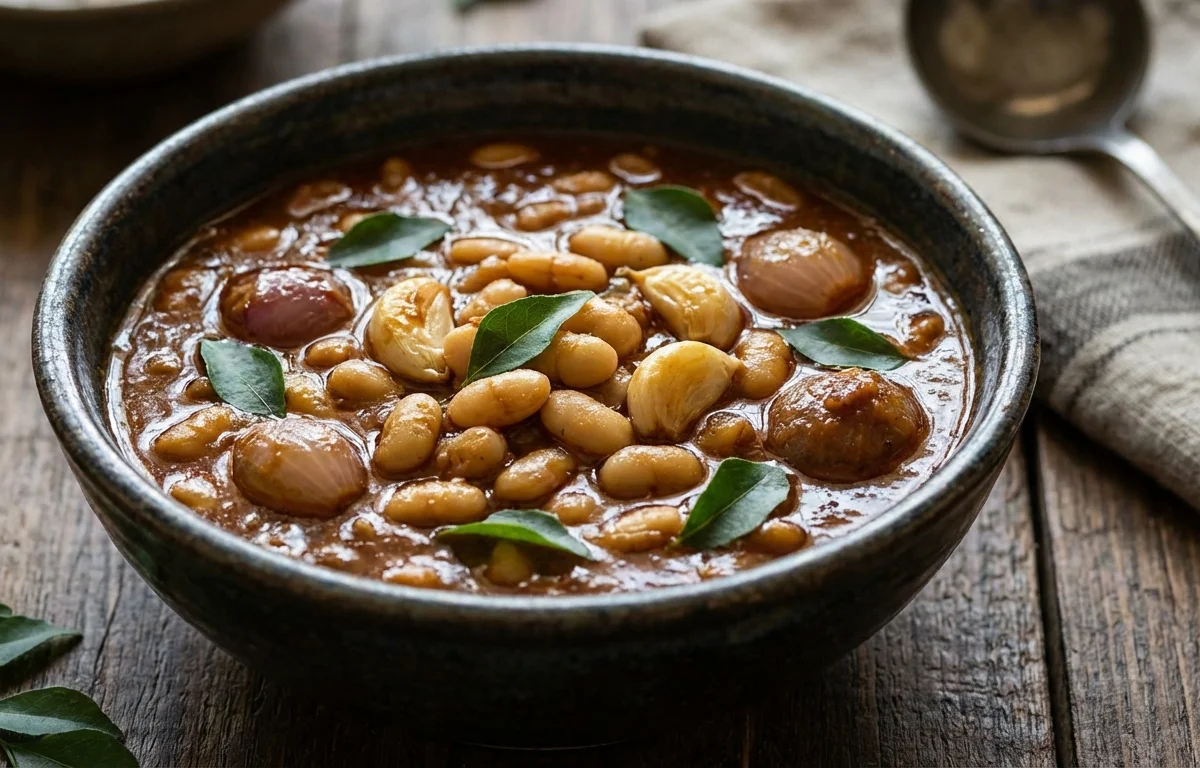
Mochai Kara Kuzhambu
A bold Tamil-style tamarind gravy made with tender mochai, roasted spices, and a rich onion-tomato base. It turns deeply savory and tangy as it simmers, and tastes wonderful with hot rice or idli.
For 4 servings
- prep · ~10 min
Soak the mochai and make the tamarind extract.
1.Rinse the mochai well and soak it in plenty of water overnight.2.Soak the tamarind in warm water for 10 minutes.3.Squeeze and strain the tamarind to get a smooth extract. - pressure cook · ~20 min
Pressure cook the mochai until tender.
Drain the soaked mochai and add it to a pressure cooker with 3 cups water. Cook for 4 to 5 whistles until soft but not mushy, then keep it aside with the cooking liquid.
TIPOlder dried mochai may need extra cooking time, so check that the beans mash easily when pressed. - roast · ~5 min
Roast the spices and coconut.
1.Heat a small pan over low heat.2.Dry roast dried red chili, coriander seeds, cumin seeds, and black peppercorns until fragrant.3.Add grated coconut and roast until it loses rawness and turns lightly golden.4.Cool the mixture for a few minutes.TIPKeep the heat low so the coconut browns gently and the spices do not turn bitter. - mix
Grind the roasted mixture.
Grind the roasted spices and coconut with a little water to a smooth paste. Keep the paste ready for the gravy.
- temper · ~1 min
Make the tempering.
1.Heat sesame oil in a kadai over medium heat.2.Add mustard seeds and let them splutter.3.Add fenugreek seeds and curry leaves.4.Stir for a few seconds until fragrant. - saute · ~8 min
Cook the onions, garlic, and tomatoes.
1.Add small onion and garlic to the pan.2.Cook until the onions soften and turn light golden.3.Add tomato and cook until soft and pulpy.4.Add turmeric powder and red chili powder, then mix well. - simmer · ~10 min
Build the kuzhambu.
1.Pour in the tamarind extract and 1 cup water.2.Add the ground spice paste and salt.3.Mix well and bring the gravy to a steady simmer.4.Cook for 8 to 10 minutes until the raw tamarind smell fades. - simmer · ~10 min
Add the mochai and finish the gravy.
Add the cooked mochai along with a little of its cooking liquid. Simmer for 8 to 10 minutes until the kuzhambu thickens slightly and the flavors come together. Stir in jaggery at the end.
TIPThe gravy should be tangy and bold, with enough body to coat rice without turning too thick. - rest · ~10 min
Let the kuzhambu rest for 10 minutes.
- serve
Serve hot with rice, idli, or dosa.
What to keep in mind.
6 tips from the recipe — small details that make a real difference to the final dish.
- 1Cook the soaked mochai only until tender; overcooked beans can break down and muddy the gravy.
- 2Roast the coconut just to light golden, not deep brown, so the paste thickens the kuzhambu without tasting burnt.
- 3Let the raw tamarind smell cook off fully before adding mochai; that is the key doneness cue for a rounded gravy.
- 4Use some mochai cooking liquid in the final simmer for extra body and bean flavor instead of plain water.
- 5Rest the kuzhambu at least 10 minutes before serving; the tang, spice, and sesame oil settle noticeably.
- 6This kuzhambu tastes even better the next day, so make it ahead and reheat gently with a splash of water if needed.
Adapt it for your goals.
No-coconut
Skip the coconut for a lighter kuzhambu; the gravy will be thinner and more tamarind-forward, which some prefer with rice.
extra spicyExtra-spicy
Increase dried red chilies or chili powder slightly for a hotter, more assertive kara kuzhambu style.
jainJain
Omit garlic and shallots, then build the base with extra tomato and the roasted spice paste for a Jain-friendly version.
mixed beansMixed-beans
Replace part of the mochai with karamani or channa for a heartier gravy with varied texture.
Why this is on our healthy list.
Bean-Based Protein and Fiber
Mochai adds plant protein and fiber, making the kuzhambu more filling than a plain tamarind gravy.
Spice-Rich Digestive Support
Cumin, pepper, fenugreek, garlic, and curry leaves are traditional ingredients that add aroma and support easier digestion.
Tomato and Tamarind Brightness
Tomato and tamarind contribute natural acidity and phytonutrients while keeping the dish bold without needing heavy cream.
Frequently asked questions
Yes. Simmer the soaked mochai on the stovetop until tender; it will take longer, and older beans may need significantly more time.