
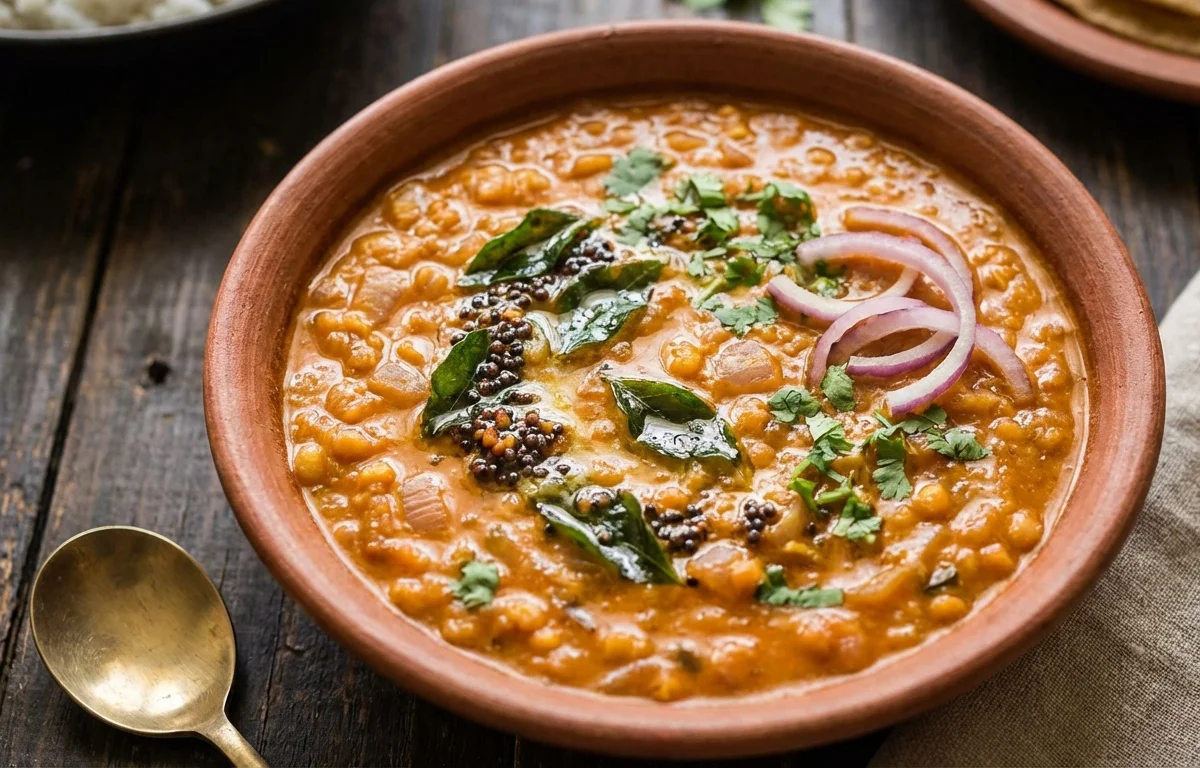
Moong Dal Gassi
A creamy, mildly spiced yellow moong dal curry from the coastal cuisine of Mangalore. Coconut and roasted spices blend together into a rich base with a gentle tang from tamarind. Warm, comforting and perfect with steamed rice.
For 4 servings
- prep · ~15 min
Cook the moong dal.
Wash moong dal well and add it to a pressure cooker with 2 cups water and turmeric powder. Cook for 3-4 whistles until soft and mushy. Let the pressure release naturally.
- roast · ~3 min
Dry roast the spices.
1.Heat a small pan over medium-low heat. Add coriander seeds and cumin seeds.2.Roast for 60-90 seconds until fragrant, shaking the pan gently.3.Add dried red chillies, fenugreek seeds, and black peppercorns. Roast 30 seconds more.4.Transfer to a plate and let cool completely. - mix · ~3 min
Grind the coconut masala paste.
1.Add the roasted spices to a blender jar along with grated coconut and tamarind paste.2.Pour in ¼ cup water and grind to a very smooth, fine paste. Set aside. - saute · ~6 min
Sauté the aromatics.
1.Heat coconut oil in a heavy-bottomed pan over medium heat.2.Add mustard seeds and let them splutter for 20 seconds.3.Toss in curry leaves and crushed garlic. Sauté 30 seconds until fragrant.4.Add chopped onion and cook until soft and translucent, about 4-5 minutes. - simmer · ~10 min
Simmer the dal with the masala.
1.Pour the cooked moong dal into the pan with the sautéed aromatics.2.Stir in the ground coconut masala paste and salt.3.Add a splash of water if the dal is too thick. Bring to a gentle simmer.4.Cook for 8-10 minutes until flavours meld and the dal reaches a smooth, creamy consistency. - garnish · ~1 min
Finish and serve hot.
Give the gassi a final stir. Transfer to a serving bowl and serve hot with steamed rice.
What to keep in mind.
6 tips from the recipe — small details that make a real difference to the final dish.
- 1Toast spices until just fragrant but not smoking, or they'll turn bitter.
- 2Use fresh, moist grated coconut for the smoothest masala paste.
- 3Cook the dal until very soft and almost mushy for the creamiest texture.
- 4Add a pinch of jaggery while simmering to balance the tamarind's tang.
- 5Let the gassi rest 5 minutes after cooking for flavors to deepen.
- 6Make ahead: refrigerate for up to 3 days; the taste improves overnight.
Adapt it for your goals.
Vegan
This recipe is naturally vegan. Ensure your tamarind paste contains no added sugar or preservatives and serve with rice or flatbread.
higher proteinHigher-protein
Stir in a handful of cooked chana dal (split chickpeas) along with the moong dal to boost protein and add textural contrast.
lower oilLower-oil
Reduce coconut oil in tempering to 1/2 teaspoon and skip sautéing onions in oil by dry-sautéing them in a non-stick pan with a splash of water.
spicierSpicier
Add 1 or 2 extra dried red chilies and a small green chili while tempering for a spicier version that Mangaloreans sometimes enjoy.
Why this is on our healthy list.
Rich in Plant Protein
Moong dal is a concentrated source of plant-based protein making this dish a satisfying and muscle-friendly meal option for vegetarians.
High in Digestive Fiber
The combination of moong dal and coconut provides soluble and insoluble fiber that supports healthy digestion and prolonged satiety.
Antioxidant Spices
Ingredients like turmeric fenugreek and black peppercorns carry natural antioxidant and anti-inflammatory properties that may support overall wellness.
Healthy Fats from Coconut
Fresh coconut supplies medium-chain triglycerides (MCTs) which are readily used for energy and may support metabolic health.
Frequently asked questions
Yes but note that split moong with skin takes slightly longer to cook and yields a thicker more rustic gassi compared to skinned moong dal.



.webp)
.webp)