Muttai Varuval
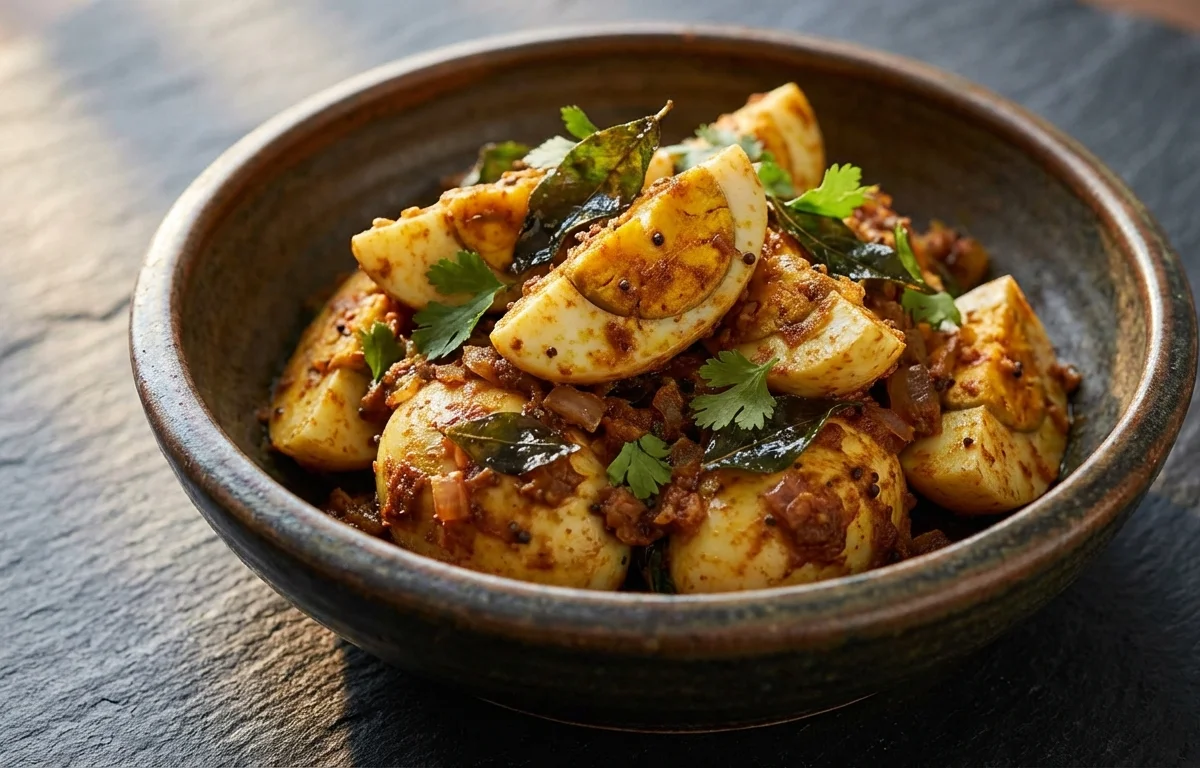
A simple Tamil-style egg fry where boiled eggs are coated in a peppery onion-tomato masala and cooked until the spices cling beautifully. It is bold, savory, and perfect with rice, rasam, or chapati.
For 4 servings
- boil · ~10 min
Boil and peel the eggs.
Cook the eggs in boiling water until hard-boiled, about 10 minutes. Cool, peel, and make a few light slits on each egg so the masala can coat them well.
TIPLight slits help the spices cling better without breaking the eggs. - prep · ~5 min
Get the masala ingredients ready.
Slice the onion, chop the tomato, slit the green chilies, mince the ginger and garlic, and keep the spice powders measured out for quick cooking.
- temper · ~1 min
Make the tempering.
1.Heat oil in a wide pan over medium heat.2.Add mustard seeds and let them splutter.3.Add fennel seeds and curry leaves.4.Cook for a few seconds until fragrant.TIPKeep the heat medium so the whole spices release flavor without burning. - saute · ~7 min
Cook the onion mixture.
1.Add sliced onion and green chili to the pan.2.Cook until the onion turns soft and light golden, 5 to 6 minutes.3.Add minced ginger and garlic.4.Sauté for 1 minute until the raw smell fades. - saute · ~5 min
Build the masala.
1.Add chopped tomato and mix well.2.Add turmeric powder, red chili powder, black pepper, coriander powder, garam masala, and salt.3.Cook until the tomato turns soft and the masala looks thick, 4 to 5 minutes.4.Splash in water to loosen the masala slightly. - fry · ~4 min
Coat the eggs in the masala.
Add the boiled eggs and turn them gently in the masala until they are well coated. Cook for 3 to 4 minutes, rolling the eggs once or twice, until the masala clings and the pan looks nearly dry.
TIPTurn the eggs gently with a spoon so they stay whole and pick up an even coating. - garnish
Garnish with coriander leaves.
- serve
Serve hot with rice or chapati.
What to keep in mind.
7 tips from the recipe — small details that make a real difference to the final dish.
- 1Let the boiled eggs cool before slitting so they do not tear when you turn them in the masala.
- 2Use a wide pan so the eggs can roll in a single layer and get evenly coated without breaking.
- 3Cook the onions to light golden, not dark brown, or the masala can taste bitter with the pepper.
- 4Wait until the tomatoes turn pulpy and the oil begins to separate before adding the eggs.
- 5Keep the final fry on low heat once the eggs go in, so the masala clings instead of scorching.
- 6This tastes even better after a 10-minute rest, which lets the slits absorb the peppery masala.
- 7Leftovers keep well refrigerated for a day; reheat gently in a covered pan with a spoon of water.
Adapt it for your goals.
Low-oil
Use less oil and a nonstick pan; cook the masala a little longer on low heat so it still clings well to the eggs.
extra pepperExtra-pepper
Reduce red chili powder and increase coarse black pepper for a sharper, more traditional pepper-forward muttai varuval.
gravy styleGravy-style
Add a little more water and stop before the masala dries fully if you want a softer side dish for rice.
shallot versionShallot-version
Replace regular onion with small shallots for a sweeter, more Tamil homestyle flavor.
Why this is on our healthy list.
Protein-Rich Eggs
Boiled eggs make this dish filling and satisfying, while also adding quality protein to the meal.
Spice-Based Flavoring
Black pepper, ginger, garlic, curry leaves, and fennel add strong flavor without needing heavy sauces.
Tomato and Onion Base
The masala relies on tomatoes and onions for body and savory depth rather than cream or butter.
Frequently asked questions
The shallow cuts help the masala grip the eggs better and allow some of the spice mixture to seep into the surface.