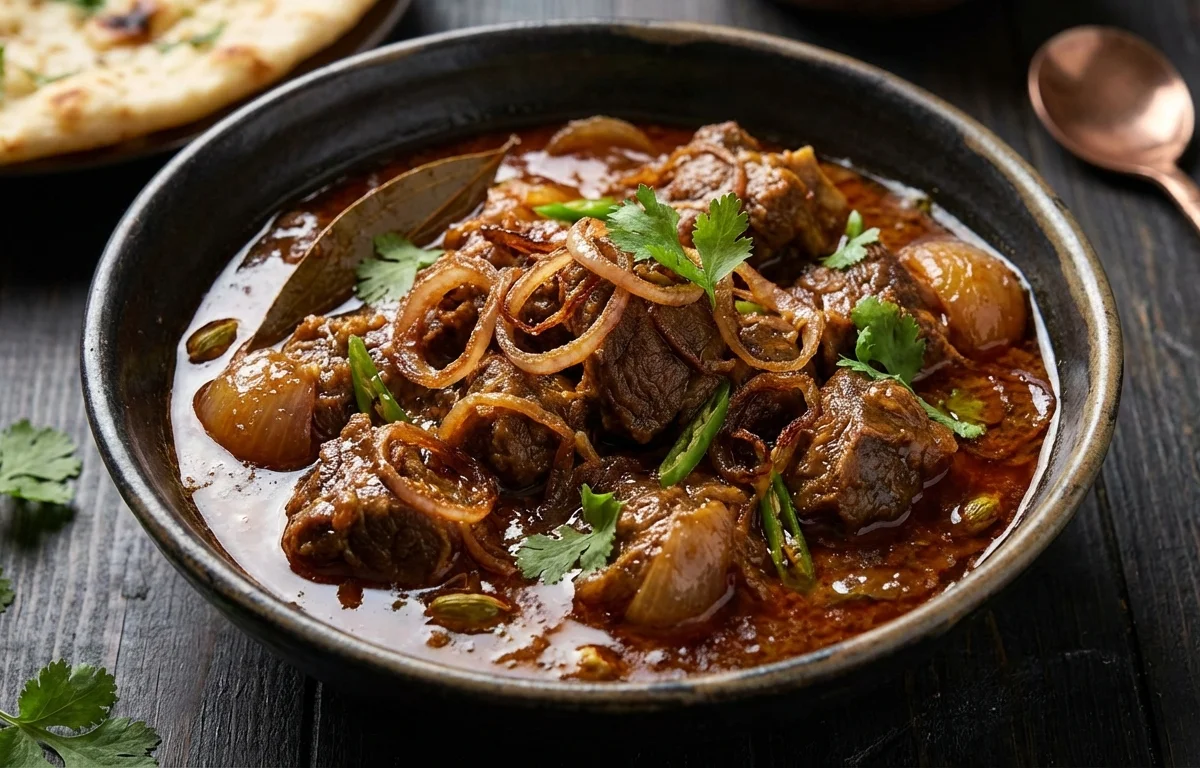
Mutton Do Pyaza
A rich, aromatic North Indian mutton curry where onions shine as the star — both slow-cooked into the gravy and added in generous chunks for texture. Bone-in goat meat simmers in a spiced yogurt-tomato base until fork-tender, perfumed with whole garam masala and finished with a sprinkle of kasuri methi.
For 4 servings
- prep
Prep the onions and aromatics.
1.Finely slice 2 large onions for the gravy base.2.Cut the remaining 2 onions into 1-inch cubes and separate the layers into petals.3.Whisk yogurt in a bowl until smooth, slit the green chilies, and chop the tomatoes. - saute · ~10 min
Brown the sliced onions for the gravy.
Heat oil in a heavy-bottomed pan or kadai over medium heat. Add the finely sliced onions and fry, stirring often, until they turn deep golden brown and crisp. Remove with a slotted spoon and set aside on a paper towel to cool slightly.
TIPTake your time with the onions — deep browning builds the curry's foundation. Don't rush this step. - prep
Make the onion-yogurt paste.
Once the fried onions have cooled, transfer them to a blender. Add the whisked yogurt and grind to a smooth, creamy paste. Set aside.
TIPEnsure the onions are cool before blending with yogurt to prevent curdling. - temper · ~2 min
Temper the whole spices.
1.In the same pan, heat the remaining oil from frying onions over medium heat.2.Add cumin seeds and let them crackle for 30 seconds.3.Add black cardamom, green cardamom, bay leaves, cinnamon stick, cloves, and black peppercorns. Sauté until fragrant, about 1 minute. - saute · ~7 min
Build the masala base.
1.Add ginger-garlic paste and slit green chilies to the pan. Sauté until the raw aroma disappears, about 1 minute.2.Add chopped tomatoes and cook, mashing occasionally, until they soften and oil begins to separate around the edges, about 5 minutes.3.Turn the heat to low. Add turmeric powder, red chili powder, coriander powder, and cumin powder. Stir continuously for 30 seconds to bloom the spices without burning.TIPKeep the heat low when adding powdered spices — they burn quickly and turn bitter. - saute · ~9 min
Incorporate the onion-yogurt paste.
Pour in the onion-yogurt paste and stir briskly to combine. Cook on medium-low heat, stirring frequently, until the paste thickens, turns glossy, and releases oil — about 8 to 10 minutes.
TIPContinuous stirring prevents the yogurt from splitting. If it catches, add a splash of water. - saute · ~6 min
Sear the mutton pieces.
Add the mutton pieces to the masala and increase the heat to medium-high. Sauté for 5 to 7 minutes, turning the pieces so they brown evenly on all sides and get well coated with the spice paste.
TIPBrowning the meat before pressure cooking locks in juices and adds depth to the curry. - pressure cook · ~25 min
Pressure cook until tender.
1.Pour in 1 cup of water and add salt. Stir everything together.2.Seal the pressure cooker and cook on high heat until the first whistle sounds.3.Lower the heat to medium-low and continue cooking for 5 to 6 more whistles, about 20 minutes total.4.Turn off the heat and let the pressure release naturally.TIPNatural pressure release is key — mutton relaxes in the residual heat and turns fork-tender. - prep · ~2 min
Sauté the cubed onion petals.
While the mutton cooks, heat 1 teaspoon of oil in a small pan. Add the onion cubes and sauté on high heat for 1 to 2 minutes just until they pick up a light char but retain their crunch. Remove and set aside.
TIPDon't cook the onion cubes fully — they should stay slightly raw and crunchy for texture contrast. - simmer · ~7 min
Simmer and finish the curry.
1.Once the pressure has released, open the cooker and check if the mutton is tender. If there is excess thin gravy, simmer uncovered on medium heat for 5 minutes to thicken.2.Stir in the sautéed onion cubes, garam masala, and crushed kasuri methi. Simmer for 2 more minutes so the flavors meld.3.Finish with a drizzle of ghee and give a final gentle stir.TIPCrushing kasuri methi between your palms releases its essential oils — don't skip this tiny step. - garnish
Garnish and serve hot.
Transfer to a serving bowl, scatter chopped coriander leaves on top, and serve hot with naan, roti, or steamed rice.
What to keep in mind.
6 tips from the recipe — small details that make a real difference to the final dish.
- 1For authentic do pyaza texture, add the charred onion petals only at the very end — they must stay slightly crunchy.
- 2Blend cooled fried onions with yogurt to create a rich, creamy base without curdling.
- 3Always let the pressure release naturally so the bone-in mutton becomes fork-tender without drying out.
- 4Crush dried fenugreek leaves between your palms before stirring in — this releases their signature aroma.
- 5Cook the masala until oil visibly separates from the paste; that's your cue for a fully developed gravy.
- 6Sauté mutton pieces on medium-high heat until well-browned before pressure cooking to lock in juices.
Adapt it for your goals.
Lighter version
Replace bone-in mutton with boneless lamb or chicken thighs and reduce oil to 2 tablespoons — use a non-stick pan to cut fat while keeping the rich do pyaza flavour.
jainJain
Omit onion and garlic; substitute ginger-garlic paste with pure ginger paste and add a pinch of asafoetida. Use rock salt (sendha namak) for a fully Jain-compatible version that still carries the signature onion crunch by using sautéed lotus stem or banana flower petals.
kashmiri styleKashmiri-style
Swap red chili powder for Kashmiri red chili powder for a vibrant red colour without excessive heat, and add a pinch of fennel powder for the distinct sweet-spicy Kashmiri curry flavour.
coconut twistCoconut twist
Add 2 tablespoons of fresh grated coconut along with the onion-yogurt paste for a southern Indian touch — it mellows the spices and adds a subtle sweetness.
Why this is on our healthy list.
Rich in Iron from Mutton
Bone-in goat meat provides highly absorbable heme iron, which supports oxygen transport and helps prevent fatigue — especially beneficial for those with iron deficiency.
Protein-Packed Meal
A single serving delivers a substantial amount of complete protein from the mutton, essential for muscle repair and satiety.
Digestive Spices
Cumin, coriander, ginger, and black cardamom are traditional digestive aids that can help reduce bloating and improve nutrient absorption from the rich curry.
Anti-Inflammatory Turmeric
Even the pinch of turmeric adds curcumin, a compound linked to reducing inflammation and supporting joint health — enhanced by the black pepper in the masala.
Yogurt for Gut Health
The yogurt in the paste contributes probiotics and calcium, supporting digestion and bone health when combined with the mineral-rich mutton bones.
Frequently asked questions
Yes, but reduce pressure cooking time to about 15-18 minutes and expect a less intense flavour since bones add depth. Also add 1-2 tablespoons of ghee to compensate for lost marrow richness.