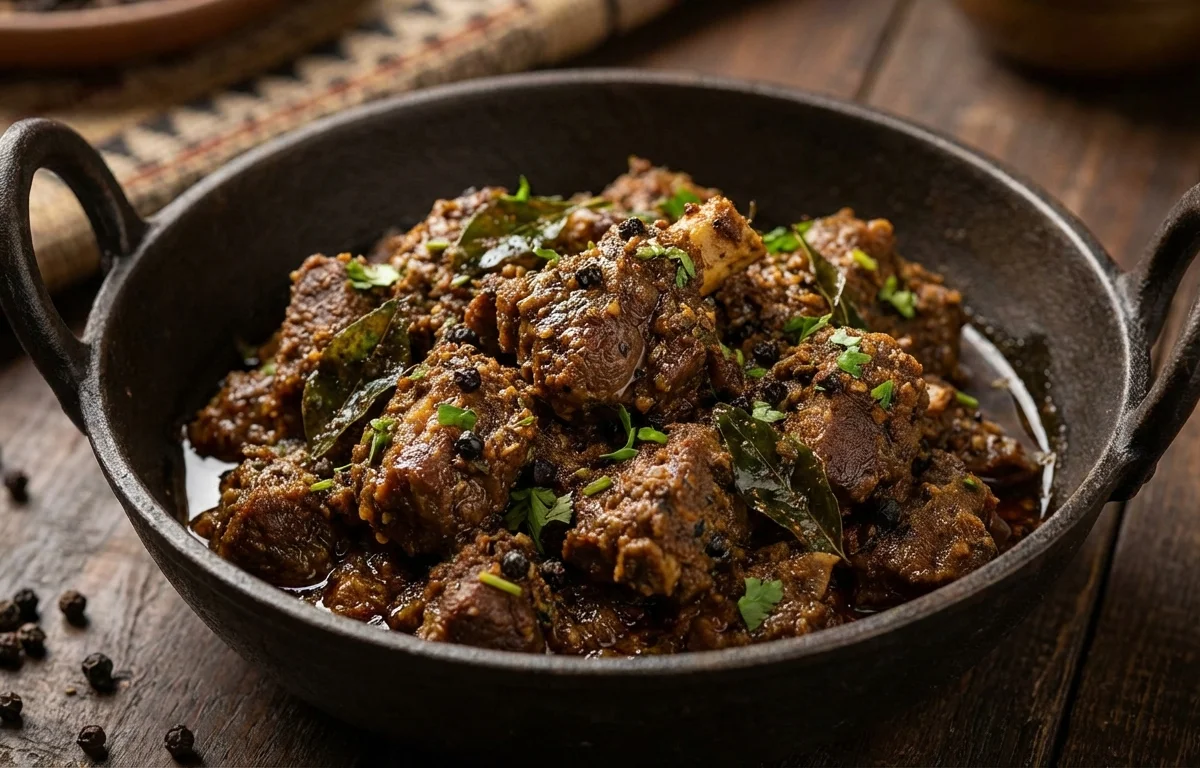
Mutton Pepper Fry
Tender bone-in mutton pieces cooked down in a fiery, fragrant black pepper masala until dark and intensely flavored. This Chettinad-style dry roast is deeply aromatic with crushed peppercorns, curry leaves, and fennel — a bold South Indian classic that pairs perfectly with rice and rasam.
For 4 servings
- pressure cook · ~20 min
Pressure cook the mutton until tender.
1.Wash 500g mutton pieces thoroughly and drain.2.Place mutton in pressure cooker with 1 pinch turmeric, 1 pinch salt, and 0.25 cup water.3.Close lid and cook on medium heat for 4-5 whistles (about 15-20 min).4.Allow pressure to release naturally. Drain mutton, reserving stock for later use.TIPNatural release keeps the meat tender; don't quick-release or the meat can toughen. - temper · ~1 min
Crackle the whole spices.
1.Heat 2 tbsp oil in a heavy-bottomed pan over medium heat.2.Add 0.5 tsp fennel seeds and 0.5 tsp cumin seeds; let them sizzle for 20 seconds.3.Add 5 curry leaves and let them splutter.TIPCoconut oil gives authentic Chettinad flavor, but any neutral oil works. - saute · ~13 min
Sauté the onions until deep golden.
1.Add 2 sliced onions and sauté for 7-8 minutes until deeply browned.2.Add 2 tsp ginger-garlic paste and 2 slit green chilies. Sauté 1 minute until raw smell goes.3.Add 1 chopped tomato and cook until soft and mushy (3-4 min).TIPTake the onions to deep golden, not just translucent — this builds the dish's rich color and base flavor. - saute · ~2 min
Build the pepper masala base.
1.Reduce heat to low. Add 1 tsp coriander powder and 1 pinch garam masala.2.Sauté for 30 seconds until fragrant.3.Add 1 tsp freshly crushed black pepper powder and mix well.TIPKeep the flame low — masala powders burn fast and turn bitter. - fry · ~9 min
Fry the mutton with the masala.
1.Add the drained boiled mutton pieces to the pan.2.Stir-fry on medium-high heat for 5 minutes until the meat starts to brown and sizzle.3.Add 2-3 tbsp of reserved mutton stock if the masala is too dry.4.Sprinkle 0.25 tsp salt and fry another 3-4 minutes.TIPKeep stirring — the mutton should fry and char slightly at the edges, not steam. Add stock only if it's sticking badly. - saute · ~2 min
Finish with pepper and aromatics.
1.Sprinkle the remaining 1 tsp coarsely crushed black pepper powder.2.Add the remaining 5 curry leaves and toss well for 1 minute.3.Switch off the heat. Squeeze 1 tsp lemon juice and mix.TIPAdding pepper in two stages layers the heat — cooked pepper for depth, fresh pepper at the end for a sharp, aromatic kick. - garnish
Garnish with coriander leaves and serve hot.
Transfer to a serving bowl, scatter 2 tbsp chopped fresh coriander leaves on top, and serve immediately with steamed rice, rasam, and cooling cucumber raita.
What to keep in mind.
8 tips from the recipe — small details that make a real difference to the final dish.
- 1Use bone-in goat meat from the shoulder or leg for the richest flavor and tender texture.
- 2Natural pressure release is crucial — quick-release can toughen the meat and make it chewy.
- 3Fry the onions until deeply golden brown, not just translucent, to build the dish's signature dark color and sweet base.
- 4Toast the whole spices in coconut oil for 20 seconds until fragrant — this unlocks the full aroma of fennel and cumin.
- 5Add the black pepper in two stages: half during cooking for depth, the rest at the end for a sharp, lively kick.
- 6Reserve the mutton stock from pressure cooking — use a splash if the pan gets dry, but don't steam the meat.
- 7This dry fry keeps well in the fridge for 2-3 days; reheat in a dry pan to restore the charred edges.
- 8Crush the black pepper coarsely just before use — pre-ground pepper lacks the punch this dish needs.
Adapt it for your goals.
Coconut-milk braise
After frying the mutton with masala, add 1/2 cup thick coconut milk and simmer for 5 minutes for a semi-gravy version that is richer and milder, perfect for those who want a saucier dish with steamed rice.
chicken versionChicken version
Substitute 500g bone-in chicken thighs for the mutton. Omit pressure cooking — simply sauté the chicken directly with the masala until cooked through (about 15 minutes). This yields a quicker, lighter dish with the same bold pepper flavor.
jain styleJain style
Skip the garlic and onion. Replace ginger-garlic paste with 1 tbsp ginger paste and 1 tsp asafoetida. Use a pinch of asafoetida in the tempering to mimic the savory depth. This version keeps the fiery pepper profile while respecting Jain dietary restrictions.
high protein, low carbHigh-protein, low-carb
Serve over cauliflower rice or alongside a cabbage thoran instead of steamed rice to reduce carbs while keeping the protein-rich mutton and spice hit intact. Ideal for keto or paleo eaters.
Why this is on our healthy list.
Rich in Bioavailable Iron
Bone-in goat mutton is a dense source of heme iron, which the body absorbs more easily than plant-based iron, supporting healthy blood oxygen transport and reducing fatigue.
Loaded with Antioxidants
Black pepper, curry leaves, and turmeric are all rich in antioxidants like piperine and curcumin, which help fight oxidative stress and reduce inflammation in the body.
Good Source of Protein for Muscle Health
Each serving of mutton provides high-quality complete protein, essential for muscle repair, maintenance, and overall body tissue health.
Contains Bone-Building Minerals
The bone-in pieces release calcium, phosphorus, and collagen into the dish during cooking, supporting strong bones and joint health.
Supports Digestion with Warm Spices
Fennel seeds, cumin, and black pepper are traditionally used in Indian cooking to stimulate digestive enzymes and reduce bloating, making this dish flavorful and gut-friendly.
Frequently asked questions
Bone-in goat shoulder and leg pieces are ideal — the bones add flavor to the masala and the meat stays tender after pressure cooking.