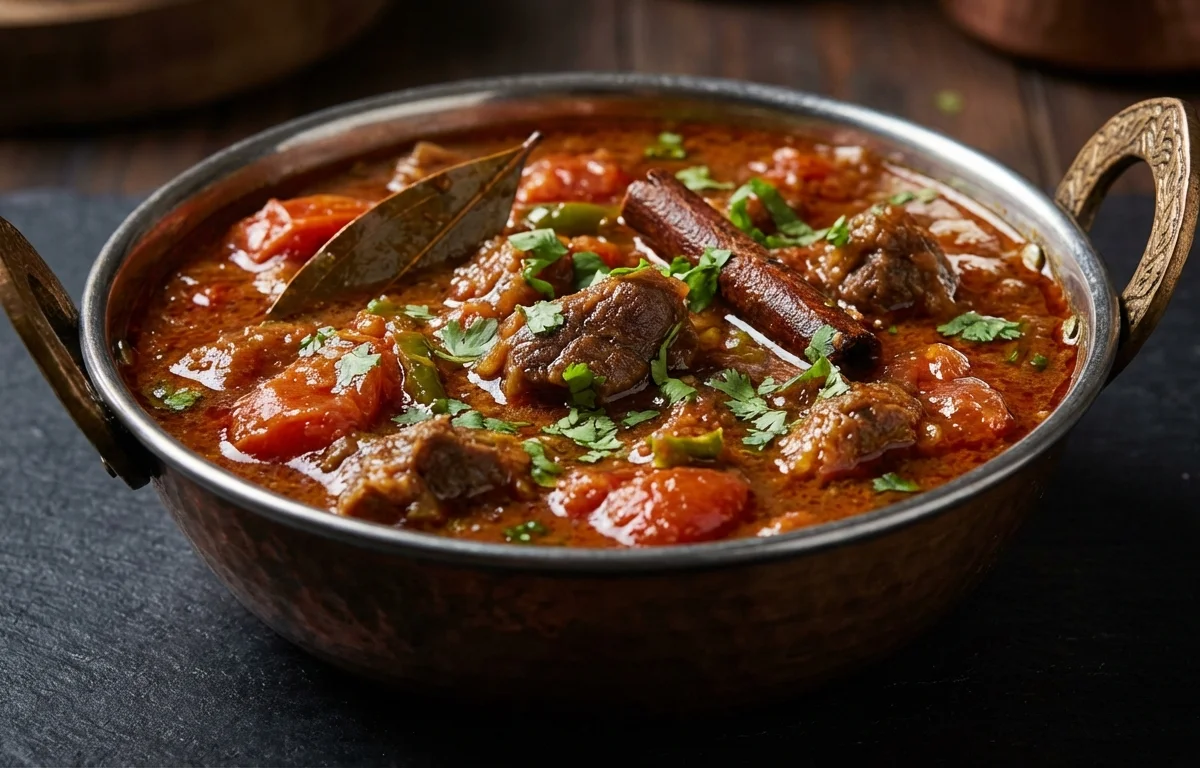
Mutton Tamatar ka Kut
A rustic, slow-cooked Hyderabadi mutton curry where succulent bone-in pieces are simmered in a rich, tangy tomato gravy with a signature roasted spice blend. The tomatoes break down completely, creating a thick, luscious sauce that clings to the meat. Best enjoyed with warm rotis or steamed rice.
For 4 servings
- prep · ~20 min
Pressure cook the mutton.
1.Add marinated mutton to a pressure cooker with 0.5 cup water and a pinch of salt.2.Close the lid and pressure cook on medium heat for 15-20 minutes (4-5 whistles).3.Turn off heat and let the pressure release naturally. Set the cooked mutton aside. - roast · ~5 min
Roast and grind the spice paste.
1.In a small pan, dry roast cumin seeds, coriander seeds, dried red chilies, cloves, cardamom, and cinnamon until aromatic (2-3 minutes).2.Add desiccated coconut and poppy seeds. Roast until coconut is light golden (1-2 minutes more).3.Cool slightly, then transfer to a blender. Add a little water and grind to a smooth paste.TIPRoast on low heat and stir continuously — coconut burns quickly and turns bitter. - saute · ~18 min
Sauté onions and tomatoes.
1.In the same heavy-bottomed pot, heat oil over medium heat.2.Add sliced onions and sauté until golden brown (8-10 minutes).3.Add ginger-garlic paste and slit green chilies. Sauté for 1 minute until fragrant.4.Add chopped tomatoes and cook until soft and pulpy (5-7 minutes). - mix · ~5 min
Combine spice paste and mutton.
1.Add the ground spice paste to the onion-tomato mixture. Stir well.2.Cook on low heat for 5 minutes, stirring frequently, until the paste thickens and oil separates.3.Add red chili powder and stir. - simmer · ~20 min
Simmer the curry to perfection.
1.Add the cooked mutton along with its stock to the pot. Stir well.2.Add remaining 0.5 cup water if the gravy is too thick.3.Bring to a gentle boil, then lower heat and simmer uncovered for 15-20 minutes until the gravy thickens and coats the mutton.TIPThe longer you simmer, the deeper the flavor. Stir occasionally to prevent sticking. - garnish
Garnish and serve hot.
1.Taste and adjust salt if needed.2.Garnish with chopped cilantro.3.Serve hot with steamed rice or roti.
What to keep in mind.
6 tips from the recipe — small details that make a real difference to the final dish.
- 1Always marinate the mutton with turmeric, salt, and a splash of water before pressure cooking to tenderize and reduce gaminess.
- 2Roast the spice mix on low heat—coconut and poppy seeds burn quickly, making the gravy bitter.
- 3Sauté the sliced onions until deep golden brown; this builds a sweet, caramelized base for the gravy.
- 4After adding the ground spice paste, cook it until oil separates on the surface—this ensures the raw spice taste is gone.
- 5Simmer the finished curry uncovered for at least 15 minutes to let the tomatoes fully break down and thicken the gravy naturally.
- 6Reserve the mutton stock after pressure cooking and add it back instead of plain water—it boosts the meaty flavour.
Adapt it for your goals.
Low-oil
Reduce oil to 1 tablespoon and skip the sauté; dry-roast the onions in a non-stick pan until soft, then proceed. Ideal for those watching their fat intake without sacrificing the deep roasted flavour.
high proteinHigh-protein
Replace half the mutton with chunky lamb or beef, or add a cup of boiled chickpeas in the simmering step. Great for increasing protein variety or making the dish more budget-friendly.
jainJain
Skip the onion, ginger, and garlic; use asafoetida (hing) and extra green chilies for depth. Swap ghee for oil. This version honours Jain dietary restrictions while keeping the tangy tomato and roasted spice core intact.
veganVegan
Replace mutton with 2 cups of chunky mushrooms or soy chunks, and use coconut oil instead of any dairy. The robust spice paste and slow simmer create a rich gravy that satisfies even without meat.
Why this is on our healthy list.
Rich in Iron
Bone-in mutton is a good source of heme iron, which is easily absorbed and helps prevent anaemia. The combination with tomatoes enhances iron absorption thanks to vitamin C.
Antioxidant-Rich Spices
Cumin, coriander, cloves, cardamom, and cinnamon provide natural antioxidants that help combat oxidative stress and support overall wellness.
Digestive Aid
Poppy seeds and cumin are traditionally used to soothe digestion, while the slow-cooked broth is gentle on the stomach and offers gut-friendly gelatin from the bones.
Good Source of Protein
Mutton delivers high-quality protein essential for muscle repair and satiety, making this curry a filling and nourishing main dish.
Frequently asked questions
Yes, but reduce pressure cooking time to 10-12 minutes (3 whistles) as boneless cooks faster. Bone-in adds extra flavour and body to the gravy, so it's preferred for this dish.