
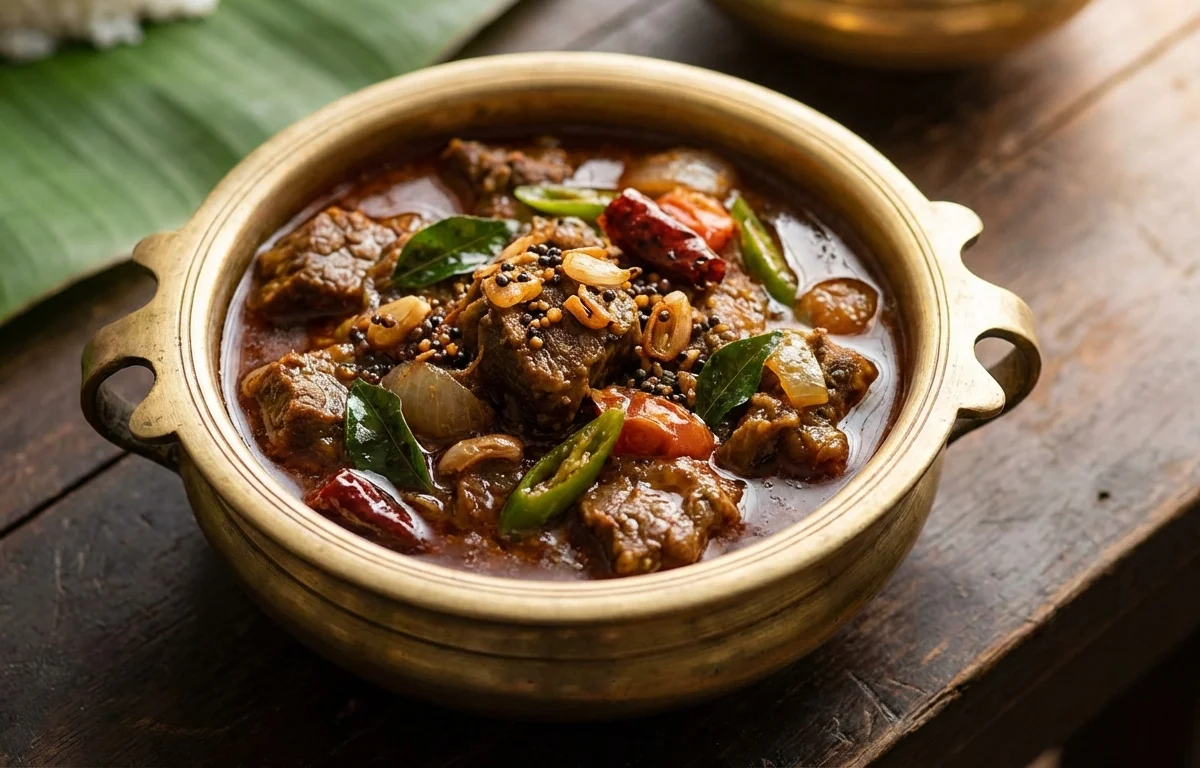
Nadan Beef Curry
A homestyle Kerala-style beef curry with tender pieces of beef cooked in a dark, spiced coconut gravy. It has warm peppery heat, roasted spices, and rich flavor that goes beautifully with appam, parotta, or rice.
For 4 servings
- prep · ~15 min
Prepare the beef and aromatics.
1.Wash the beef and drain well.2.Slice the onions and shallots.3.Crush the ginger and garlic.4.Chop the tomatoes and slit the green chilies.TIPDrain the beef well so the masala coats it nicely instead of turning watery. - roast · ~6 min
Roast the coconut.
Heat a small pan over medium heat and roast the grated coconut until deep golden brown, stirring often so it colors evenly without burning.
TIPTake it off the heat as soon as it turns dark golden; burnt coconut will make the curry bitter. - mix · ~3 min
Grind the roasted coconut.
Cool the roasted coconut slightly, then grind it with a little water to a smooth, thick paste.
- pressure cook · ~30 min
Pressure cook the beef.
1.Add beef to the pressure cooker with half the onion, half the shallots, ginger, garlic, green chili, turmeric powder, black pepper, salt, and 1 cup water.2.Mix well so the spices coat the beef.3.Pressure cook on medium heat until the beef is tender, about 20 to 25 minutes after the first whistle.TIPCooking time can vary with the cut, so open and check that the beef is tender before moving on. - temper · ~2 min
Make the tempering.
1.Heat coconut oil in a wide pan over medium heat.2.Add mustard seeds and let them splutter.3.Add fennel seeds and 1 sprig curry leaves.4.Stir for a few seconds until fragrant. - saute · ~12 min
Cook the onion base.
1.Add the remaining onion and shallots to the pan.2.Cook until soft and lightly golden, stirring often.3.Add tomatoes and cook until they turn soft and pulpy.TIPLet the onions get lightly browned for the deep, homestyle flavor this curry is known for. - saute · ~1 min
Cook the spice mix.
Lower the heat and add red chili powder, coriander powder, and garam masala. Stir for 30 seconds so the spices bloom without scorching.
- simmer · ~7 min
Combine the beef and coconut paste.
1.Add the cooked beef along with its cooking liquid to the pan.2.Stir in the ground coconut paste.3.Add the remaining 1 cup water and mix well.4.Bring the curry to a gentle simmer. - simmer · ~10 min
Simmer until the curry thickens.
Cook uncovered on low heat until the gravy thickens slightly and the oil begins to show on top. Stir in the remaining curry leaves during the last few minutes.
TIPKeep the curry at a gentle simmer so the beef stays tender and the coconut gravy does not catch at the bottom. - serve
Serve hot.
Serve the nadan beef curry hot with Kerala parotta, appam, puttu, or rice.
What to keep in mind.
7 tips from the recipe — small details that make a real difference to the final dish.
- 1Roast the grated coconut to a deep golden brown, not pale; that dark color gives this curry its signature Kerala depth.
- 2After pressure cooking, check the beef before combining; if it is still chewy, cook a little longer before moving on.
- 3Lower the heat before adding chili, coriander, and garam masala so the powders bloom without turning bitter.
- 4Use a wide pan for the final simmer so the gravy reduces evenly and the oil separates properly on top.
- 5Stir often once the coconut paste is added, because thick coconut gravies can catch quickly at the bottom.
- 6This curry tastes even better after a few hours of rest, when the pepper, roasted coconut, and beef flavors settle together.
- 7If reheating the next day, add a small splash of hot water to loosen the gravy without dulling the masala.
Adapt it for your goals.
Extra-peppery
Increase the coarsely crushed black pepper for a sharper, more traditional heat that pairs especially well with appam and parotta.
dry styleDry-style
Simmer longer with less added water to make a thicker, clingier beef masala that works beautifully with Kerala parotta.
low spiceLow-spice
Reduce the red chili powder and green chilies while keeping the black pepper for warmth without making the curry too fiery.
potato addedPotato-added
Add a few chunks of potato during the simmer for a heartier curry; they soak up the roasted coconut gravy well.
Why this is on our healthy list.
Protein-Rich Main Dish
Beef makes this curry filling and satisfying, helping turn it into a substantial meal rather than just a side.
Aromatic Spice Benefits
Ginger, garlic, black pepper, fennel, and curry leaves add more than flavor, bringing a range of traditional aromatic ingredients to the dish.
Less Reliance on Heavy Cream
The gravy gets richness and body from roasted coconut instead of dairy cream, keeping the texture traditional and deeply flavored.
Frequently asked questions
Yes. Cook the beef covered on the stovetop with the same aromatics and water until tender; it will simply take much longer than pressure cooking.



.webp)


.webp)