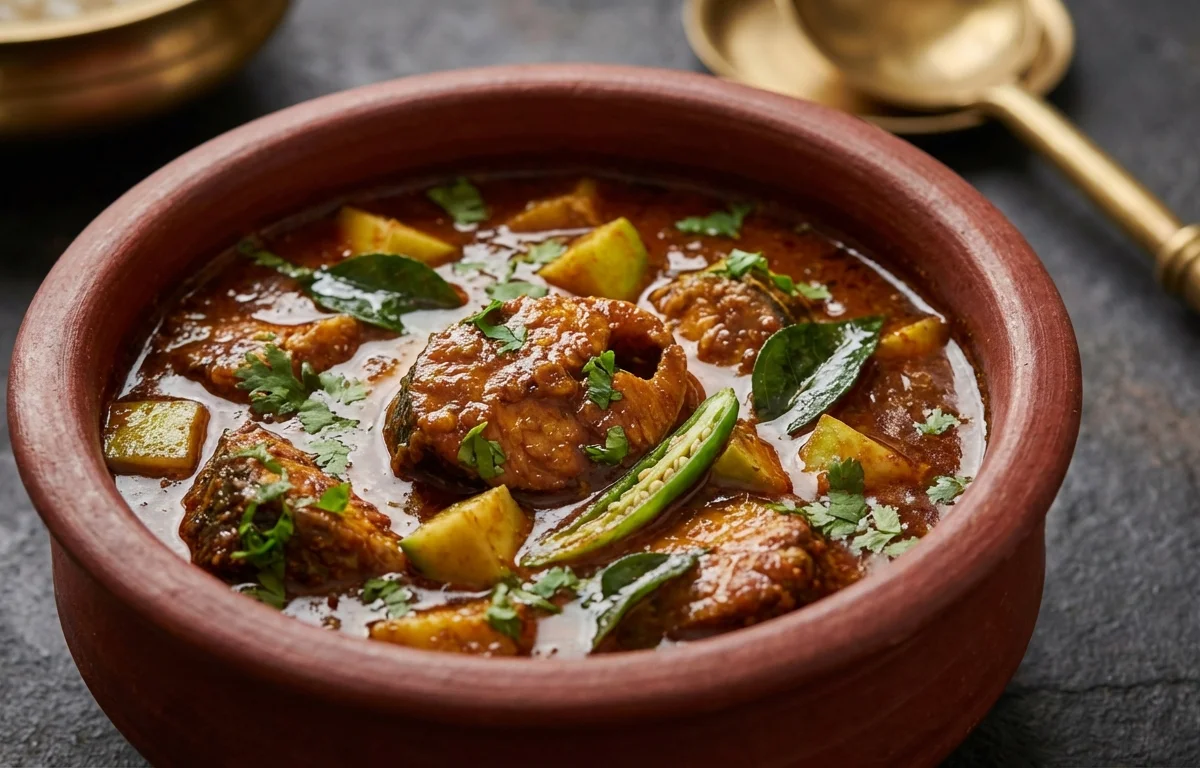
Nellore Chepala Pulusu
A fiery, tangy fish curry from the Nellore region of Andhra Pradesh. Pieces of firm fish are gently simmered in a tamarind-laced gravy infused with aromatic whole spices and a rustic onion-tomato base. The deep heat comes from Guntur chili, perfectly balanced by the sourness of tamarind, making it a soulful accompaniment to steamed rice.
For 4 servings
- prep · ~15 min
Marinate the fish.
1.Clean and wash 500g fish steaks thoroughly.2.Apply 1 pinch turmeric powder and 1 pinch salt to the fish.3.Set aside for 15 minutes to absorb the flavors.TIPUse firm-fleshed fish like kingfish for best results—it holds its shape during simmering. - prep · ~5 min
Prepare the tamarind mixture.
1.In a bowl, combine 2 tbsp tamarind paste with 500 ml water.2.If using fresh tamarind, soak a lemon-sized ball in warm water for 10 minutes and extract the pulp.3.Set the tamarind water aside. - temper · ~3 min
Temper the whole spices.
1.Heat 2 tbsp oil in a deep pan over medium heat.2.Add 1 tsp mustard seeds and let them splutter (30 sec).3.Add 0.5 tsp cumin seeds, 0.25 tsp fenugreek seeds, and 2 dried red chilies.4.Fry until fragrant, about 30 seconds.5.Add 12 curry leaves and sauté briefly.TIPDon't let the fenugreek seeds burn—they turn bitter. Keep the heat at medium. - saute · ~13 min
Build the onion-tomato base.
1.Add 2 chopped onions to the tempering.2.Sauté until deep golden brown (7-8 min).3.Add 1 tbsp ginger-garlic paste and cook until the raw smell disappears (1 min).4.Add 3 slit green chilies and 2 chopped tomatoes.5.Cook until tomatoes turn soft and mushy, about 5 minutes.TIPDeep browning of onions is crucial for the rich, rustic flavor typical of Andhra cooking. - saute · ~1 min
Cook the spice powders.
1.Reduce heat to low.2.Add 1 tbsp red chili powder, 1 tbsp coriander powder, and the remaining turmeric powder.3.Stir continuously for 30-40 seconds until the spices release their aroma. Be careful not to burn them.TIPCook spices on low heat — adding water immediately after helps prevent burning. - simmer · ~10 min
Simmer the tamarind gravy.
1.Pour in the prepared tamarind water.2.Add 0.25 tsp salt for the gravy.3.Bring the gravy to a rolling boil.4.Reduce heat and let it simmer for 10 minutes until the raw tamarind smell disappears and the gravy thickens slightly. - simmer · ~10 min
Add the fish and finish cooking.
1.Gently slide the marinated fish pieces into the simmering gravy.2.Give the pan a gentle swirl to coat the fish. Avoid stirring too much.3.Cook uncovered on medium heat for 8-10 minutes, or until the fish is just cooked through.4.The gravy will thicken and the oil will start to separate on the surface.TIPDo not cook the fish for too long — it will become tough. Look for the flesh to turn opaque and flake easily. - garnish · ~5 min
Garnish and serve hot.
Turn off the heat. Garnish generously with 3 tbsp chopped coriander leaves. Let the curry rest for 5 minutes so the flavors meld together splendidly.
What to keep in mind.
6 tips from the recipe — small details that make a real difference to the final dish.
- 1Use kingfish or another firm-fleshed fish so the pieces hold their shape during simmering.
- 2Deeply caramelize the onions until golden brown for an authentic, rich Andhra flavour base.
- 3Cook the tamarind gravy for a full 10 minutes until the raw sour smell mellows and blends.
- 4Slide the fish pieces in gently and do not stir—just swirl the pan to coat them.
- 5Watch for the oil separating on top of the gravy; that's the sign of a perfectly cooked pulusu.
- 6Let the curry rest for 5 minutes after turning off the heat so the flavours meld together.
Adapt it for your goals.
Milder version
Reduce red chili powder to 1/2 tbsp and omit dried red chilies for a family-friendly, less fiery curry while retaining the tangy tamarind base.
vegetarianVegetarian
Replace fish with 250g paneer or firm tofu chunks; simmer for just 5 minutes after adding. The tangy-spicy gravy pairs beautifully with paneer.
coconut twistCoconut twist
Stir in 1/4 cup fresh or frozen coconut paste at the end for a creamy, slightly sweet variation popular in coastal Andhra.
extra tangyExtra tangy
Add 1 extra tablespoon of tamarind paste and a pinch of jaggery (or sugar) to heighten the sour-sweet balance for a more intense pulusu.
Why this is on our healthy list.
Lean Protein from Fish
Firm white fish like kingfish provides high-quality, low-fat protein essential for muscle repair and overall health.
Rich in Anti-inflammatory Spices
Turmeric, fenugreek, and curry leaves in this dish contain natural anti-inflammatory compounds that support immunity.
Digestive Aid from Tamarind
Tamarind is a natural digestive aid and a good source of antioxidants, helping to soothe the stomach and improve gut health.
Heart-Healthy Fats
Sesame oil, traditionally used in Andhra cooking, provides healthy unsaturated fats and adds a nutty depth of flavour.
Frequently asked questions
Yes, just thaw it completely in the refrigerator, pat dry with paper towels, and then marinate as instructed to avoid excess water in the gravy.