
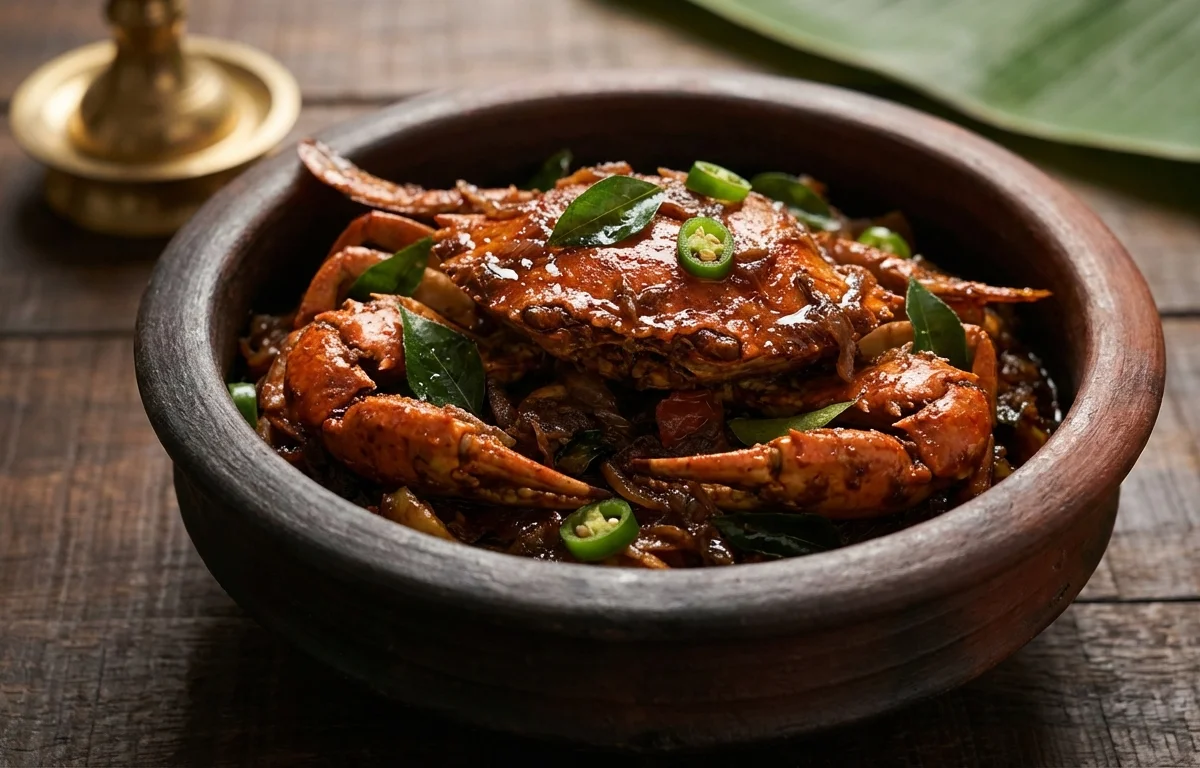
Njandu Roast
A fiery coastal crab roast with onions, ginger, garlic, tomatoes, and warm spices cooked down into a thick masala. It is messy, bold, and deeply savory, with plenty of roasted flavor in every shell-coated bite.
For 4 servings
- prep · ~8 min
Clean and ready the crab.
1.Rinse the crab pieces well under running water.2.Crack the claws slightly so the masala can get in while cooking.3.Drain well and keep the crab aside. - saute · ~10 min
Cook the onions and aromatics.
1.Heat coconut oil in a wide pan over medium heat.2.Add onion and curry leaves, then cook until the onion turns soft and lightly golden, 6 to 8 minutes.3.Add ginger, garlic, and green chili, then sauté for 1 to 2 minutes until fragrant.TIPUse a wide pan so the crab cooks in an even layer and the masala roasts instead of steaming. - saute · ~6 min
Make the roast masala.
1.Add tomato and cook until soft and pulpy, 4 to 5 minutes.2.Add turmeric powder, red chili powder, black pepper, coriander powder, garam masala, and salt.3.Cook the masala for 1 minute, stirring often so the spices do not burn. - simmer · ~12 min
Cook the crab in the masala.
Add the crab and toss well so every piece is coated. Pour in water, cover, and cook on medium-low heat for 10 to 12 minutes, stirring once or twice, until the crab is cooked through and releases its juices.
TIPDo not add too much water. Njandu Roast should stay thick and cling to the shells. - saute · ~7 min
Roast until the masala turns thick.
Remove the lid and cook uncovered for 5 to 7 minutes, stirring gently, until the masala dries down and coats the crab well. Let a few edges catch slightly for deeper roasted flavor.
- garnish
Finish with coriander leaves.
- serve
Serve hot with rice, appam, or Kerala parotta.
What to keep in mind.
8 tips from the recipe — small details that make a real difference to the final dish.
- 1Use a wide, heavy pan so the crab sits in a single layer and the masala roasts instead of turning watery.
- 2Crack the claws before cooking; the spiced onion-tomato masala will seep in and make the meat easier to eat.
- 3Cook the onions to light golden, not just soft, for the deep sweet base that balances the pepper and chili.
- 4After adding the powdered spices, stir constantly for that 1 minute so they bloom in oil without scorching.
- 5Do not add extra water unless the pan is drying too fast; this dish should finish thick and shell-coating.
- 6Stir gently once the crab goes in so the meat stays in the shell and the pieces do not break apart.
- 7Rest the roast for 5 minutes before serving; the masala clings better and the spice tastes more rounded.
- 8Leftovers reheat best in a covered pan on low heat with a tiny splash of water, not in a hot dry pan.
Adapt it for your goals.
Extra-pepper
Increase freshly crushed black pepper and slightly reduce red chili powder for a more traditional pepper-forward coastal heat.
low oilLow-oil
Use a little less coconut oil and a good nonstick or heavy pan; the roast will be lighter but still flavorful.
prawn roastPrawn-roast
Use the same masala with prawns for a faster-cooking seafood roast that gives similar bold Kerala flavors.
Why this is on our healthy list.
Protein-Rich Seafood
Crab provides high-quality protein, making this roast filling and satisfying without relying on heavy gravies.
Aromatic Spice Benefits
Ginger, garlic, black pepper, and turmeric add flavor while contributing beneficial plant compounds common in coastal home cooking.
Lighter Than Creamy Curries
This roast gets body from onions and tomatoes rather than cream or coconut milk, keeping the dish robust but not overly rich.
Frequently asked questions
The shell turns brighter, the meat becomes opaque, and the crab releases juices into the masala. Avoid overcooking or the meat can toughen.


.webp)
.webp)