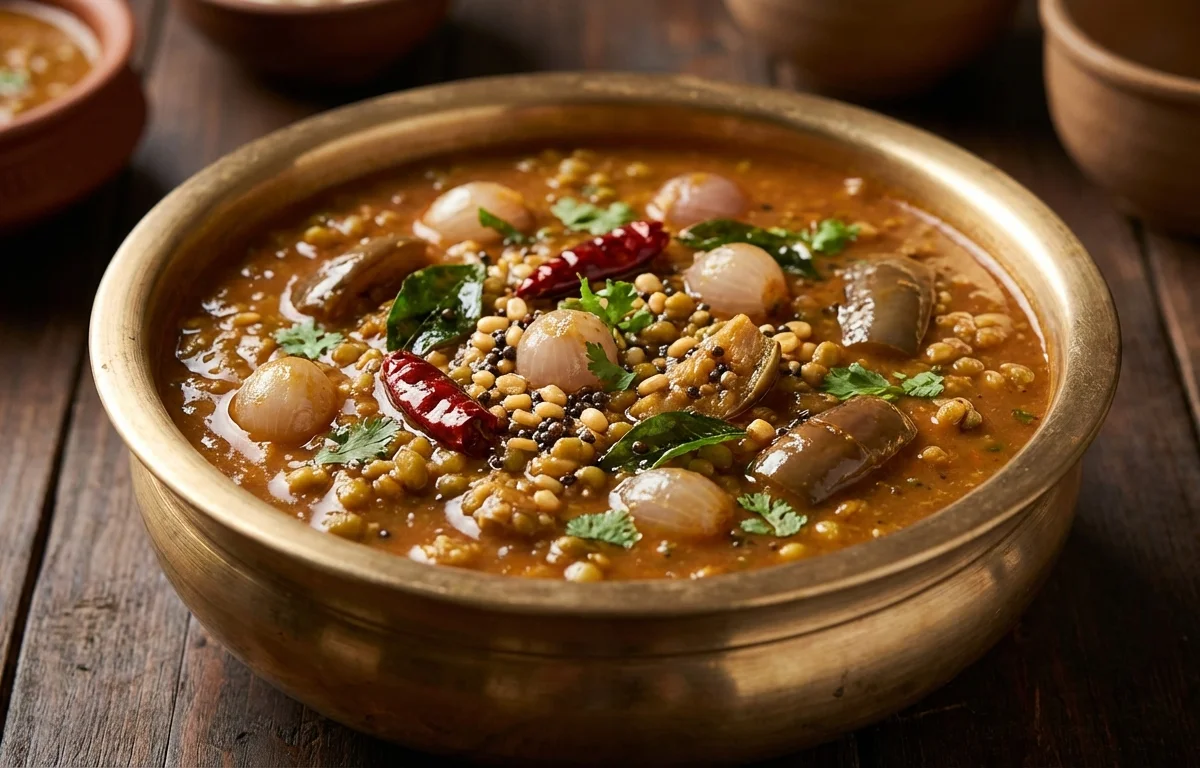
Pacha Payaru Kuzhambu
A homestyle Tamil kuzhambu made with whole green gram, gentle spices, and a lightly tangy tamarind base. It cooks into a comforting, earthy gravy that pairs beautifully with hot rice and a simple poriyal.
For 4 servings
- prep
Soak the green gram.
Wash the whole green gram well, cover with plenty of water, and soak overnight. Drain before cooking.
- pressure cook · ~15 min
Pressure cook the green gram.
Add the soaked green gram, 2 cups water, turmeric powder, and 0.25 tsp salt to a pressure cooker. Cook until soft but not mushy, about 4 whistles.
TIPThe beans should hold their shape slightly. Overcooking makes the kuzhambu muddy. - temper · ~1 min
Make the tempering.
1.Heat oil in a pot over medium heat.2.Add mustard seeds and let them splutter.3.Add cumin seeds, curry leaves, and asafoetida.4.Cook for a few seconds until fragrant. - saute · ~6 min
Cook the onion and aromatics.
1.Add onion and cook until soft and lightly golden, 4 to 5 minutes.2.Add ginger, garlic, and green chili.3.Cook for 1 minute until the raw smell fades. - saute · ~6 min
Cook the tomato and spices.
1.Add tomato and cook until soft and pulpy, 4 to 5 minutes.2.Add red chili powder and coriander powder.3.Mix well and cook for 30 seconds. - simmer · ~6 min
Add tamarind and simmer the base.
Stir in tamarind paste and the remaining 1 cup water. Add the remaining 0.25 tsp salt and simmer for 5 to 6 minutes so the raw tamarind taste cooks off.
- simmer · ~10 min
Finish the kuzhambu.
Add the cooked green gram along with its cooking liquid. Simmer for 8 to 10 minutes until the kuzhambu comes together and reaches a light gravy consistency.
TIPIf it gets too thick, add a splash of hot water. Kuzhambu should pour easily over rice. - garnish
Garnish with coriander leaves.
- serve
Serve hot with rice.
What to keep in mind.
6 tips from the recipe — small details that make a real difference to the final dish.
- 1Do not overcook the soaked green gram; the beans should stay whole so the kuzhambu keeps its earthy texture.
- 2Simmer the tamarind base before adding the cooked beans, or the kuzhambu can taste sharp and raw.
- 3Cook the tomatoes until fully pulpy and oily at the edges so the gravy tastes rounded, not acidic.
- 4If the kuzhambu thickens as it rests, loosen it with hot water rather than cold to keep the tempering aromatic.
- 5This kuzhambu tastes even better after 30 minutes of resting, when the tamarind and spice flavors settle into the beans.
- 6Store refrigerated for up to 2 days and reheat gently; vigorous boiling can split the beans and muddy the gravy.
Adapt it for your goals.
Jain
Skip onion and garlic, increase ginger and asafoetida slightly, and cook the tomato base a bit longer for a lighter but still flavorful kuzhambu.
veganVegan
The recipe is naturally vegan if you use a pure asafoetida that contains no wheat or dairy additives.
no pressure cookerNo-pressure-cooker
Simmer the soaked green gram in a pot until tender, then continue as written if you prefer stovetop cooking.
spicierSpicier
Add one extra green chili or a little more red chili powder for a sharper heat that stands up well to plain rice.
Why this is on our healthy list.
Rich in Plant Protein
Whole green gram adds plant protein and makes this kuzhambu satisfying enough to pair simply with rice and a vegetable side.
Good Source of Fiber
Using whole mung beans instead of split lentils keeps more fiber in the dish, supporting fullness and a hearty texture.
Digestive Spice Support
Ginger, cumin, asafoetida, and garlic are traditional aromatics that add flavor while making a bean-based gravy feel lighter to eat.
Frequently asked questions
Yes, but it will take longer to cook and may not soften as evenly. Soaking gives a creamier interior while helping the beans hold shape.