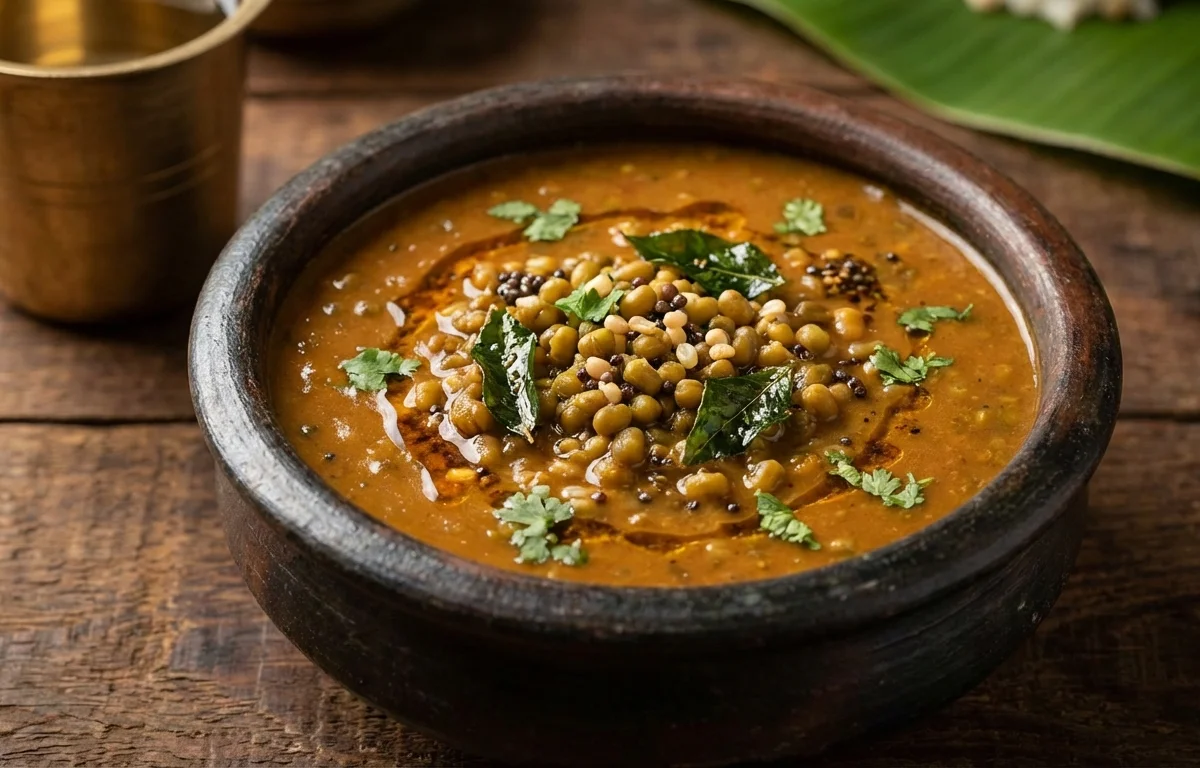
Pachai Payaru Kuzhambu
A homestyle Tamil kuzhambu made with whole green gram simmered in a spiced coconut gravy. It is hearty without feeling heavy, with gentle heat, soft lentils, and a tangy finish that goes beautifully with hot rice.
For 4 servings
- prep
Soak the green gram and get the base ready.
1.Wash the whole green gram well and soak it in plenty of water overnight.2.Drain the soaked green gram before cooking.3.Soak the tamarind in a little warm water and squeeze out a thick extract.4.Chop the onion and tomatoes, and peel the ginger and garlic. - pressure cook · ~20 min
Pressure cook the green gram.
Add the soaked green gram, 2 cups water, turmeric powder, and 0.25 tsp salt to a pressure cooker. Cook until soft but not mushy, about 4 whistles, then let the pressure drop naturally.
TIPThe beans should hold their shape lightly. Overcooking makes the kuzhambu pasty. - saute · ~4 min
Cook the coconut masala.
1.Heat 1 tsp oil in a small pan over medium heat.2.Add cumin seeds, fennel seeds, and dried red chili.3.Add the grated coconut, ginger, and garlic.4.Cook for 2 to 3 minutes until fragrant without letting the coconut brown too much. - mix
Grind the masala.
Cool the coconut mixture slightly, then grind it with a little water to a smooth paste.
- temper · ~5 min
Make the tempering.
1.Heat the remaining oil in a pot.2.Add mustard seeds and let them splutter.3.Add curry leaves and let them sizzle for a few seconds.4.Add the chopped onion and cook until soft and lightly golden.TIPKeep the heat medium so the mustard seeds pop without burning. - saute · ~7 min
Cook the tomato base.
Add the chopped tomatoes, red chili powder, coriander powder, and the remaining salt. Cook until the tomatoes soften and the masala looks thick and glossy.
- simmer · ~10 min
Simmer the kuzhambu.
1.Add the cooked green gram with its cooking liquid to the pot.2.Pour in the ground coconut paste and tamarind extract.3.Add the remaining 1 cup water and mix well.4.Bring to a gentle simmer and cook until the kuzhambu thickens slightly and the raw tamarind smell goes away.TIPStir now and then so the coconut paste does not catch at the bottom. - garnish
Finish with cilantro.
- serve
Serve hot with rice.
What to keep in mind.
7 tips from the recipe — small details that make a real difference to the final dish.
- 1Cook the soaked green gram only until tender; split or mushy beans will make the kuzhambu heavy.
- 2Do not deeply brown the coconut while sautéing, or the gravy will taste roasted instead of fresh and mellow.
- 3Grind the coconut masala very smooth so the kuzhambu gets a creamy body without graininess.
- 4Simmer after adding tamarind until the raw smell disappears; that is the cue that the sourness has rounded out.
- 5If the kuzhambu thickens too much as it rests, loosen it with a splash of hot water before serving.
- 6This tastes even better after 30 minutes of resting, when the green gram absorbs the tamarind and spice flavors.
- 7Refrigerate leftovers for up to 2 days and reheat gently, stirring often so the coconut gravy does not catch.
Adapt it for your goals.
Low-oil
Dry-roast the coconut spices lightly and reduce the tempering oil for a lighter everyday kuzhambu with the same core flavors.
veganVegan
This dish is already naturally vegan, making it a good option for plant-based South Indian meals.
no garlicNo-garlic
Skip the garlic for a milder, more traditional home-style version where cumin, fennel, coconut, and tamarind stand out more.
spicierSpicier
Add one extra dried red chili or a little more chili powder if you want a hotter kuzhambu for mixing with plain rice.
Why this is on our healthy list.
Plant Protein and Fiber
Whole green gram adds satisfying plant protein and fiber, helping make this kuzhambu hearty and filling.
Digestive Spice Support
Cumin, fennel, ginger, garlic, and curry leaves bring traditional digestive-friendly ingredients into the gravy.
Balanced Comfort Dish
The recipe feels rich from coconut but remains grounded by legumes, tomato, and tamarind rather than heavy cream or butter.
Frequently asked questions
Yes, but it will take longer to cook and may not soften as evenly. Overnight soaking gives the best texture for this kuzhambu.