Palak ki Kadi
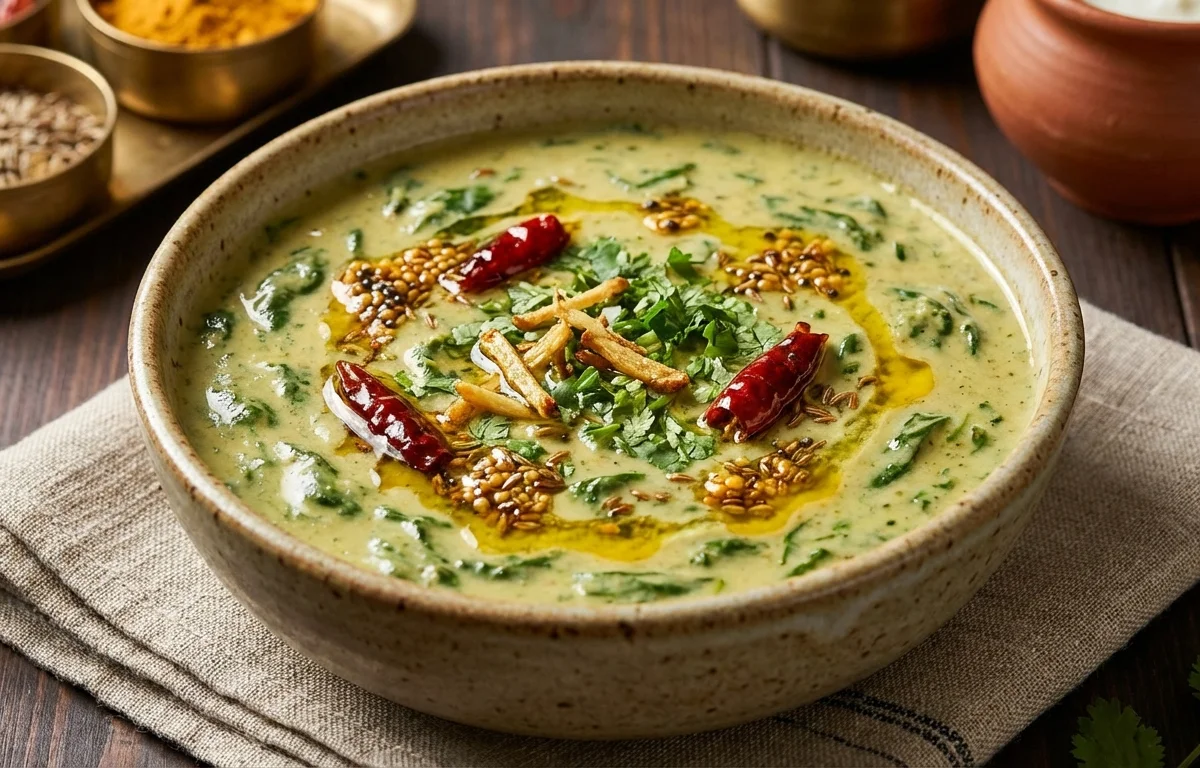
A homestyle spinach kadhi with a gently tangy yogurt and besan base, simmered until silky and finished with a simple tempering. It is light, comforting, and works beautifully with plain rice or phulka.
For 4 servings
- prep · ~10 min
Prep the spinach and aromatics.
1.Wash the spinach well, drain, and finely chop it.2.Finely chop the onion.3.Grate the ginger, mince the garlic, and slit the green chilies.TIPDrain the spinach well so the kadhi does not turn watery. - mix · ~4 min
Whisk the kadhi base.
In a bowl, whisk the yogurt and chickpea flour until smooth with no lumps. Slowly add the water and whisk again to make a thin, even mixture.
TIPUse room-temperature yogurt and whisk thoroughly so the kadhi stays smooth while simmering. - saute · ~10 min
Cook the onion and spinach.
1.Heat the oil in a deep pan over medium heat.2.Add the onion and cook until soft and lightly golden, 4 to 5 minutes.3.Add the ginger, garlic, and green chilies and cook for 1 minute.4.Add the chopped spinach and cook until wilted and most of the moisture cooks off, 3 to 4 minutes.TIPKeep the heat medium so the garlic cooks sweetly and does not burn. - simmer · ~15 min
Simmer the kadhi until thick and silky.
1.Pour the yogurt mixture into the pan and stir well.2.Add the turmeric powder, red chili powder, and salt.3.Cook over medium-low heat, stirring often, until the kadhi comes to a gentle simmer.4.Continue to simmer for 12 to 15 minutes, stirring now and then, until slightly thickened.TIPDo not boil the kadhi hard; a gentle simmer helps prevent the yogurt from splitting. - temper · ~1 min
Make the tempering.
1.Heat the ghee in a small pan.2.Add the cumin seeds, mustard seeds, and fenugreek seeds and let them crackle for a few seconds.3.Add the curry leaves and cook briefly until fragrant.TIPFenugreek seeds can turn bitter if overcooked, so take the pan off the heat as soon as they darken slightly. - assemble · ~1 min
Pour the tempering over the kadhi.
Pour the hot tempering straight over the simmering kadhi and stir once. Let it cook for 1 more minute so the flavors come together.
- serve
Serve the palak ki kadi hot.
What to keep in mind.
6 tips from the recipe — small details that make a real difference to the final dish.
- 1Whisk the yogurt and besan completely smooth before adding water, or tiny lumps will stay in the kadhi.
- 2Let the spinach cook until its released moisture mostly evaporates, so the finished kadhi stays silky instead of thin.
- 3Keep the heat at a gentle simmer after adding the yogurt mixture; a hard boil can make it split.
- 4Stir the pan more often in the first few minutes after adding the kadhi base, when besan is most likely to catch at the bottom.
- 5Add the tempering while it is still sizzling hot so the cumin, mustard, fenugreek, and curry leaf aroma blooms in the kadhi.
- 6This kadhi thickens slightly as it stands, so loosen leftovers with a splash of water when reheating.
Adapt it for your goals.
No-onion
Skip the onion for a simpler, lighter kadhi; the ginger, garlic, spinach, and tempering still keep it flavorful.
jainJain
Omit onion and garlic, then increase ginger and green chili slightly for a Jain-style version with clean, bright flavor.
veganVegan
Use a plain unsweetened plant-based yogurt that can handle simmering, and replace ghee with oil for a dairy-free kadhi.
low oilLow-oil
Reduce the sautéing oil slightly and make the tempering in minimal oil instead of ghee if you want a lighter everyday version.
Why this is on our healthy list.
Leafy Greens Goodness
Spinach brings fiber and a range of naturally occurring vitamins and minerals to this light, comforting kadhi.
Protein From Besan and Yogurt
Chickpea flour and yogurt add satisfying protein, making the dish more filling than a plain vegetable curry.
Digestive Spice Support
Ginger, cumin, fenugreek, and curry leaves contribute warmth and aromatic depth while keeping the dish gentle and balanced.
Frequently asked questions
It usually happens when the heat is too high or the yogurt was cold. Use room-temperature yogurt, whisk it well with besan, and keep the kadhi at a gentle simmer.



.webp)