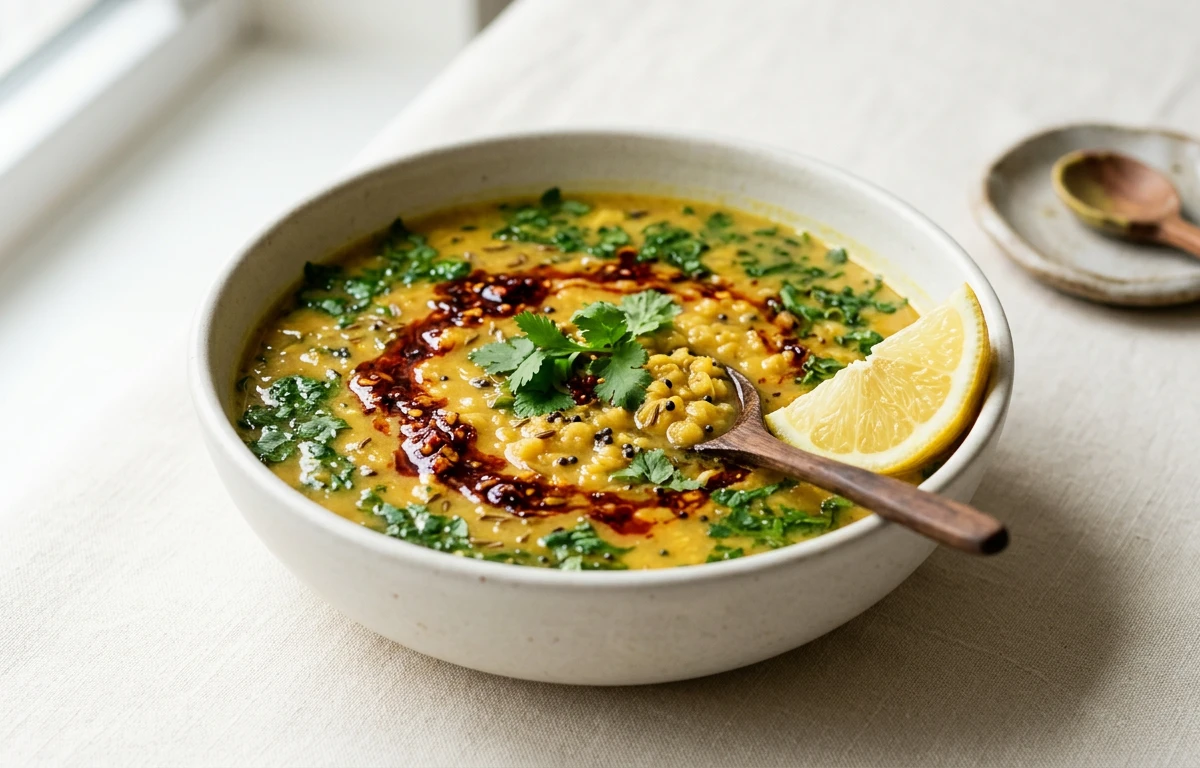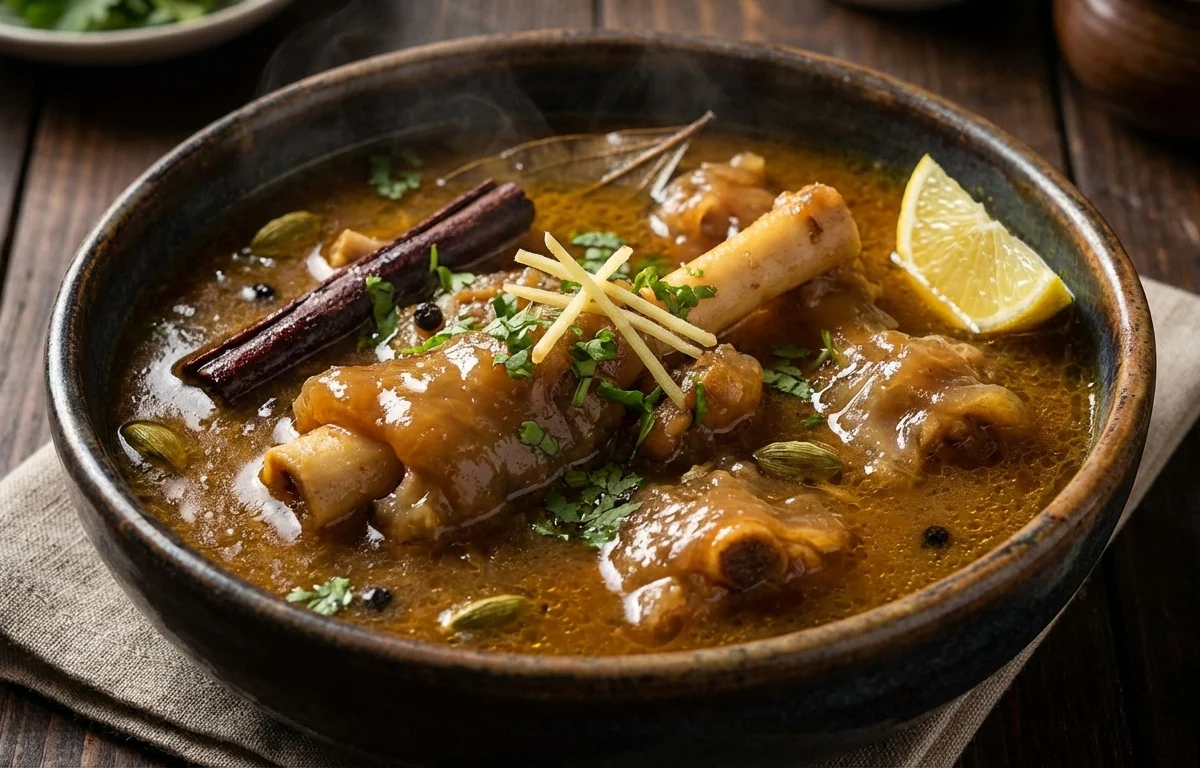
Paya Shorba
A slow-cooked mutton trotter broth with warming whole spices, onions, ginger, and garlic. The stock turns silky and deeply savory as the paya softens, making this classic Indian shorba rich, comforting, and full of old-school flavor.
For 4 servings
- prep · ~10 min
Clean and ready the paya.
1.Rinse the mutton trotters well under running water.2.Scrape and wash again if needed so the pieces are very clean.3.Set them aside while you prepare the onions, ginger, and garlic.TIPVery clean trotters give a clearer, better-tasting shorba. - saute · ~9 min
Cook the onion base.
1.Heat oil in a pressure cooker over medium heat.2.Add sliced onion and cook until lightly golden, 6 to 8 minutes.3.Add crushed ginger and garlic, then cook 1 minute until fragrant. - mix · ~3 min
Add the paya and spices.
1.Add the mutton trotters to the cooker and mix well with the onion base.2.Add coriander powder, red chili powder, turmeric powder, salt, green chili, black peppercorns, cloves, cardamom, cinnamon, and bay leaf.3.Stir for 2 to 3 minutes so the spices coat the paya well. - pressure cook · ~75 min
Pressure cook until the paya turns tender.
Pour in the water and bring it to a boil. Lock the lid and pressure cook on medium-low heat until the trotters are very soft and the broth looks rich and slightly sticky, about 60 to 75 minutes depending on the size and age of the paya.
TIPLong cooking is the key here; the gelatin from the trotters gives the shorba its body. - rest · ~15 min
Let the pressure drop naturally.
- simmer · ~15 min
Simmer the shorba to finish.
1.Open the cooker and check the consistency of the broth.2.Simmer uncovered for 10 to 15 minutes if you want a slightly deeper, fuller shorba.3.Skim any extra fat from the top if needed and check the salt.TIPThe broth should stay light and pourable, not thick like a curry. - garnish
Finish with lemon juice and coriander leaves.
- serve
Serve the paya shorba hot.
Ladle into katoris and serve while steaming hot. Spoon a little broth and a piece of tender paya into each serving.
What to keep in mind.
6 tips from the recipe — small details that make a real difference to the final dish.
- 1If your butcher can split the trotters, more marrow and collagen will release into the shorba.
- 2Brown the onions only to light golden; deep browning can make the broth taste heavy and dark.
- 3After pressure cooking, the paya is done when the joints feel loose and the broth turns slightly sticky.
- 4Natural pressure release helps keep the meat tender and prevents the broth from turning cloudy.
- 5If making ahead, chill the shorba and lift off the solidified fat before reheating for a cleaner finish.
- 6Add the lemon juice only at the end so the broth stays bright and the paya softens properly while cooking.
Adapt it for your goals.
Stovetop-slow-cooked
Cook the same ingredients in a heavy pot for several hours instead of a pressure cooker if you prefer a gentler simmer and more traditional texture.
pepper forwardPepper-forward
Increase black peppercorns and reduce red chili for a sharper, warming heat that suits breakfast-style paya.
bone richBone-rich
Add a few extra split trotters or marrow bones for an even silkier shorba with deeper meaty flavor.
lighter finishLighter-finish
Chill and skim the fat before reheating if you want the broth cleaner and less rich while keeping its body.
Why this is on our healthy list.
Collagen-Rich Broth
Slow-cooked trotters release gelatin into the shorba, giving it a naturally rich, silky body.
Protein From Goat Trotters
The paya contributes animal protein, making the broth more sustaining than a plain spiced soup.
Digestive Spice Base
Ginger, garlic, black pepper, and cardamom bring warming aromatics often used in comforting savory broths.
Frequently asked questions
The trotters should be very tender, the joints should loosen easily, and the broth should look glossy and slightly sticky from released gelatin.