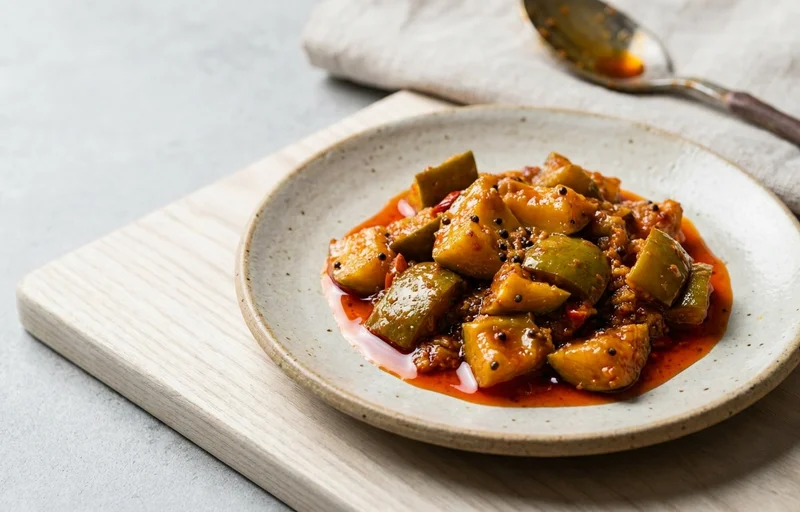
Pesara Pappu Pulusu
A tangy, comforting Andhra-style stew made with moong dal gently simmered in a tamarind-tomato base. Light yet deeply satisfying, this protein-rich pulusu gets its character from a crackling mustard seed tempering and the subtle warmth of fenugreek. Perfect spooned over hot rice.
For 4 servings
- prep · ~10 min
Soak tamarind and prep the dal.
1.Soak tamarind in 0.5 cup warm water for 10 minutes, then squeeze and extract the juice. Discard the pulp.2.Wash moong dal in 2-3 changes of water until the water runs clear. - pressure cook · ~15 min
Pressure cook the moong dal.
1.Add the washed dal, 2 cups of water, and turmeric powder to the pressure cooker.2.Close the lid and cook on medium heat for 2 whistles, then lower the heat and cook for another 3 minutes.3.Let the pressure release naturally. Open the lid and whisk the dal lightly until smooth.TIPMoong dal cooks quickly. Overcooking makes it lose texture, so stick to the whistle count. - simmer · ~10 min
Build the pulusu base and simmer.
1.Place the pressure cooker with the cooked dal back on low heat.2.Stir in the tamarind juice, quartered tomatoes, slit green chilies, red chili powder, and salt.3.Add 0.5 cup of water if the consistency seems too thick.4.Simmer for 8 to 10 minutes, letting the tomatoes soften and flavors meld. - temper · ~2 min
Make the tempering.
1.Heat oil in a small tadka pan over medium heat.2.Add mustard seeds and let them splutter.3.Immediately add cumin seeds, fenugreek seeds, crushed garlic, and a pinch of asafoetida. Sauté for 30 seconds.4.Toss in curry leaves, let them crackle for 10 seconds, then pour the entire tempering over the simmering dal.TIPFenugreek seeds burn fast and turn bitter. Keep the heat medium-low once you add them. - simmer · ~2 min
Finish the dish.
1.Stir the tempering into the dal.2.Let it bubble for a final 2 minutes, then switch off the heat. - garnish
Garnish with fresh coriander leaves and serve hot.
TIPA teaspoon of ghee drizzled on top just before serving adds incredible aroma.
What to keep in mind.
6 tips from the recipe — small details that make a real difference to the final dish.
- 1Cook moong dal until just soft but still holding shape; mushy dal ruins the texture of the pulusu.
- 2Always soak tamarind in warm water to extract maximum tartness and color for the base.
- 3Use medium-ripe tomatoes for the best balance of sourness and sweetness in the stew.
- 4Let the tempering sizzle for just a few seconds before pouring it over the dal to preserve the aroma of curry leaves and garlic.
- 5For a thicker pulusu, skip the extra water in step 3; for a soupier consistency, add up to 1 cup more.
- 6Leftover pulusu thickens upon cooling; add a splash of warm water while reheating to restore the desired consistency.
Adapt it for your goals.
Low-oil
Skip the tempering entirely and stir in a pinch of asafoetida directly into the simmering dal; finish with a squeeze of lemon for brightness. Ideal for those reducing oil.
high proteinHigh-protein
Replace half the moong dal with split yellow chana dal (bengal gram) for a heartier, higher-protein version. Cook it for an extra whistle as chana dal takes longer to soften.
jainJain
Omit garlic and onion; add a pinch more asafoetida in the tempering and use a bit of grated ginger for depth. Suitable for Jain dietary practices that avoid root vegetables.
veganVegan
The recipe is already vegan. For extra richness, stir in a tablespoon of coconut milk just before serving instead of ghee.
Why this is on our healthy list.
Excellent Plant-Based Protein
Moong dal is a rich source of plant protein, making this stew a satisfying and muscle-friendly option for vegetarians and vegans.
Digestive Support from Spices
Fenugreek, asafoetida, and cumin are traditionally used in Indian cooking to aid digestion and reduce bloating.
Rich in Iron from Lentils and Spices
Moong dal and fenugreek both contribute iron, which supports healthy blood and energy levels.
Low in Fat and Calories
With only one teaspoon of oil, this pulusu is a light yet filling meal option for weight-conscious eaters.
Frequently asked questions
Yes. Simmer the washed moong dal in 3 cups of water in a pot for about 25-30 minutes until soft, stirring occasionally and skimming any foam.



.webp)